


Visiting Marshall Islands President David Kabua yesterday reaffirmed his country’s diplomatic ties with Taiwan, while calling for the country to be given its “rightful place” in the international arena.
Kabua, on his first overseas engagement since assuming office in January 2020, spoke at a welcoming ceremony in Taipei hosted by President Tsai Ing-wen (蔡英文) and featuring a military salute.
Kabua said he had come to “fill with confidence that the unique alliance between our two countries continues to prosper and flourish.”

Photo: Peter Lo, Taipei Times
Praising Taiwan as a “shining example of a vibrant and peaceful progressive nation,” Kabua called on the world to recognize the nation on the world stage.
“It is time for Taiwan to take its rightful place as an equal member of the family of nations,” he said.
Kabua also reaffirmed that diplomatic ties between the Marshall Islands and Taiwan are robust, saying that his country is “strongly committed to further strengthen the bonds between our two countries.”
Tsai welcomed Kabua’s state visit, saying that he is the first head of state among Taiwan’s diplomatic allies in the Pacific to visit since the COVID-19 pandemic began.
“The international landscape has shifted radically since 1998 when two countries [Taiwan and the Marshall Islands] established diplomatic relations. To this day, our two nations have always supported each other in overcoming various challenges and deepening our relations,” she said.
Tsai said that she expects to see closer relations and enhanced exchanges between the two allies.
At a follow-up ceremony, Tsai awarded Kabua the Order of Brilliant Jade with Grand Cordon for enhancing ties between Taiwan and the Marshall Islands.
Instituted in 1933, the order is the highest honor presented by Taiwan and can only be awarded to a head of state.
Tsai said that she has made two visits to the Marshall Islands since becoming president in May 2016.
She thanked Kabua for his “unwavering support for Taiwan.”
Kabua spoke of last year’s session of the UN General Assembly, at which he criticized the body’s “shameful silence” over its ongoing exclusion of Taiwan.
“I firmly believe that Taiwan’s 23.6 million people deserve to participate in regional and international forums, including specialized agencies under the UN,” he said.
At a closed-door meeting with Kabua at the Presidential Office yesterday, Tsai said that Taiwan and the Marshall Islands would set up a joint fund to tackle some climate change issues, the office said in a statement.
The fund would help to enhance cooperation in such areas as green energy infrastructure, natural disaster prevention and the cultivation of talent, Tsai was quoted as saying.
The Marshall Islands delegation arrived in Taiwan on Monday afternoon.
Before leaving on Friday, Kabua is to attend a banquet hosted by Minister of Foreign Affairs Joseph Wu (吳釗燮) and preside over a ceremony to renew a bilateral agreement on agricultural technical cooperation, the Ministry of Foreign Affairs said.
Other members of the Marshall Islands delegation include Minister of Foreign Affairs and Trade Casten Nemra and Senator Joe Bejang, the ministry said.
Kabua — the son of Amata Kabua, the first president of the Marshall Islands — also served as minister of health and internal affairs.
The Marshall Islands is one of Taiwan’s 14 diplomatic allies. The two countries have maintained official diplomatic ties since 1998.

AIR SUPPORT: The Ministry of National Defense thanked the US for the delivery, adding that it was an indicator of the White House’s commitment to the Taiwan Relations Act Deputy Minister of National Defense Po Horng-huei (柏鴻輝) and Representative to the US Alexander Yui on Friday attended a delivery ceremony for the first of Taiwan’s long-awaited 66 F-16C/D Block 70 jets at a Lockheed Martin Corp factory in Greenville, South Carolina. “We are so proud to be the global home of the F-16 and to support Taiwan’s air defense capabilities,” US Representative William Timmons wrote on X, alongside a photograph of Taiwanese and US officials at the event. The F-16C/D Block 70 jets Taiwan ordered have the same capabilities as aircraft that had been upgraded to F-16Vs. The batch of Lockheed Martin

GRIDLOCK: The National Fire Agency’s Special Search and Rescue team is on standby to travel to the countries to help out with the rescue effort A powerful earthquake rocked Myanmar and neighboring Thailand yesterday, killing at least three people in Bangkok and burying dozens when a high-rise building under construction collapsed. Footage shared on social media from Myanmar’s second-largest city showed widespread destruction, raising fears that many were trapped under the rubble or killed. The magnitude 7.7 earthquake, with an epicenter near Mandalay in Myanmar, struck at midday and was followed by a strong magnitude 6.4 aftershock. The extent of death, injury and destruction — especially in Myanmar, which is embroiled in a civil war and where information is tightly controlled at the best of times —
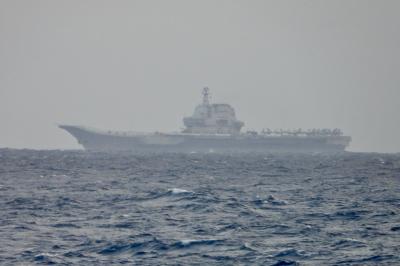
China's military today said it began joint army, navy and rocket force exercises around Taiwan to "serve as a stern warning and powerful deterrent against Taiwanese independence," calling President William Lai (賴清德) a "parasite." The exercises come after Lai called Beijing a "foreign hostile force" last month. More than 10 Chinese military ships approached close to Taiwan's 24 nautical mile (44.4km) contiguous zone this morning and Taiwan sent its own warships to respond, two senior Taiwanese officials said. Taiwan has not yet detected any live fire by the Chinese military so far, one of the officials said. The drills took place after US Secretary

THUGGISH BEHAVIOR: Encouraging people to report independence supporters is another intimidation tactic that threatens cross-strait peace, the state department said China setting up an online system for reporting “Taiwanese independence” advocates is an “irresponsible and reprehensible” act, a US government spokesperson said on Friday. “China’s call for private individuals to report on alleged ‘persecution or suppression’ by supposed ‘Taiwan independence henchmen and accomplices’ is irresponsible and reprehensible,” an unnamed US Department of State spokesperson told the Central News Agency in an e-mail. The move is part of Beijing’s “intimidation campaign” against Taiwan and its supporters, and is “threatening free speech around the world, destabilizing the Indo-Pacific region, and deliberately eroding the cross-strait status quo,” the spokesperson said. The Chinese Communist Party’s “threats


 RSS
RSS