


The WHO has warned that the Omicron variant of SARS-CoV-2 might reinfect people who had recovered from COVID-19, the Central Epidemic Command Center (CECC) said yesterday.
The CECC on Friday announced that effective tomorrow, travelers from southern Africa, where the variant was first detected — South Africa, Botswana, Eswatini, Lesotho, Namibia and Zimbabwe — would need to quarantine for 14 days in a centralized facility after arriving in Taiwan.
The move followed similar requirements other countries imposed on travelers from those states.
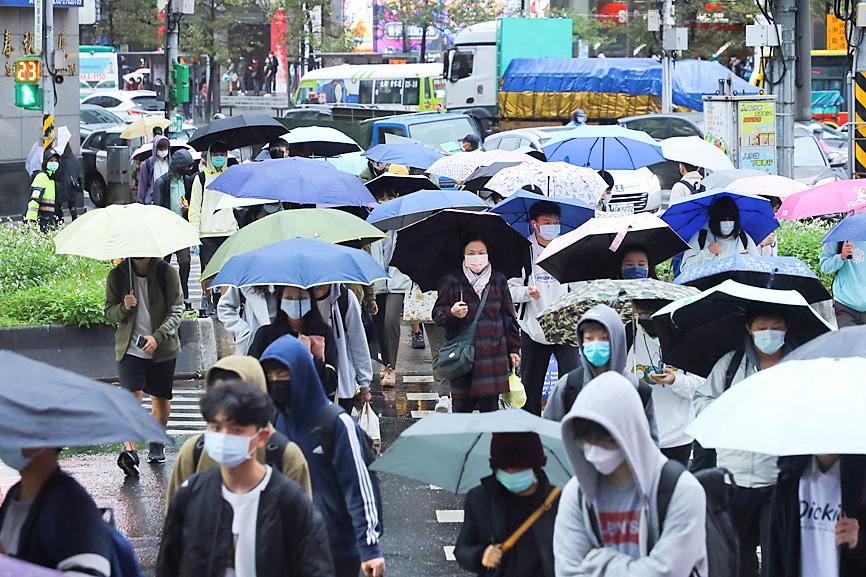
Photo: Annabelle Chih, REUTERS
Centers for Disease Control Deputy Director-General Chuang Jen-hsiang (莊人祥), who is the CECC’s spokesman, yesterday said that preliminary evidence suggests that the Omicron variant increases the risk of reinfection.
WHO experts are evaluating the transmissibility and severity of the variant, which appears to be spreading fast in southern Africa, as well as the effectiveness of preventive measures, diagnostics, vaccines and therapeutics, he said.
As it would take some time to assess potential effects, the WHO has asked countries to enhance surveillance and sequencing efforts to better understand circulating variants, he said.
The global health body also asked countries to submit genome sequences and associated metadata to public databases, such as GISAID, and report cases involving the new variant through its International Health Regulations mechanism, he said.
It has further urged countries to conduct field investigations and laboratory assessments so that potential effects of the new variant can be better understood, he said.
The information of interest includes epidemiology, severity, effectiveness of public health and social measures, immune responses, and other characteristics, he said.
Minister of Health and Welfare Chen Shih-chung (陳時中), who heads the CECC, said that to stop the new variant from entering Taiwan, the center would impose centralized quarantines on arrivals from the six countries, as it regards them as key high-risk states.
The adjustments to border control measures would be made in accordance with the global COVID-19 situation, but have no effect on life in Taiwan, he said, adding that there are no plans to tighten measures during the Lunar New Year holiday as long as there are no local Omicron cases.
Drugmakers Pfizer Inc and BioNTech SE have announced that they would update their COVID-19 vaccine with regard to the new variant and produce a new jab within 100 days, Chen said.
If the firms succeed, the CECC would seek to acquire their updated vaccine, Chen said, adding that the process leading to an emergency use authorization would take time.
As of Friday, Taiwan’s first-dose vaccination rate had reached 77.59 percent and its full vaccination rate was 53.3 percent, the CECC said.
Taiwan yesterday reported 12 new imported cases of COVID-19 — eight men and four women who arrived from Ethiopia, India, Indonesia, South Korea and the US.
The CECC said that four of the cases are vaccine breakthrough infections, adding that three of them had received two doses of the Sinovac COVID-19 vaccine, and one had received one dose each of the Pfizer-BioNTech and Moderna COVID-19 vaccines.
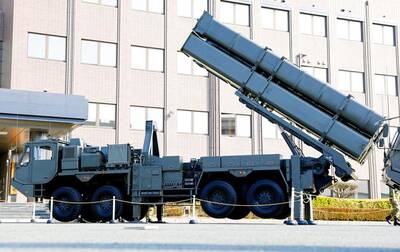
Japan has deployed long-range missiles in a southwestern region near China, the Japanese defense minister said yesterday, at a time when ties with Beijing are at their lowest in recent years. The missiles were installed in Kumamoto in the southern region of Kyushu, as Japan is attempting to shore up its military capacity as China steps up naval activity in the East China Sea. “Standoff defense capabilities enable us to counter the threat of enemy forces attempting to invade our country ... while ensuring the safety of our personnel,” Japanese Minister of Defense Shinjiro Koizumi said. “This is an extremely important initiative for

MORE POPULAR: Taiwan Pass sales increased by 59 percent during the first quarter compared with the same period last year, the Tourism Administration said The Tourism Administration yesterday said that it has streamlined the Taiwan Pass, with two versions available for purchase beginning today. The tourism agency has made the pass available to international tourists since 2024, allowing them to access the high-speed rail, Taiwan Railway Corp services, four MRT systems and four Taiwan Tourist Shuttles. Previously, five types of Taiwan Pass were available, but some tourists have said that the offerings were too complicated. The agency said only two types of Taiwan Pass would be available, starting from a three-day pass with the high-speed rail and a three-day pass with Taiwan Railway Corp. The former costs NT$2,800

POLLS CONCERNS: There are concerns within the KMT that a Cheng Li-wun-Xi Jinping meeting could trigger a voter backlash in elections in November Chinese Nationalist Party (KMT) Chairwoman Cheng Li-wun (鄭麗文) accepted an invitation from Chinese President Xi Jinping (習近平) to visit next month, her party and Chinese state media reported yesterday. Cheng, who took up her role in November last year, “gladly accepted” the invitation to lead a delegation to China, the KMT said in a statement, confirming a Xinhua news agency report. Cheng “looks forward to joint efforts by both parties to advance the peaceful development of cross-strait relations, promote cross-strait exchanges and cooperation, and work for peace in the Taiwan Strait and greater well-being for people on both sides,” the statement said. Chinese

SIGNIFICANT TO THE WORLD: The delegation’s visit aims to send a clear message that bipartisan support for Taiwan is consistent, US Senator Jeanne Shaheen said The US Senate’s bipartisan support for Taiwan remains strong and Taiwan-US ties would continue for decades to come, a US Senate delegation said in Taipei yesterday, while calling on the legislature to swiftly pass a special defense budget bill. A US delegation led by Democratic US Senator Jeanne Shaheen and Republican US Senator John Curtis — both members of the US Senate Committee on Foreign Relations — arrived in Taiwan yesterday for a two-day visit. The other senators of the delegation included Senate Taiwan Caucus cochair Thom Tillis and Senate Committee on Armed Services senior member Jacky Rosen. Shaheen told a news


 RSS
RSS