


Quintuple Stimulus Vouchers are to be distributed at the beginning of October and would be valid through April next year, the Executive Yuan announced yesterday.
Reservations for the vouchers could be made from the end of next month through the program’s official Web site, Chunghwa Post’s (中華郵政) Web site, convenience store kiosks and digital payment providers, the National Development Council (NDC) told a news conference at the Executive Yuan in Taipei, after presenting the plan at a Cabinet meeting earlier that morning.
Recipients could choose to receive digital or paper vouchers, it said, adding that they would be distributed free of charge starting in the first half of October and could be used until April 30 next year.
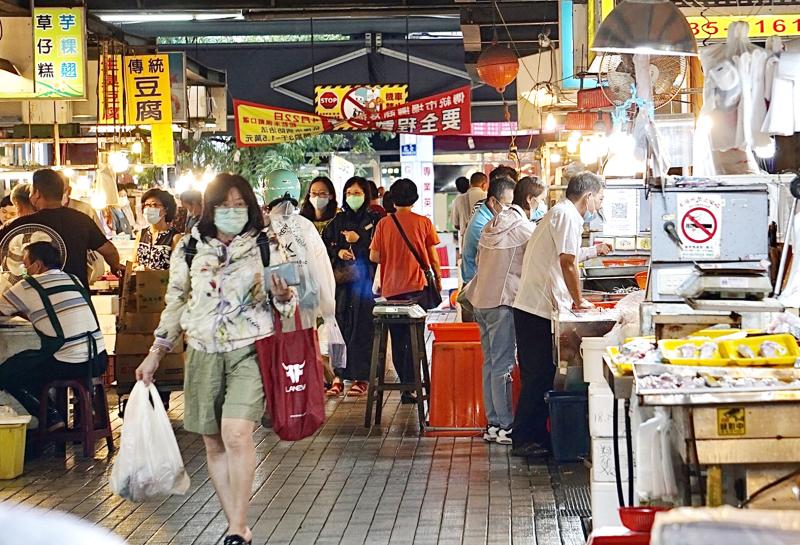
Photo: CNA
Eligible recipients include all Republic of China citizens born before April 30 next year and Alien Permanent Resident Certificate holders, it added.
The council said that it is to open advanced reservation to encourage people to reserve times for pickup, although a specific timetable is still being discussed.
The vouchers would be distributed in packs of 10 bills: three NT$1,000 bills, two NT$500 bills and five NT$200 bills, for a total of NT$5,000, Executive Yuan spokesman Lo Ping-cheng (羅秉成) said.
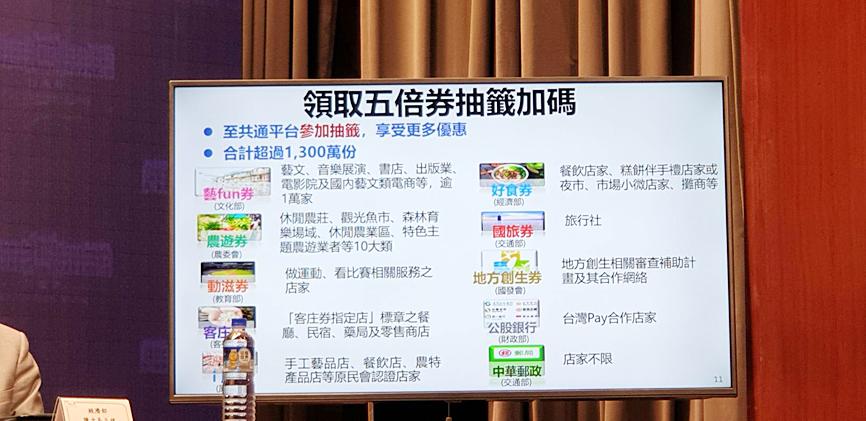
Photo: Lee Hsin-fang, Taipei Times
Regarding concerns about the value of the bills, the government requests that people do not demand change from stores, but if shopkeepers are willing to give change for the vouchers, it would respect their decision, Lo said.
As small stores have been the most affected by disease prevention measures this year, the vouchers can only be used at physical stores and at approved online Taiwanese vendors, NDC Minister Kung Ming-hsin (龔明鑫) said, adding that the council plans to announce a “whitelist” of online retailers soon.
The economic benefits of the program are expected to far surpass last year’s Triple Stimulus Voucher program, thanks primarily to secondary vouchers offered by ministries, businesses and local governments, Kung said.
Eight secondary voucher programs targeting different sectors are to be offered to a total of 13 million people, up from four programs organized last year, the Cabinet said, adding that program registration would be consolidated onto one platform.
In addition to last year’s sports vouchers, Hakka e-coupons, culture vouchers and agriculture travel vouchers, several government agencies this time would also present voucher programs under their purview to boost growth in different sectors, it said.
After reserving the Executive Yuan’s Quintuple Stimulus Vouchers on the official Web site, people can select which drawings they wish to enter, so they can win secondary vouchers provided by government agencies, Minister Without Portfolio Audrey Tang (唐鳳) said, adding that the organizing agencies would announce draw schedules and other details.
Whereas at most five sets of the Triple Stimulus Vouchers could be retrieved from post offices, this year, one digital voucher account can add up to four people, even if they are registered at different households, Tang added.
Premier Su Tseng-chang (蘇貞昌) was quoted as saying at the Cabinet meeting that he hopes this year’s vouchers would help local businesses quickly regain customers, driving the nation’s general economic recovery.
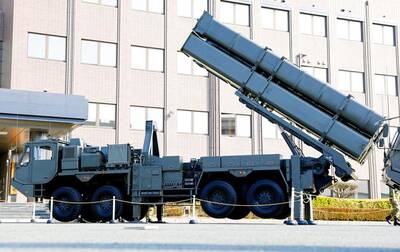
Japan has deployed long-range missiles in a southwestern region near China, the Japanese defense minister said yesterday, at a time when ties with Beijing are at their lowest in recent years. The missiles were installed in Kumamoto in the southern region of Kyushu, as Japan is attempting to shore up its military capacity as China steps up naval activity in the East China Sea. “Standoff defense capabilities enable us to counter the threat of enemy forces attempting to invade our country ... while ensuring the safety of our personnel,” Japanese Minister of Defense Shinjiro Koizumi said. “This is an extremely important initiative for

The nation’s fastest supercomputer, Nano 4 (晶創26), is scheduled to be launched in the third quarter, and would be used to train large language models in finance and national defense sectors, the National Center for High-Performance Computing (NCHC) said. The supercomputer, which would operate at about 86.05 petaflops, is being tested at a new cloud computing center in the Southern Taiwan Science Park in Tainan. The exterior of the server cabinet features chip circuitry patterns overlaid with a map of Taiwan, highlighting the nation’s central position in the semiconductor industry. The center also houses Taiwania 2, Taiwania 3, Forerunner 1 and
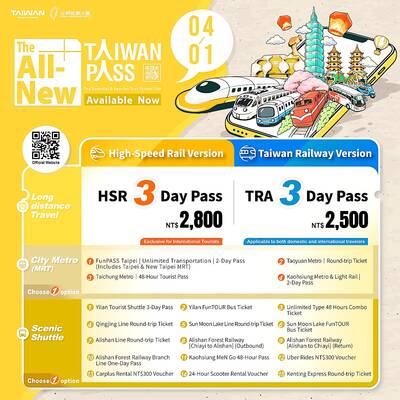
MORE POPULAR: Taiwan Pass sales increased by 59 percent during the first quarter compared with the same period last year, the Tourism Administration said The Tourism Administration yesterday said that it has streamlined the Taiwan Pass, with two versions available for purchase beginning today. The tourism agency has made the pass available to international tourists since 2024, allowing them to access the high-speed rail, Taiwan Railway Corp services, four MRT systems and four Taiwan Tourist Shuttles. Previously, five types of Taiwan Pass were available, but some tourists have said that the offerings were too complicated. The agency said only two types of Taiwan Pass would be available, starting from a three-day pass with the high-speed rail and a three-day pass with Taiwan Railway Corp. The former costs NT$2,800
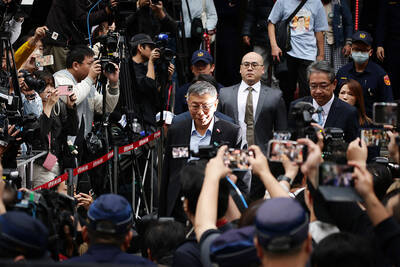
FIRST TRIAL: Ko’s lawyers sought reduced bail and other concessions, as did other defendants, but the bail judge denied their requests, citing the severity of the sentences Former Taipei mayor Ko Wen-je (柯文哲) was yesterday sentenced to 17 years in prison and had his civil rights suspended for six years over corruption, embezzlement and other charges. Taipei prosecutors in December last year asked the Taipei District Court for a combined 28-year, six-month sentence for the four cases against Ko, who founded the Taiwan People’s Party (TPP). The cases were linked to the Core Pacific City (京華城購物中心) redevelopment project and the mismanagement of political donations. Other defendants convicted on separate charges included Chinese Nationalist Party (KMT) Taipei City Councilor Angela Ying (應曉薇), who was handed a 15-year, six-month sentence; Core Pacific


 RSS
RSS