


The Coast Guard Administration is to hold two live-fire exercises to test an indigenous anti-armor rocket on the Pratas Islands (Dongsha Islands, 東沙群島) in the South China Sea next month.
The exercises are scheduled from 8am to 9am on Sept. 5 and 12, the agency said in a notice to operators of aircraft and ships in the area.
The exercises would affect an area of 8 nautical miles (14.8km) around the launch site and the rockets would reach heights of up to 3.7km, it said.
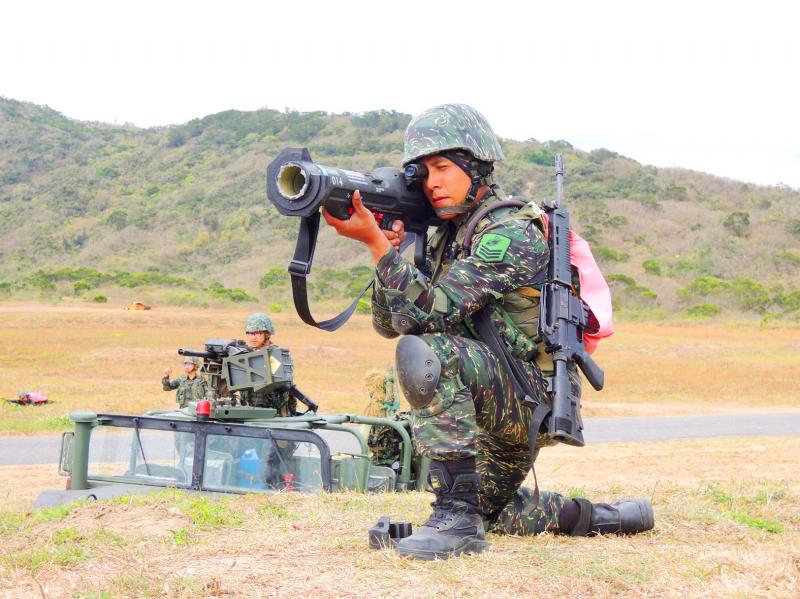
Photo: Lo Tien-pin, Taipei Times
The notice did not specify what kind of weapons would be tested, saying only that the exercises are part of annual drills.
However, the Central News Agency reported that locally developed Kestrel anti-armor rockets would be launched on both dates.
The rocket, developed by the military’s top research unit, the Chungshan Institute of Science and Technology, is an individual shoulder-launched weapon for anti-armor and concrete penetration.
With an effective range of 400m, the launcher is made from fiber-reinforced plastic and features an optical sight and a mounting for a night vision scope.
The military previously said that it would soon deploy 292 Kestrel rockets at two Taiwan-controlled sites in the South China Sea in reaction to increasing Chinese presence in the region.
The Pratas Islands, which are almost 450km southwest of Kaohsiung, are one of two territories controlled by Taiwan in the South China Sea. The other is Itu Aba Island (Taiping Island, 太平島), which is about 1,500km southwest of Kaohsiung. Marine Corps-trained coast guard personnel are stationed on both territories.
However, the Ministry of National Defense last year said that it would temporarily post military personnel on the Pratas Islands in reaction to reports that the Chinese military was planning to conduct drills in the area.
The ministry did not elaborate on the number of troops it would deploy, their planned arrival date or how long they would stay.
Taiwan, Brunei, China, Indonesia, Malaysia, the Philippines and Vietnam all claim part of the South China Sea as their territory.
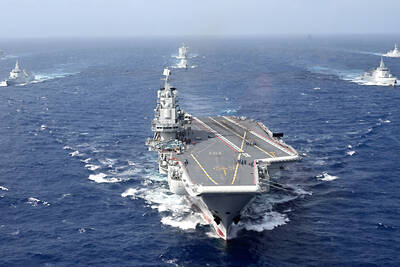
PROVOCATIVE: Chinese Deputy Ambassador to the UN Sun Lei accused Japan of sending military vessels to deliberately provoke tensions in the Taiwan Strait China denounced remarks by Japan and the EU about the South China Sea at a UN Security Council meeting on Monday, and accused Tokyo of provocative behavior in the Taiwan Strait and planning military expansion. Ayano Kunimitsu, a Japanese vice foreign minister, told the Council meeting on maritime security that Tokyo was seriously concerned about the situation in the East China and South China seas, and reiterated Japan’s opposition to any attempt to change the “status quo” by force, and obstruction of freedom of navigation and overflight. Stavros Lambrinidis, head of the EU delegation to the UN, also highlighted South China Sea

The final batch of 28 M1A2T Abrams tanks purchased from the US arrived at Taipei Port last night and were transported to the Armor Training Command in Hsinchu County’s Hukou Township (湖口), completing the military’s multi-year procurement of 108 of the tanks. Starting at 12:10am today, reporters observed more than a dozen civilian flatbed trailers departing from Taipei Port, each carrying an M1A2T tank covered with black waterproof tarps. Escorted by military vehicles, the convoy traveled via the West Coast Expressway to the Armor Training Command, with police implementing traffic control. The army operates about 1,000 tanks, including CM-11 Brave Tiger
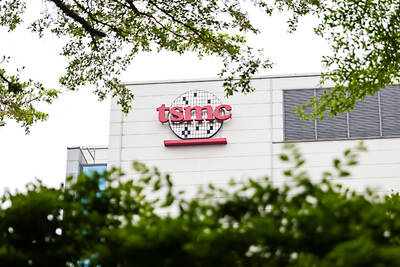
Taiwan Semiconductor Manufacturing Co (TSMC, 台積電), the world’s largest contract chipmaker, said it expects its 2-nanometer (2nm) chip capacity to grow at a compound annual rate of 70 percent from this year to 2028. The projection comes as five fabs begin volume production of 2-nanometer chips this year — two in Hsinchu and three in Kaohsiung — TSMC senior vice president and deputy cochief operating officer Cliff Hou (侯永清) said at the company’s annual technology symposium in Silicon Valley, California, last week. Output in the first year of 2-nanometer production, which began in the fourth quarter of last year, is expected to
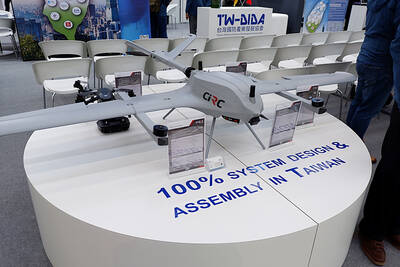
Taiwan’s drone exports surged past US$100 million in the first quarter, exceeding last year’s full-year total, with the Czech Republic emerging as the largest buyer, the Ministry of Economic Affairs said. Exports of complete drones reached US$115.85 million in the period, about 1.2 times the total recorded for all of last year, the ministry said in a report. Exports to the Czech Republic accounted for about US$100 million, far outpacing other markets. Poland, last year’s top destination, recorded about US$11.75 million in the first quarter. Taiwan’s drone exports have expanded rapidly in the past few years, with last year’s total


 RSS
RSS