


The Executive Yuan yesterday approved a NT$260 billion (US$9.38 billion) expansion to the COVID-19 relief program known as “Stimulus 4.0,” which would funnel subsidies to 7.3 million Taiwanese.
People who applied for relief subsidies last year and qualify under this year’s conditions would have money deposited in their registered bank accounts from today, Premier Su Tseng-chang (蘇貞昌) told a news conference after a Cabinet meeting.
First-time applicants for pandemic relief should apply remotely via the Ministry of Labor’s Web site (https://edesk.bli.gov.tw/aa/) or by mail from Monday next week, Su added.
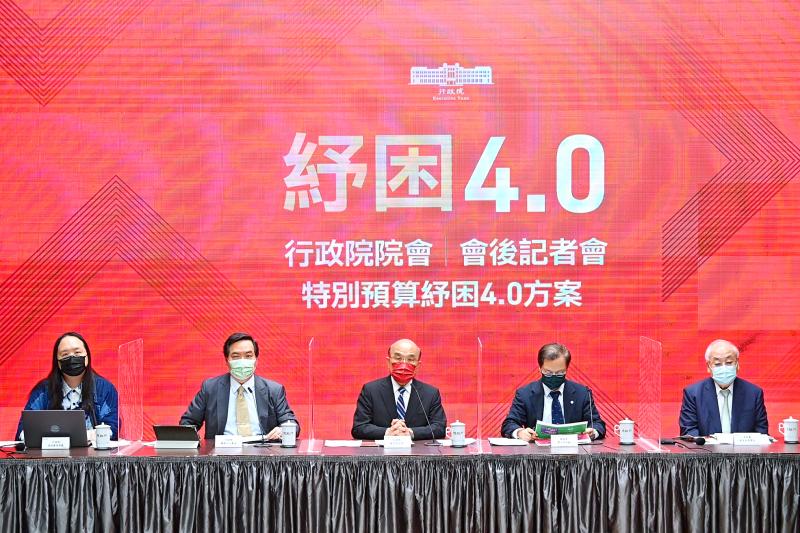
Photo: Lee Hsin-fang, Taipei Times
Although the premier holds weekly Cabinet meetings, he rarely attends the post-meeting news conferences, as the Executive Yuan spokesperson or a minister typically fills that role.
Enterprises can also apply for pandemic relief from Monday next week, while applications for the childrearing household subsidy and the general worker relief loan would be accepted from June 15, National Development Council Minister Kung Ming-hsin (龔明鑫) said.
The childrearing household subsidy has been expanded to include families with children younger than elementary-school age, or those who have children with physical or mental disabilities up to high-school age or in the first three years of vocational school, he said.

Photo: CNA
Families are to receive a subsidy of NT$10,000 per child, while low and middle-income families would receive NT$4,500 more distributed over three months, Kung said.
Agricultural and fishery workers would receive a subsidy of at least NT$10,000 per person, he said.
Category A members of fishers’ associations with a National Labor Insurance premium of less than NT$24,000 would instead receive a subsidy of NT$30,000, he said.
Temporary workers who are not agricultural or fishery workers, but who are working and have no labor insurance can apply for an emergency relief loan of NT$10,000 to NT$30,000.
Creative industry workers who are self-employed or who have no definite employer; taxi drivers and tour bus drivers; tour guides and tour group leaders are to receive a subsidy of NT$30,000 distributed over three months.
Visually impaired massage workers are to receive NT$45,000 over three months.
Babysitters and family care providers who have worked as recently as April 30 are to receive NT$30,000.
Coaches, commentators, referees and other workers in the sports industry, as well as community college lecturers are to receive up to NT$40,000.
The inclusion of those who are self-employed and childrearing households expanded the relief program 80 percent, Kung said.
Stimulus 4.0 is designed to help individuals and enterprises to pull through the near-term, from last month to August, he said, adding that a second expansion of relief coverage would be possible if needed.
Directorate-General of Budget, Accounting and Statistics Minister Chu Tzer-ming (朱澤民), whose ministry drafted the budget, said that the package is not at risk of overrunning the limit of the legislature’s emergency authorization.
A buffer of NT$160 billion remains of the NT$420 billion additionally authorized by the Legislative Yuan last week, Chu added.
The Ministry of Labor said that the relief would benefit 1.85 million self-employed workers and workers without a definite employer.
Qualified workers would, depending on their income, receive a subsidy of NT$10,000 or NT$30,000, the labor ministry said.
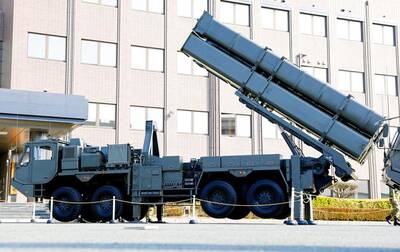
Japan has deployed long-range missiles in a southwestern region near China, the Japanese defense minister said yesterday, at a time when ties with Beijing are at their lowest in recent years. The missiles were installed in Kumamoto in the southern region of Kyushu, as Japan is attempting to shore up its military capacity as China steps up naval activity in the East China Sea. “Standoff defense capabilities enable us to counter the threat of enemy forces attempting to invade our country ... while ensuring the safety of our personnel,” Japanese Minister of Defense Shinjiro Koizumi said. “This is an extremely important initiative for
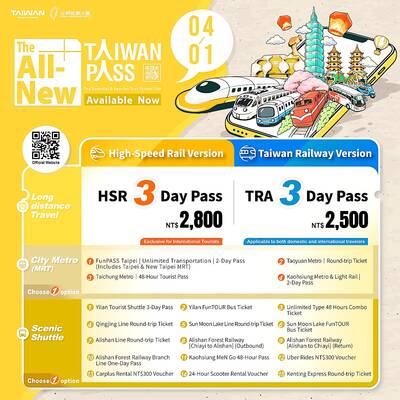
MORE POPULAR: Taiwan Pass sales increased by 59 percent during the first quarter compared with the same period last year, the Tourism Administration said The Tourism Administration yesterday said that it has streamlined the Taiwan Pass, with two versions available for purchase beginning today. The tourism agency has made the pass available to international tourists since 2024, allowing them to access the high-speed rail, Taiwan Railway Corp services, four MRT systems and four Taiwan Tourist Shuttles. Previously, five types of Taiwan Pass were available, but some tourists have said that the offerings were too complicated. The agency said only two types of Taiwan Pass would be available, starting from a three-day pass with the high-speed rail and a three-day pass with Taiwan Railway Corp. The former costs NT$2,800

POLLS CONCERNS: There are concerns within the KMT that a Cheng Li-wun-Xi Jinping meeting could trigger a voter backlash in elections in November Chinese Nationalist Party (KMT) Chairwoman Cheng Li-wun (鄭麗文) accepted an invitation from Chinese President Xi Jinping (習近平) to visit next month, her party and Chinese state media reported yesterday. Cheng, who took up her role in November last year, “gladly accepted” the invitation to lead a delegation to China, the KMT said in a statement, confirming a Xinhua news agency report. Cheng “looks forward to joint efforts by both parties to advance the peaceful development of cross-strait relations, promote cross-strait exchanges and cooperation, and work for peace in the Taiwan Strait and greater well-being for people on both sides,” the statement said. Chinese
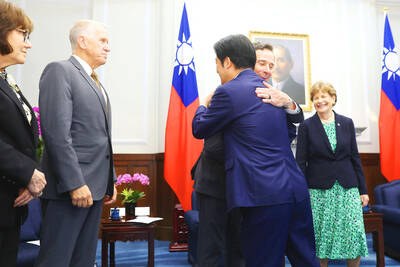
SIGNIFICANT TO THE WORLD: The delegation’s visit aims to send a clear message that bipartisan support for Taiwan is consistent, US Senator Jeanne Shaheen said The US Senate’s bipartisan support for Taiwan remains strong and Taiwan-US ties would continue for decades to come, a US Senate delegation said in Taipei yesterday, while calling on the legislature to swiftly pass a special defense budget bill. A US delegation led by Democratic US Senator Jeanne Shaheen and Republican US Senator John Curtis — both members of the US Senate Committee on Foreign Relations — arrived in Taiwan yesterday for a two-day visit. The other senators of the delegation included Senate Taiwan Caucus cochair Thom Tillis and Senate Committee on Armed Services senior member Jacky Rosen. Shaheen told a news


 RSS
RSS