


President Tsai Ing-wen (蔡英文) has ordered a reshuffle of top military and security officials in the Cabinet, Presidential Office spokesman Xavier Chang (張惇涵) said yesterday.
Chang told a news conference at the Presidential Office that National Security Bureau Director-General Chiu Kuo-cheng (邱國正) is to replace Minister of National Defense Yen De-fa (嚴德發), while Yen is to become a National Security Council (NSC) consultant.
Mainland Affairs Council Minister Chen Ming-tong (陳明通) is to become the bureau’s director-general, while NSC consultant Chiu Tai-san (邱太三) is to take over Chen’s post, he said.
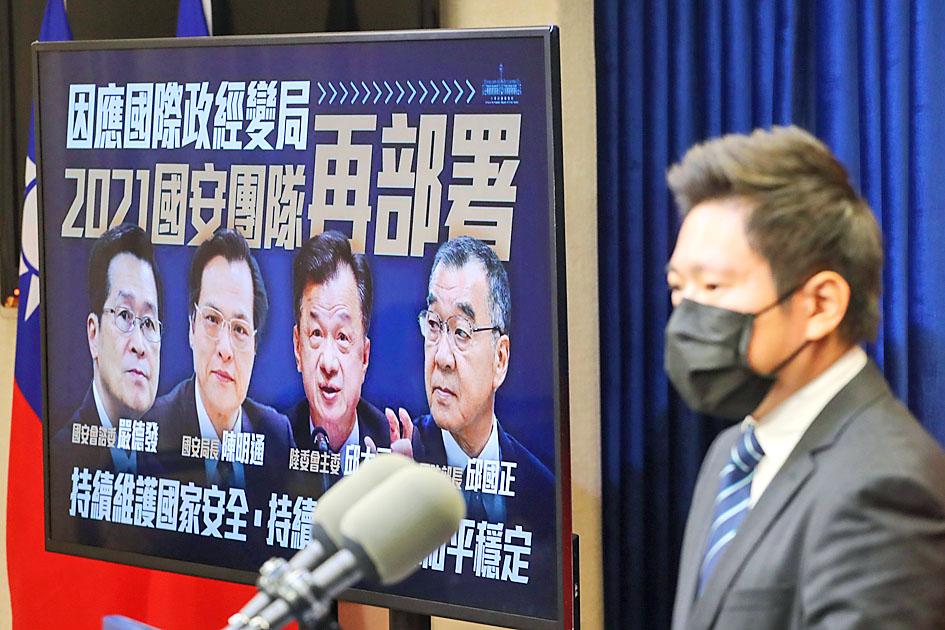
Photo: CNA
The transition for the four officials to their new posts is to begin next week, he added.
Tsai believes the adjustments to the national security team are necessary to meet the challenges of a post-COVID-19 pandemic world where the regional and international situation has changed, Chang said.
Tsai decided on the changes after comprehensively reviewing the situation and consulting with Premier Su Tseng-chang (蘇貞昌), Chang added.
Commenting on the reshuffle, the Chinese Nationalist Party (KMT) legislative caucus issued a statement saying the rehashing of the same cast of national security officials is a “seat and circle game” that brings no value to the relationship across the Taiwan Strait or with the US.
On the other hand, Democratic Progressive Party (DPP) lawmakers mostly supported the reshufle choices.
Having Chen, who has no military or intelligence background, assume the role at the bureau is a step forward, DPP Legislator Wang Ting-yu (王定宇) said, adding that Chen would be able to bring a new perspective to the NSB with his knowledge of cross-strait affairs.
Chiu Tai-san’s background in law and his appointment to the MAC position suggests that the government is considering national security-related laws as a point of reference when handling cross-strait affairs, as well as Hong Kong and Macau affairs, he added.
DPP Legislator Lo Chih-cheng (羅致政) said that Chiu Kuo-cheng’s experience in intelligence would be a boon to the Ministry of National Defense.
Taiwan People’s Party Legislator Ann Kao (高虹安) said that Chiu Tai-san, Chiu Kuo-cheng and Chen are all close aides of Tsai and the reshuffle of their positions seems to be nothing but a round of musical chairs.
The reshuffle shows that Tsai’s circle of confidantes remains closed and small, she added.
However, Kao said that from the perspective of a new US president, appointing experienced individuals to these positions might be the safest move.
Additional reporting by Huang Hsin-po, Chen Yu and CNA
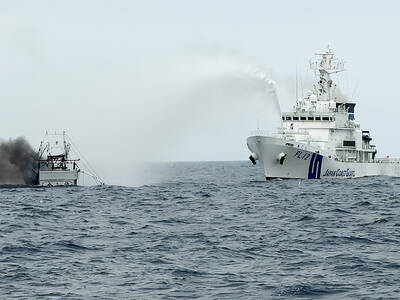
CREDIT-GRABBER: China said its coast guard rescued the crew of a fishing vessel that caught fire, who were actually rescued by a nearby Taiwanese boat and the CGA Maritime search and rescue operations do not have borders, and China should not use a shipwreck to infringe upon Taiwanese sovereignty, the Coast Guard Administration (CGA) said yesterday. The coast guard made the statement in response to the China Coast Guard (CCG) saying it saved a Taiwanese fishing boat. The Chuan Yu No. 6 (全漁6號), a fishing vessel registered in Keelung, on Thursday caught fire and sank in waters northeast of Diaoyutai Islands (釣魚台). The vessel left Keelung’s Badouzih Fishing Harbor (八斗子漁港) at 3:35pm on Sunday last week, with seven people on board — a 62-year-old Taiwanese captain surnamed Chang (張) and six
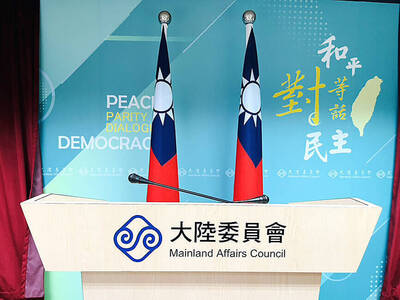
RISKY BUSINESS: The ‘incentives’ include initiatives that get suspended for no reason, creating uncertainty and resulting in considerable losses for Taiwanese, the MAC said China’s “incentives” failed to sway sentiment in Taiwan, as willingness to work in China hit a record low of 1.6 percent, a Ministry of Labor survey showed. The Directorate-General of Budget, Accounting and Statistics (DGBAS) also reported that the number of Taiwanese workers in China has nearly halved from a peak of 430,000 in 2012 to an estimated 231,000 in 2024. That marked a new low in the proportion of Taiwanese going abroad to work. The ministry’s annual survey on “Labor Life and Employment Status” includes questions respondents’ willingness to seek employment overseas. Willingness to work in China has steadily declined from

The Legislative Yuan’s Finance Committee yesterday approved proposed amendments to the Amusement Tax Act (娛樂稅法) that would abolish taxes on films, cultural activities and competitive sporting events, retaining the fee only for dance halls and golf courses. The proposed changes would set the maximum tax rate for dance halls and golf courses at 50 and 20 percent respectively, with local governments authorized to suspend the levies. Article 2 of the act says that “amusement tax shall be levied on tickets sold or fees charged by amusement places, facilities or activities” in six categories: “Cinema; professional singing, story-telling, dancing, circus, magic show, acrobatics
INFLATION UP? The IMF said CPI would increase to 1.5 percent this year, while the DGBAS projected it would rise to 1.68 percent, with GDP per capita of US$44,181 The IMF projected Taiwan’s real GDP would grow 5.2 percent this year, up from its 2.1 percent outlook in January, despite fears of global economic disruptions sparked by the US-Iran conflict. Taiwan’s consumer price index (CPI) is projected to increase to 1.5 percent, while unemployment would be 3.4 percent, roughly in line with estimates for Asia as a whole, the international body wrote in its Global Economic Outlook Report published in the US on Monday. The figures are comparatively better than the IMF outlook for the rest of the world, which pegged real GDP growth at 3.1 percent, down from 3.3 percent


 RSS
RSS