


China’s top diplomat yesterday warned the US not to cross the country’s “red line,” in a pointed speech that pushed back against early moves by US President Joe Biden to press Beijing on human rights.
Yang Jiechi (楊潔篪), a politburo member and head of the Chinese Communist Party’s foreign affairs office, said in a video address to the New York-based National Committee on US-China Relations that the two sides “stand at a key moment” to rebuild ties and cooperate after Biden’s inauguration.
However, he placed the onus on Washington to repair the damage caused by the “misguided policies” of former US president Donald Trump.
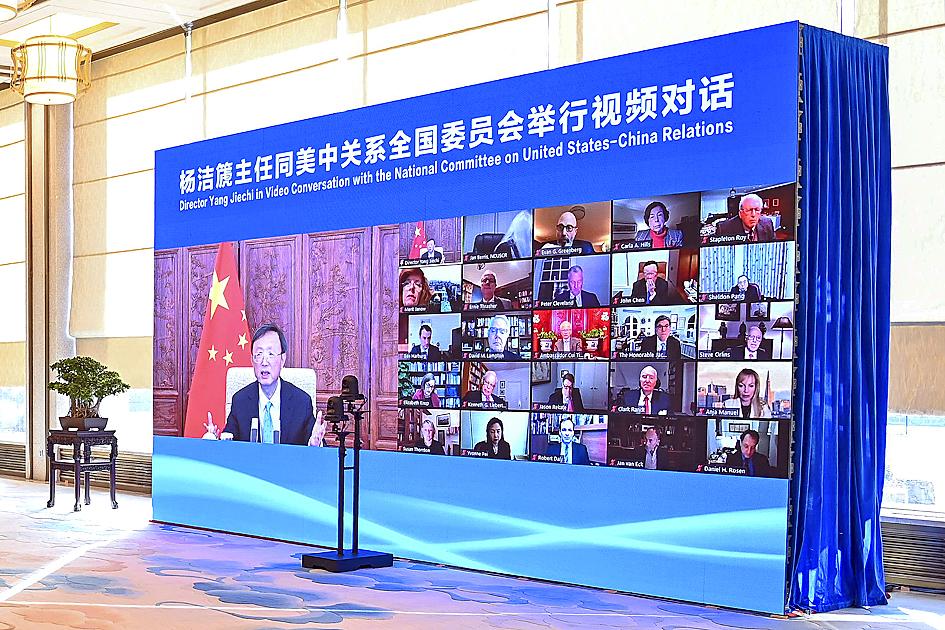
Photo: AP
“We in China hope that the United States will rise above the outdated mentality of zero-sum, major-power rivalry and work with China to keep the relationship on the right track,” Yang said, a former minister of foreign affairs.
Yang urged the US to stop “harassing Chinese students, restricting Chinese media outlets, shutting down Confucius Institutes and suppressing Chinese companies,” and said that Hong Kong, Tibet and Xinjiang affairs were a “red line that must not be crossed.”
“China and the United States are two large countries with different histories, cultures and systems, and thus have differences on some issues. It is crucial to properly control them and not allow them to interfere with the overall development of bilateral relations,” he said.
The US should fulfill its commitments to Beijing, “abide by the one China principle, and effectively respect China’s position and concerns on the Taiwan issue,” he added.
The speech represented Beijing’s most high-profile appeal to an American audience since Biden took power on Jan. 20. Chinese President Xi Jinping (習近平) was among the last world leaders to congratulate Biden on his election victory over Trump in November, and the two men have yet to speak after the inauguration.
The Biden administration has signaled a desire to maintain the pressure on China from trade and human rights. US Secretary of State Antony Blinken said during an appearance on MSNBC on Monday that the US should give “haven” to people fleeing political repression in Hong Kong.
He had previously said that China’s policies toward its Muslim minority in Xinjiang amounted to genocide.
Additional reporting by AP

PROVOCATIVE: Chinese Deputy Ambassador to the UN Sun Lei accused Japan of sending military vessels to deliberately provoke tensions in the Taiwan Strait China denounced remarks by Japan and the EU about the South China Sea at a UN Security Council meeting on Monday, and accused Tokyo of provocative behavior in the Taiwan Strait and planning military expansion. Ayano Kunimitsu, a Japanese vice foreign minister, told the Council meeting on maritime security that Tokyo was seriously concerned about the situation in the East China and South China seas, and reiterated Japan’s opposition to any attempt to change the “status quo” by force, and obstruction of freedom of navigation and overflight. Stavros Lambrinidis, head of the EU delegation to the UN, also highlighted South China Sea

SILENCING CRITICS: In addition to blocking Taiwan, China aimed to prevent rights activists from speaking out against authoritarian states, a Cabinet department said The Ministry of Foreign Affairs (MOFA) yesterday condemned transnational repression by Beijing after RightsCon, a major digital human rights conference scheduled to be held in Zambia this week, was abruptly canceled due to Chinese pressure over Taiwanese participation. This year’s RightsCon, the world’s largest conference discussing issues “at the intersection of human rights and technology,” was scheduled to take place from tomorrow to Friday in Lusaka, and expected to draw 2,600 in-person attendees from 150 countries, along with 1,100 online participants. However, organizers were forced to cancel the event due to behind-the-scenes pressure from China, the ministry said, expressing its “strongest condemnation”
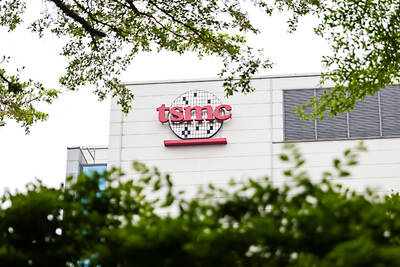
Taiwan Semiconductor Manufacturing Co (TSMC, 台積電), the world’s largest contract chipmaker, said it expects its 2-nanometer (2nm) chip capacity to grow at a compound annual rate of 70 percent from this year to 2028. The projection comes as five fabs begin volume production of 2-nanometer chips this year — two in Hsinchu and three in Kaohsiung — TSMC senior vice president and deputy cochief operating officer Cliff Hou (侯永清) said at the company’s annual technology symposium in Silicon Valley, California, last week. Output in the first year of 2-nanometer production, which began in the fourth quarter of last year, is expected to
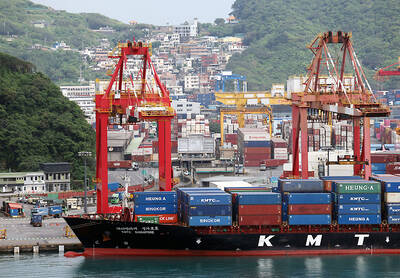
Taiwan’s economy grew far faster than expected in the first quarter, as booming demand for artificial intelligence (AI) applications drove a surge in exports, spilling over into investment and consumption, the Directorate-General of Budget, Accounting and Statistics (DGBAS) said yesterday. GDP growth was 13.69 percent year-on-year during the January-to-March period, beating the DGBAS’ February forecast by 2.23 percentage points and marking the most robust growth in nearly four decades, DGBAS senior official Chiang Hsin-yi (江心怡) told a news conference in Taipei. The result was powered by exports, which remain the backbone of Taiwan’s economy, Chiang said. Outbound shipments jumped 51.12 percent year-on-year to


 RSS
RSS