


US Secretary of State Mike Pompeo on Monday said the mere fact China can get so worked up over a US official’s visit to Taiwan only goes to reflect its “weakness.”
“I think that tells you a lot about the weakness of the Chinese Communist Party and the fact that it could feel threatened from such a visit,” Pompeo said in an interview on the conservative Newsmax TV when asked what message Washington was sending to Beijing with the visit of US Health and Human Services Secretary Alex Azar to Taiwan this week.
Even though the visit has had a clear political component, Pompeo said the sole purpose of Azar’s visit was to learn how Taiwan has dealt with the COVID-19 pandemic and better understand the “Wuhan virus.”
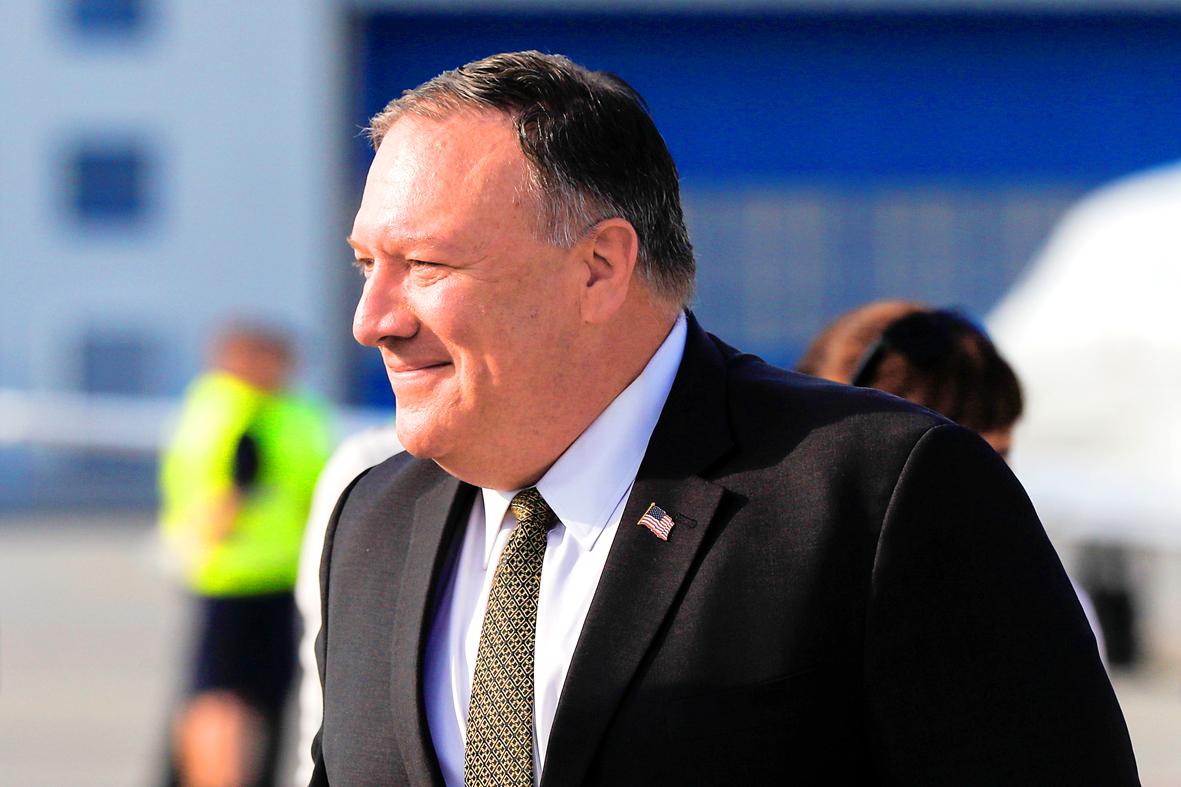
Photo: Reuters
“I’m always surprised that when the United States sends its health minister to another country why anyone would find that so threatening,” he said.
“He went there for the noble humanitarian purpose of reducing risk to citizens all across the world, including Chinese citizens,” Pompeo said.
“It seems pretty weak when the mere presence of a health minister in a particular place working to defeat this global pandemic you find threatening or you find angering or you find somehow challenging to your very nation’s national security,” Pompeo added.
Asked what would be the red line that would lead the US to go in and defend Taiwan, Pompeo called it “a very sensitive issue.”
“We thoroughly intend to uphold our obligations and commitments with respect to the historical understandings between the United States and China on Taiwan,” he said, stressing that the visit by Azar’s delegation was “wholly consistent with those commitments.”
“We’ve told both the Chinese and the Taiwanese that we are going to continue to abide by that set of understandings,” he said.
“It’s enshrined in US law as well, so it’s an obligation that we do so,” he said.
“I am confident that we’ll continue to keep up those promises,” he added.
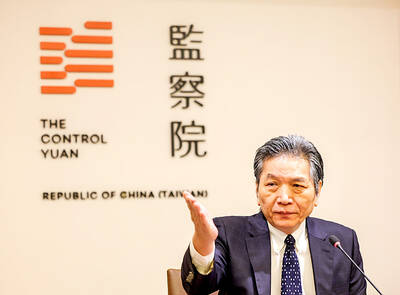
‘ABUSE OF POWER’: Lee Chun-yi allegedly used a Control Yuan vehicle to transport his dog to a pet grooming salon and take his wife to restaurants, media reports said Control Yuan Secretary-General Lee Chun-yi (李俊俋) resigned on Sunday night, admitting that he had misused a government vehicle, as reported by the media. Control Yuan Vice President Lee Hung-chun (李鴻鈞) yesterday apologized to the public over the issue. The watchdog body would follow up on similar accusations made by the Chinese Nationalist Party (KMT) and would investigate the alleged misuse of government vehicles by three other Control Yuan members: Su Li-chiung (蘇麗瓊), Lin Yu-jung (林郁容) and Wang Jung-chang (王榮璋), Lee Hung-chun said. Lee Chun-yi in a statement apologized for using a Control Yuan vehicle to transport his dog to a
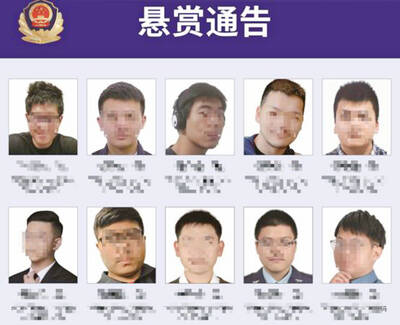
Taiwan yesterday denied Chinese allegations that its military was behind a cyberattack on a technology company in Guangzhou, after city authorities issued warrants for 20 suspects. The Guangzhou Municipal Public Security Bureau earlier yesterday issued warrants for 20 people it identified as members of the Information, Communications and Electronic Force Command (ICEFCOM). The bureau alleged they were behind a May 20 cyberattack targeting the backend system of a self-service facility at the company. “ICEFCOM, under Taiwan’s ruling Democratic Progressive Party, directed the illegal attack,” the warrant says. The bureau placed a bounty of 10,000 yuan (US$1,392) on each of the 20 people named in
The High Court yesterday found a New Taipei City woman guilty of charges related to helping Beijing secure surrender agreements from military service members. Lee Huei-hsin (李慧馨) was sentenced to six years and eight months in prison for breaching the National Security Act (國家安全法), making illegal compacts with government employees and bribery, the court said. The verdict is final. Lee, the manager of a temple in the city’s Lujhou District (蘆洲), was accused of arranging for eight service members to make surrender pledges to the Chinese People’s Liberation Army in exchange for money, the court said. The pledges, which required them to provide identification
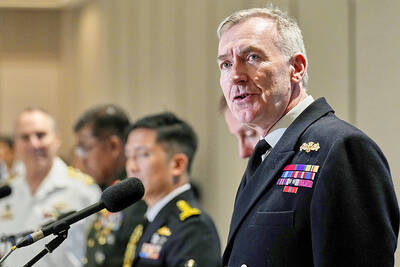
INDO-PACIFIC REGION: Royal Navy ships exercise the right of freedom of navigation, including in the Taiwan Strait and South China Sea, the UK’s Tony Radakin told a summit Freedom of navigation in the Indo-Pacific region is as important as it is in the English Channel, British Chief of the Defence Staff Admiral Tony Radakin said at a summit in Singapore on Saturday. The remark came as the British Royal Navy’s flagship aircraft carrier, the HMS Prince of Wales, is on an eight-month deployment to the Indo-Pacific region as head of an international carrier strike group. “Upholding the UN Convention on the Law of the Sea, and with it, the principles of the freedom of navigation, in this part of the world matters to us just as it matters in the


 RSS
RSS