


Beijing yesterday said that it would impose visa restrictions on US individuals with “egregious conduct” on Hong Kong-related issues, mirroring US sanctions against unnamed Chinese officials deemed responsible for curbing freedoms in the territory.
It was not clear if the measure targeted only US government officials or those in the private sector as well.
The announcement comes as the Chinese National People’s Congress (NPC) Standing Committee deliberates a draft national security law for Hong Kong that pro-democracy advocates in the territory fear could be used to eliminate dissent and tighten Beijing’s control.
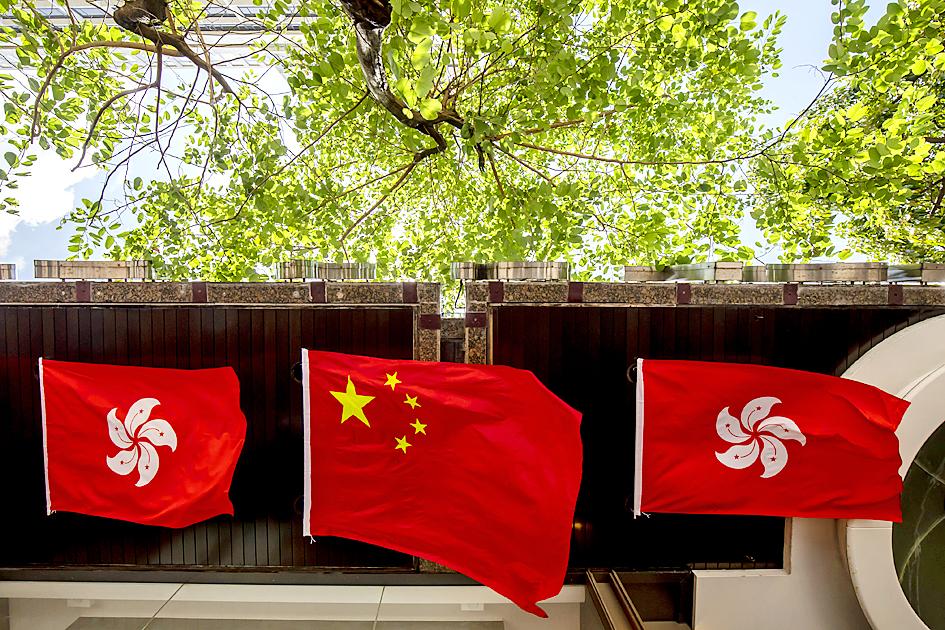
Photo: Bloomberg
It is expected to adopt the legislation before its session ends later today.
The legislation was approved by the NPC during its May 22 to May 28 meeting, little more than six weeks after it was unveiled, sending shockwaves through Hong Kong and beyond.
Chinese Ministry of Foreign Affairs spokesman Zhao Lijian (趙立堅), who announced the new sanctions during a press briefing in response to a question about Washington’s new visa restrictions, did not specify which US individuals have been targeted.
“The US is attempting to obstruct China’s legislation for safeguarding national security in the HK SAR [Hong Kong Special Administrative Region] by imposing the so-called sanctions, but it will never succeed,” he told reporters. “In response ... China has decided to impose visa restrictions on US individuals with egregious conduct on HK related issues.”
US Secretary of State Mike Pompeo last week said that the new visa restrictions by Washington apply to “current and former” officials of the Chinese Communist Party “believed to be responsible for, or complicit in, undermining Hong Kong’s high degree of autonomy.”
The US Senate last week also approved a bill that would impose mandatory sanctions on people or companies that back efforts to restrict Hong Kong’s autonomy. It includes secondary sanctions on banks that do business with anyone backing any crackdown on the territory’s autonomy.
Zhao said that the US “should not review, advance or implement relevant negative bills concerning Hong Kong, even less impose so-called sanctions on China, otherwise China will firmly take strong countermeasures.”
He also that China had lodged a complaint with the US over the Senate bill.
Additional reporting by AP and AFP
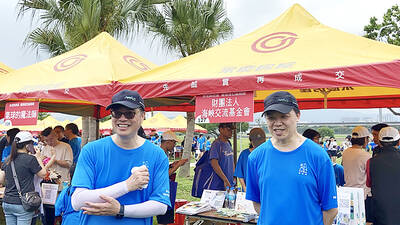
SECURITY: As China is ‘reshaping’ Hong Kong’s population, Taiwan must raise the eligibility threshold for applications from Hong Kongers, Chiu Chui-cheng said When Hong Kong and Macau citizens apply for residency in Taiwan, it would be under a new category that includes a “national security observation period,” Mainland Affairs Council (MAC) Minister Chiu Chui-cheng (邱垂正) said yesterday. President William Lai (賴清德) on March 13 announced 17 strategies to counter China’s aggression toward Taiwan, including incorporating national security considerations into the review process for residency applications from Hong Kong and Macau citizens. The situation in Hong Kong is constantly changing, Chiu said to media yesterday on the sidelines of the Taipei Technology Run hosted by the Taipei Neihu Technology Park Development Association. With

CARROT AND STICK: While unrelenting in its military threats, China attracted nearly 40,000 Taiwanese to over 400 business events last year Nearly 40,000 Taiwanese last year joined industry events in China, such as conferences and trade fairs, supported by the Chinese government, a study showed yesterday, as Beijing ramps up a charm offensive toward Taipei alongside military pressure. China has long taken a carrot-and-stick approach to Taiwan, threatening it with the prospect of military action while reaching out to those it believes are amenable to Beijing’s point of view. Taiwanese security officials are wary of what they see as Beijing’s influence campaigns to sway public opinion after Taipei and Beijing gradually resumed travel links halted by the COVID-19 pandemic, but the scale of
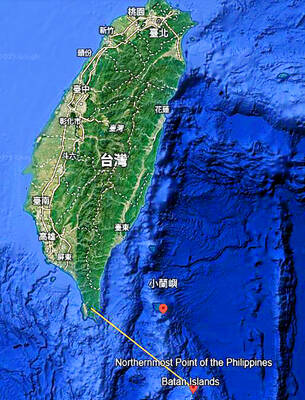
A US Marine Corps regiment equipped with Naval Strike Missiles (NSM) is set to participate in the upcoming Balikatan 25 exercise in the Luzon Strait, marking the system’s first-ever deployment in the Philippines. US and Philippine officials have separately confirmed that the Navy Marine Expeditionary Ship Interdiction System (NMESIS) — the mobile launch platform for the Naval Strike Missile — would take part in the joint exercise. The missiles are being deployed to “a strategic first island chain chokepoint” in the waters between Taiwan proper and the Philippines, US-based Naval News reported. “The Luzon Strait and Bashi Channel represent a critical access
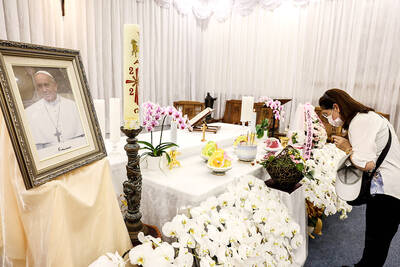
Pope Francis is be laid to rest on Saturday after lying in state for three days in St Peter’s Basilica, where the faithful are expected to flock to pay their respects to history’s first Latin American pontiff. The cardinals met yesterday in the Vatican’s synod hall to chart the next steps before a conclave begins to choose Francis’ successor, as condolences poured in from around the world. According to current norms, the conclave must begin between May 5 and 10. The cardinals set the funeral for Saturday at 10am in St Peter’s Square, to be celebrated by the dean of the College


 RSS
RSS