


The government plans to rank countries based on their COVID-19 risks to determine how to treat tourists and other travelers from those nations once Taiwan reopens its borders, but it is still working out the categories, a top health official told lawmakers yesterday.
“We would divide countries around the world into several categories. One category would comprise those countries with very few confirmed COVID-19 cases, such as New Zealand and Palau. Travelers from the countries in this category would only need to practice self-health management,” Centers for Disease Control Deputy Director-General Chuang Jen-hsiang (莊人祥) told a Legislative Yuan seminar hosted by Democratic Progressive Party lawmakers Mark Ho (何志偉) and Su Chiao-hui (蘇巧慧).
“Tourists from low-risk countries, such as Vietnam and Brunei, might be asked to undergo quarantine for five to six days after entering the country,” he said.
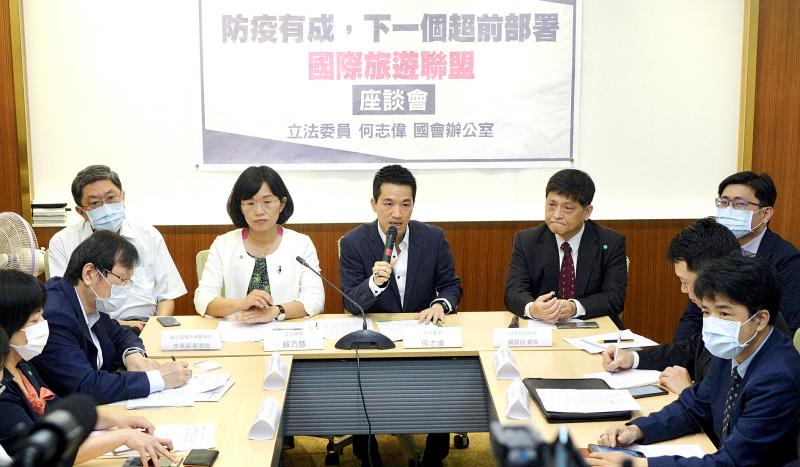
Photo: George Tsorng, Taipei Times
Taiwan has not had any confirmed domestic COVID-19 cases for 50 consecutive days, but there are now more than 6 million confirmed cases in the rest of the world, with the number rising in South America and Southeast Asia, Chuang said.
This means the government would face tremendous pressure when it decides to reopen Taiwan’s borders, he said.
“The most important thing is whether the countries whose tourists are allowed to enter Taiwan without having to follow quarantine requirements would allow Taiwanese tourists to do the same there. We need to work with the Ministry of Foreign Affairs to sort out the issues,” he said.
It is also crucial that people maintain the habit of wearing masks so that the nation can quickly and effectively contain a potential outbreak after the borders are reopened, he added.
Ho and Su have proposed that the government form an international travel alliance with other nations that have relatively few confirmed cases of COVID-19.
They cited Japan as an example, which is mulling lifting its disease-prevention restrictions imposed on business travelers as well as tourists from member states of the Comprehensive and Progressive Agreement for Trans-Pacific Partnership (CPTPP).
Taiwan could follow suit by first allowing tourists from countries where the pandemic has been effectively contained and disease-prevention information is transparent, the lawmakers said.
Department of East Asia and Pacific Affairs Deputy Director Su Ying-chun (蘇瑩君) said the foreign ministry has told Japan that Taiwan would like to be included in its initiative, and Tokyo is assessing the possibility.
Lee Ping-ing (李秉穎), a National Taiwan University Hospital pediatrician and consultant for the Central Epidemic Command Center, urged caution on border opening.
“The most challenging part would be how to define countries that are safe to travel to. How many domestic infection cases should the country have? Does it have the capacity to conduct screening tests? Can we trust its disease-prevention reports? How high would the risk of contracting COVID-19 be when traveling there?” Lee said.
It might be difficult to form a travel alliance with CPTPP members since they might have different disease-prevention standards, and accurate and updated information is only available if everyone agrees to share their data, Lee said.

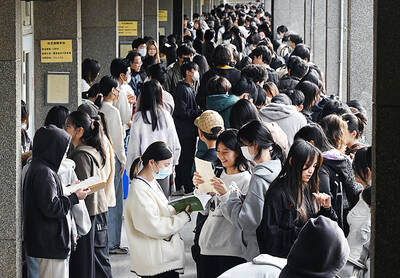
A global survey showed that 60 percent of Taiwanese had attained higher education, second only to Canada, the Ministry of the Interior said. Taiwan easily surpassed the global average of 43 percent and ranked ahead of major economies, including Japan, South Korea and the US, data from the Organisation for Economic Co-operation and Development (OECD) for 2024 showed. Taiwan has a high literacy rate, data released by the ministry showed. As of the end of last year, Taiwan had 20.617 million people aged 15 or older, accounting for 88.5 percent of the total population, with a literacy rate of 99.4 percent, the data

CCP ‘PAWN’? Beijing could use the KMT chairwoman’s visit to signal to the world that many people in Taiwan support the ‘one China’ principle, an academic said Chinese Nationalist Party (KMT) Chairwoman Cheng Li-wun (鄭麗文) yesterday arrived in China for a “peace” mission and potential meeting with Chinese President Xi Jinping (習近平), while a Taiwanese minister detailed the number of Chinese warships currently deployed around the nation. Cheng is visiting at a time of increased Chinese military pressure on Taiwan, as the opposition-dominated Legislative Yuan stalls a government plan for US$40 billion in extra defense spending. Speaking to reporters before going to the airport, Cheng said she was going on a “historic journey for peace,” but added that some people felt uneasy about her trip. “If you truly love Taiwan,
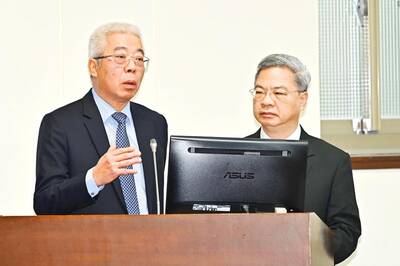
Taiwan has arranged for about 8 million barrels of crude oil, or about one-third of its monthly needs, to be shipped from the Red Sea this month to bypass the Strait of Hormuz and ease domestic supply pressures, CPC Corp, Taiwan (CPC, 台灣中油) said yesterday. The state-run oil company has worked with Middle Eastern suppliers to secure routes other than the Strait of Hormuz, through which about 20 percent of the world’s oil and liquefied natural gas typically passes, CPC chairman Fang Jeng-zen (方振仁) said at a meeting of the legislature’s Economics Committee in Taipei. Suppliers in Saudi Arabia have indicated they

NEW LOW: The council in 2024 based predictions on a pessimistic estimate for the nation’s total fertility rate of 0.84, but last year that rate was 0.69, 17 percent lower An expected National Development Council (NDC) report expects the nation’s population to drop below 12 million by 2065, with the old-age dependency ratio to top 100 percent sooner than 2070, sources said yesterday. The council is slated to release its latest population projections in August, using an ultra-low fertility model, the sources said. The previous report projected that Taiwan’s population would fall to 14.37 million by 2070, but based on a new estimate of the total fertility rate (TFR) — the average number of children born to a woman over her lifetime — the population is expected to reach 12 million by


 RSS
RSS