


The Central Epidemic Command Center yesterday reported no new COVID-19 cases, marking the sixth consecutive day without a confirmed case and the 31st without a domestic infection.
Minister of Health and Welfare Chen Shih-chung (陳時中), who heads the center, said that it was also the third time that Taiwan has achieved “zero cases for six consecutive days,” adding that he has confidence in the public’s diligent disease prevention efforts.
Among the nation’s 440 confirmed cases, 375 patients have recovered and been removed from isolation, he said.
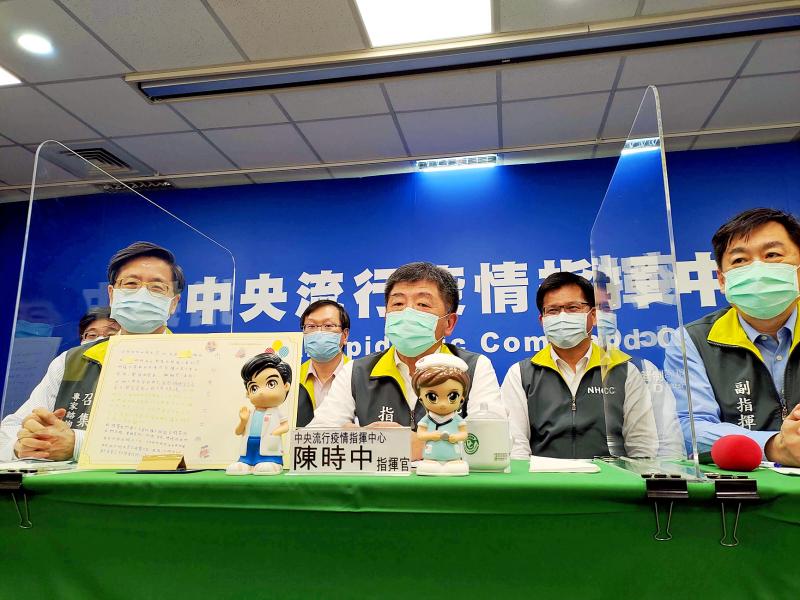
Photo: Wu Liang-yi, Taipei Times
While many people have asked whether hostess clubs and dance halls are to be allowed to resume operations, the center’s guidelines for the adoption of a “new disease prevention lifestyle” are not aimed at specific industries, Chen said.
Businesses that have been affected by the COVID-19 pandemic would be allowed to resume operations if they are capable of strictly adhering to the guidelines, he said.
The guidelines include maintaining a social distance between people of at least 1.5m indoors and 1m outdoors; wearing masks or using divider boards if the proper distance cannot be observed; and implementing body temperature measurement and name registration at events.
Businesses and event organizers should also control the flow of people, disinfect the venue and monitor whether participants follow the social distancing rules, Chen said, adding that customers and participants should practice good personal hygiene, including washing their hands frequently.
If hostess clubs and dance halls can meet the requirements, and local governments take responsibility for conducting inspections, the center would respect local governments’ decision to allow the businesses to reopen, he said.
Asked about relaxing disease prevention regulations, Chen said that students taking examinations as part of the Comprehensive Assessment Program for Junior High School Students this weekend would still be required to wear masks.
However, the center would carefully consider whether eating and drinking should again be permitted on Taiwan Railways Administration and Taiwan High Speed Rail Corp trains, he said.
Train passengers have since last month been required to wear masks and refrain from eating.
Minister of Transportation and Communications Lin Chia-lung (林佳龍) said that wearing a mask on public transportation would remain mandatory until the center relaxes the regulations, but added that the Ministry of Transportation and Communications is considering first resuming the practice of having non-reserved seating on trains.
Taking advantage of the opportunity to train tourism industry workers, the ministry also plans to promote “disease prevention tours” by collaborating with travel agencies and the various national scenic area administrations to offer quality tour packages that meet the center’s disease prevention guidelines, with the first wave of site survey tours possibly beginning later this month, he said.
In addition, as some healthcare workers have expressed concern about taking infection risks home from hospitals, but also consider hotels too expensive, the ministry is to provide a subsidy of up to NT$1,500 per night per room for medical professionals who need to stay at designated quarantine hotels, Lin said.
Healthcare workers who are qualified to receive Ministry of Health and Welfare subsidies and rewards for medical staff who treat confirmed and suspected COVID-19 patients would be eligible for the hotel subsidy, he said.
Documents from a hospital proving that they are engaged in epidemic prevention work and their hospital staff identification card would need to be presented when checking in, he added.
The subsidy would be available for unlimited use until the end of next month, Lin said.
Chen also shared a letter that he received from two young sisters, who wrote to express their gratitude to him and the center, as well as two piggy banks shaped like a doctor and a nurse that held their allowances, which they said they wanted to donate to the center for the fight against COVID-19.
The sisters wrote that they have to stay home and cannot go out and play because of the pandemic, Chen said, adding that he was moved by how even children are willing to cooperate with the center’s policies and show their support, even though it must be unbearable to be unable to play outside.
Addressing the children, Chen said that they can play outside again if they promise to practice good personal hygiene to stay healthy.
He said that he would return their piggy banks and allowances to encourage them to continue saving money.

South Korea has adjusted its electronic arrival card system to no longer list Taiwan as a part of China, a move that the Ministry of Foreign Affairs said would help facilitate exchanges between the two sides. South Korea previously listed “Taiwan” as “Taiwan (China)” in the drop-down menus of its online arrival card system, where people had to fill out where they came from and their next destination. The ministry had requested South Korea make a revision and said it would change South Korea’s name on Taiwan’s online immigration system from “Republic of Korea” to “Korea (South),” should the issue not be

Tainan, Taipei and New Taipei City recorded the highest fines nationwide for illegal accommodations in the first quarter of this year, with fines issued in the three cities each exceeding NT$7 million (US$220,639), Tourism Administration data showed. Among them, Taipei had the highest number of illegal short-term rental units, with 410. There were 3,280 legally registered hotels nationwide in the first quarter, down by 14 properties, or 0.43 percent, from a year earlier, likely indicating operators exiting the market, the agency said. However, the number of unregistered properties rose to 1,174, including 314 illegal hotels and 860 illegal short-term rental
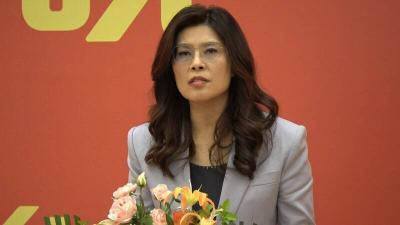
Both sides of the Taiwan Strait share a political foundation based on the “1992 consensus” and opposition to Taiwanese independence, Chinese Nationalist Party (KMT) Chairwoman Cheng Li-wun (鄭麗文) today said during her meeting with Chinese President Xi Jinping (習近平). Both sides of the Strait should plan and build institutionalized and sustainable mechanisms for dialogue and cooperation based on that foundation to make peaceful development across the Strait irreversible, she said. Peace is a shared moral value across the Strait, and both sides should move beyond political confrontation to seek institutionalized solutions to prevent war, she said. Mutually beneficial cross-strait relations are what the
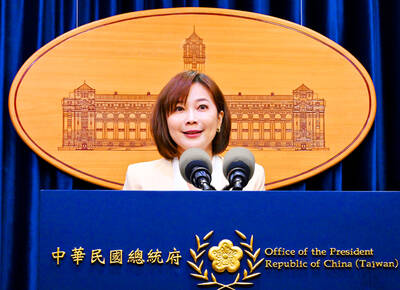
ECONOMIC COERCION: Such actions are often inconsistently applied, sometimes resumed, and sometimes just halted, the Presidential Office spokeswoman said The government backs healthy and orderly cross-strait exchanges, but such arrangements should not be made with political conditions attached and never be used as leverage for political maneuvering or partisan agendas, Presidential Office spokeswoman Karen Kuo (郭雅慧) said yesterday. Kuo made the remarks after China earlier in the day announced 10 new “incentive measures” for Taiwan, following a landmark meeting between Chinese President Xi Jinping (習近平) and Chinese Nationalist Party (KMT) Chairwoman Cheng Li-wun (鄭麗文) in Beijing on Friday. The measures, unveiled by China’s Xinhua news agency, include plans to resume individual travel by residents of Shanghai and China’s Fujian


 RSS
RSS