


US President Donald Trump has announced a shock 30-day ban on travel to the US from mainland Europe due to COVID-19 that has sparked unprecedented lockdowns, widespread panic and another financial market meltdown yesterday.
Trump’s unexpected move in a primetime TV address from the Oval Office pummeled stock markets, as traders fretted about the economic effects of the pandemic, which is on a seemingly relentless march across the planet.
“This is the most aggressive and comprehensive effort to confront a foreign virus in modern history,” Trump said.

Photo: AFP
Trump’s ban affects travelers from Europe — but not Britain — as the continent grapples with a burgeoning crisis.
Hardest-hit Italy on Wednesday clocked more than 2,300 new cases in 24 hours and infections in Spain jumped by one-fourth to more than 2,100.
German Chancellor Angela Merkel quoted experts as saying that “60 to 70 percent of the population will be infected if the situation” continues, with no vaccine in sight.
Italy is in the grip of a lockdown never before seen in peacetime, shutting all stores except pharmacies and food shops in a move that has emptied world-famous tourist sites in Rome, Venice and Florence.
People in Italy have been told to keep at least 1m from each other and shun handshakes. Many are now talking to each other a few steps apart.
Trump announced steps aimed at inoculating the world’s top economy from the pandemic, including deferring tax payments for some individuals and businesses — a move he said amounted to US$200 billion in liquidity.
However, markets still took fright. Australian stocks suffered their worst one-day drop since the 2008 financial crisis, dropping 7.4 percent, despite the earlier announcement of a multibillion-dollar stimulus package in the country.
“Travel restrictions equal slower global economic activity, so if you need any more coaxing to sell, sell, sell, sell after a massively negative signal from overnight trading in US markets, it just fell in your lap,” AxiCorp chief market strategist Stephen Innes said.
White House officials were also forced into a clarification after Trump announced the “tremendous amount of trade and cargo” from Europe would be banned.
Washington later said that the measures, in effect from “midnight Friday,” would apply only to humans, not goods or cargo.
The US Department of State later advised Americans to reconsider travel abroad, as Johns Hopkins University’s coronavirus tracker put the number of known US cases at about 1,300, with 36 dead.
On Wednesday, US National Security Adviser Robert O’Brien accused China of a slow response to the initial emergence of the coronavirus, saying that this had probably cost the world two months when it could have been preparing for the outbreak.
Asked about O’Brien’s comments, Chinese Ministry of Foreign Affairs spokesman Geng Shuang (耿爽) yesterday told a news conference in Beijing that “immoral and irresponsible” remarks would not help US epidemic efforts.
China’s efforts had bought the world time to prepare against the epidemic, he said.
“We wish that a few officials in the US would at this time concentrate their energy on responding to the virus and promoting cooperation, and not on shifting the blame to China,” Geng said.
Additional reporting by Reuters

US President Donald Trump yesterday announced sweeping "reciprocal tariffs" on US trading partners, including a 32 percent tax on goods from Taiwan that is set to take effect on Wednesday. At a Rose Garden event, Trump declared a 10 percent baseline tax on imports from all countries, with the White House saying it would take effect on Saturday. Countries with larger trade surpluses with the US would face higher duties beginning on Wednesday, including Taiwan (32 percent), China (34 percent), Japan (24 percent), South Korea (25 percent), Vietnam (46 percent) and Thailand (36 percent). Canada and Mexico, the two largest US trading

AIR SUPPORT: The Ministry of National Defense thanked the US for the delivery, adding that it was an indicator of the White House’s commitment to the Taiwan Relations Act Deputy Minister of National Defense Po Horng-huei (柏鴻輝) and Representative to the US Alexander Yui on Friday attended a delivery ceremony for the first of Taiwan’s long-awaited 66 F-16C/D Block 70 jets at a Lockheed Martin Corp factory in Greenville, South Carolina. “We are so proud to be the global home of the F-16 and to support Taiwan’s air defense capabilities,” US Representative William Timmons wrote on X, alongside a photograph of Taiwanese and US officials at the event. The F-16C/D Block 70 jets Taiwan ordered have the same capabilities as aircraft that had been upgraded to F-16Vs. The batch of Lockheed Martin
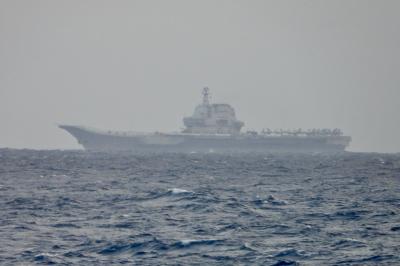
China's military today said it began joint army, navy and rocket force exercises around Taiwan to "serve as a stern warning and powerful deterrent against Taiwanese independence," calling President William Lai (賴清德) a "parasite." The exercises come after Lai called Beijing a "foreign hostile force" last month. More than 10 Chinese military ships approached close to Taiwan's 24 nautical mile (44.4km) contiguous zone this morning and Taiwan sent its own warships to respond, two senior Taiwanese officials said. Taiwan has not yet detected any live fire by the Chinese military so far, one of the officials said. The drills took place after US Secretary

THUGGISH BEHAVIOR: Encouraging people to report independence supporters is another intimidation tactic that threatens cross-strait peace, the state department said China setting up an online system for reporting “Taiwanese independence” advocates is an “irresponsible and reprehensible” act, a US government spokesperson said on Friday. “China’s call for private individuals to report on alleged ‘persecution or suppression’ by supposed ‘Taiwan independence henchmen and accomplices’ is irresponsible and reprehensible,” an unnamed US Department of State spokesperson told the Central News Agency in an e-mail. The move is part of Beijing’s “intimidation campaign” against Taiwan and its supporters, and is “threatening free speech around the world, destabilizing the Indo-Pacific region, and deliberately eroding the cross-strait status quo,” the spokesperson said. The Chinese Communist Party’s “threats


 RSS
RSS