


At least 40 Filipino graduate students at Yu Da University of Science and Technology (YDU) have allegedly been forced to work at a tile factory in Miaoli since April last year, Democratic Progressive Party Legislator Chang Liao Wan-chien (張廖萬堅) said yesterday.
The university is the third school to be accused of collaborating with personnel agencies to force international students into manual labor, following University of Kang Ning and Hsing Wu University, he told a news conference at the Legislative Yuan, adding that such incidents have “seriously damaged Taiwan’s image.”
YDU in April last year recruited 52 students from the Philippines through the study abroad agency Faith (中華飛世文化教育發展協會), which told students that they could work and study in Taiwan through the school’s graduate program, he said.
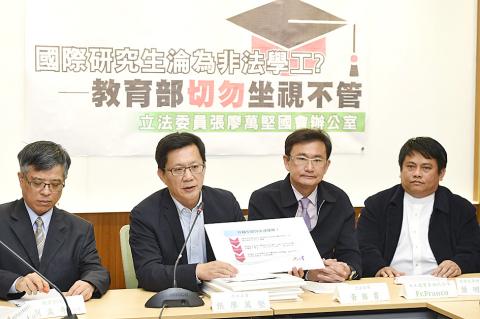
Photo: George Tsorng, Taipei Times
Upon arriving in Taiwan, the students were handed over to the personnel agency Harvest (華維思), which told them to sign a contract prescribing manual labor and payments of NT$2,000 a month to Harvest for consultations and work assignments, he said.
According to the contract, if students showed a “bad attitude,” their employer could terminate the contract and make them pay a penalty of US$1,000.
It would also disqualify them for a tuition installment plan and require them to immediately pay their tuition in full.
Afterward, students were assigned work at a tile factory 4.7km from campus, he said, adding that they worked 40 hours a week, although the legal limit for international students is 20 hours a week.
The students, who were paid NT$140 per hour, worked four to five days a week, from 8am to 8pm on days without classes and from 4pm to midnight on days with classes, he added.
“When some of the students tried to discuss their work situation with the school, they were told to sign a form by which they voluntarily dropped out,” he said.
After eight of the first 24 students quit the program, Harvest added a clause to the contract requiring students recruited after September to pay a penalty of NT$500,000 if they revealed any information about the contract or their work, he said.
One of the students, Raymark, 26, said he was surprised to find that the work was taxing manual labor, instead of work related to their field of study.
“We became slaves of our dreams,” he said.
“I gave my best to my work, but my body is neither a log nor a robot,” he said, adding that worse than the physical pain was the abuse from their line manager, who often shouted at them.
“All I request now is to get back all the illegal fees collected from me and my colleagues, as that was hard-earned money,” he said.
Deputy Minister of Education Lio Mon-Chi (劉孟奇) apologized to the students at the news conference and vowed to protect their rights.
The way the students have been treated is “totally unacceptable,” he said.
The ministry would severely punish schools that deceive students and force them to do illegal work, he said, adding that it would make their illicit actions public.
To better protect international students, the ministry has set up a hotline for reporting problems encountered at schools, he said, adding that the hotline — 0800-789-007 — is available in Chinese, English, Vietnamese and Indonesian.
The ministry would make sure the school assists students in terminating the unfair contracts and reimbursing illegally collected agency fees, Department of Technological and Vocational Education Director Yang Yu-hui (楊玉惠) said.
YDU has been banned from recruiting international students and there would be further punishment if the school was found to have participated in arranging the illegal work, she said.
After being informed about the manual labor, YDU promptly began investigating the matter and helped the students terminate their contracts, the school said in a statement.
It denied ever telling students to drop out and said that it would review its policies for international students.
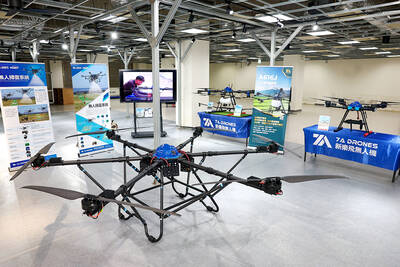
DRONE CENTRAL: Taiwan aims to become Asia’s democratic hub for drones, with most exports focused on high-quality military-grade models, an official said Taiwan’s drone industry is expected to expand significantly by 2030, producing 100,000 units per month and exporting half of them, the Ministry of Economic Affairs said yesterday. Current drone production capacity is about 15,000 units per month, but the industry can quickly scale up as demand increases, Industrial Development Administration Director-General Chiou Chyou-huey (邱求慧) told a news conference in Taipei. Taiwan’s drone output grew 2.5-fold last year to NT$12.9 billion (US$408.3 million) under a government program to develop the uncrewed vehicle sector, he said. The Executive Yuan in October last year approved plans to invest NT$44.2 billion into domestic production of uncrewed aerial
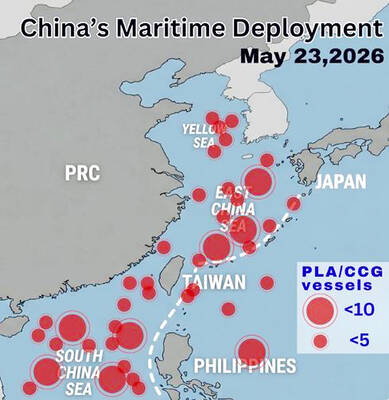
WARNING: China should stop engaging in actions that undermine regional peace and stability, as it would only build resentment among people across the Strait, the CGA said China has deployed more than 100 navy, coast guard and other vessels in waters from the Yellow Sea to the South China Sea and the western Pacific since US President Donald Trump and Chinese President Xi Jinping (習近平) met in Beijing, National Security Council Secretary-General Joseph Wu (吳釗燮) said yesterday. “In this part of the world, #China is the one & only PROBLEM wrecking the #StatusQuo & threatening regional peace & stability,” Wu wrote on X. In a separate post, he said Beijing was coercing Taiwan’s maritime domain, calling it illegal and provocative, after the Coast Guard Administration (CGA) expelled a

VERBOSE VESSELS: A CGA cutter and a China Coast Guard exchanged verbal barbs for more than a day in Taiwanese-controlled waters before the Chinese vessel left The Taiwanese and Chinese coast guards had a standoff near the strategically located Pratas Islands (Dongsha Islands, 東沙群島) in the north of the South China Sea, the Coast Guard Administration (CGA) said yesterday. The two sides engaged in intense radio exchanges over sovereignty claims during the 33-hour standoff. China Coast Guard vessel 3501 eventually left the restricted waters, 26.6 nautical miles (49.2km) west of the Pratas Islands, at 5pm yesterday, the CGA said. Lying approximately between southern Taiwan and Hong Kong, the Taiwan-controlled Pratas are seen by some security experts as vulnerable to Chinese attack due to their distance — more than
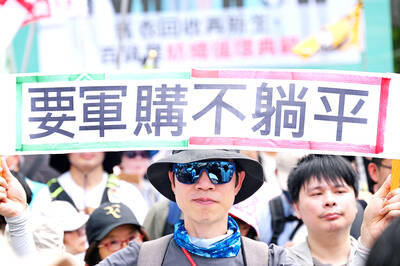
More than 8,000 people took part in a rally in Taipei yesterday to express support for more defense spending, after the opposition slashed the Cabinet’s proposed NT$1.25 trillion (US$39.6 billion) special defense budget and capped it at NT$780 billion. The demonstrators urged the Cabinet to propose another bill. Taiwan Economic Democracy Union convener Lai Chung-chiang (賴中強) said the main problem of the passed budget plan is the removal of funding for critical items, not just that the total amount is smaller. Critical budget items included purchasing or developing uncrewed vehicles, Strong Bow (強弓) missile systems, additional ammunition, artificial intelligence-powered combat systems and Taiwan-US


 RSS
RSS