


The Kaohsiung District Court yesterday convicted 12 people of negligence causing death and other charges following a series of gas explosions that rocked Kaohsiung in 2014, handing out sentences ranging from four years to four years and 10 months, including to former LCY Chemical Corp (李長榮化工) chairman Bowei Lee (李謀偉) and local government officials.
The rulings came after three years of questioning and testimony by 510 persons of interest, witnesses, experts and defendants, and involved the efforts of 12 prosecutors, a court statement said.
Lee was given a four-year sentence, while Kaohsiung City Government Secretary-General Chao Chien-chiao (趙建喬) was handed a four-year, 10-month prison term.
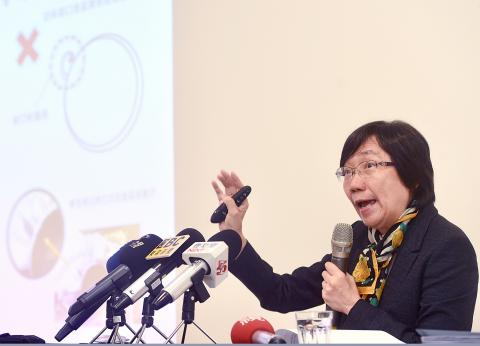
Photo: Chien Jung-fong, Taipei Times
It was the first ruling and it can be appealed.
Five LCY Chemical Corp employees, including a plant manager, supervisors and technicians in the control room, were also convicted of the charges and all received a four-year prison sentences.
Three employees of China General Terminal & Distribution Corp (CGTD, 華運倉儲) were also convicted and handed four-year, six-month sentences.
Two Kaohsiung Sewage System Office technicians, Yang Tsung-jen (楊宗仁) and Chiu Ping-wen (邱炳文), were found guilty of professional negligence and received the heaviest sentences, four-year, 10-month prison terms.
The series of underground explosions, which left 32 people dead and 321 injured, began in Kaohsiung’s Lingya (苓雅) and Cianjhen (前鎮) districts on July 31, 2014, following reports of gas leaks earlier that night.
The court found the 12 defendants guilty of negligence relating to leaking propene from underground pipelines that caused the blasts.
Following an investigation, an underground pipeline belonging to LCY was found to be corroded and the cause of the gas leak.
As a result, Lee and the five LCY employees were convicted for their roles in the incident, which prosecutors attributed to their failure to conduct proper maintenance on a regular basis.
Their failure to monitor the process properly also contributed to the explosions, the ruling said.
The court found Chao, who worked as an engineer in the Kaohsiung Sewage System Office when the blasts took place, and the two technicians working under him, guilty of negligence as they had signed off on an inspection of a culvert containing three pipelines without notifying the relevant companies to inspect them.
The extent to which the defendants sought to settle with the victims was a key point for the judges in determining the sentences, as each had sought to blame others and denied any personal responsibility, Chief Judge Yeh Wen-po (葉文博) said.
LCY paid NT$12 million (US$403,050) to the families of each of the 32 people killed in the blasts, a total of NT$384 million, in line with an agreement reached, Yeh said.
CGTD reached a compensation deal with 63 of the 321 people injured and has paid out more than NT$500 million, the court said.
The district court said it had not received any report from the Kaohsiung City Government indicating that it had reached an agreement with victims to compensate them for damage to their property, Yeh added.
Lee’s attorney said Lee would appeal the ruling.
Although the court handed down its ruling, it had failed to determine the “scientific truth” behind the explosions and Lee wants foreign experts to conduct an examination of the available evidence to determine the real reason for the explosions, which he denies were caused by LCY’s pipeline, the attorney added.
“This ruling is very unfair to me, so I will certainly appeal,” Chao said.
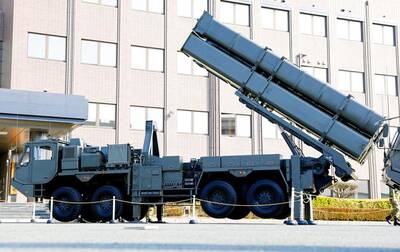
Japan has deployed long-range missiles in a southwestern region near China, the Japanese defense minister said yesterday, at a time when ties with Beijing are at their lowest in recent years. The missiles were installed in Kumamoto in the southern region of Kyushu, as Japan is attempting to shore up its military capacity as China steps up naval activity in the East China Sea. “Standoff defense capabilities enable us to counter the threat of enemy forces attempting to invade our country ... while ensuring the safety of our personnel,” Japanese Minister of Defense Shinjiro Koizumi said. “This is an extremely important initiative for
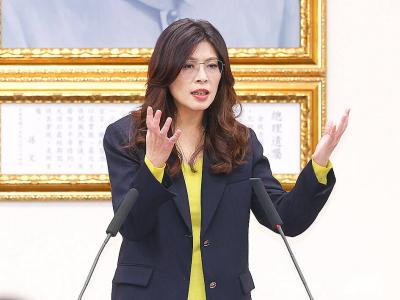
Chinese Nationalist Party (KMT) Chairwoman Cheng Li-wun (鄭麗文) today accepted an invitation from Chinese President Xi Jinping (習近平) to lead a delegation to China next month, saying she hopes to promote the peaceful development of cross-strait relations and bring stability to the Taiwan Strait. “I am grateful and happy to accept this invitation,” Cheng said in a statement from the KMT chairperson’s office. Cheng said she hopes both sides can work together to promote the peaceful development of cross-strait relations, enhance exchange and cooperation, bring stability to the Taiwan Strait and improve people’s livelihoods. At today's news conference, Cheng said any efforts to
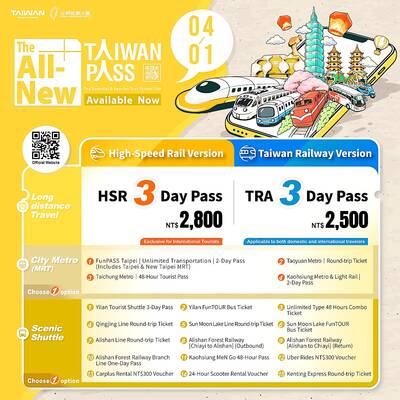
MORE POPULAR: Taiwan Pass sales increased by 59 percent during the first quarter compared with the same period last year, the Tourism Administration said The Tourism Administration yesterday said that it has streamlined the Taiwan Pass, with two versions available for purchase beginning today. The tourism agency has made the pass available to international tourists since 2024, allowing them to access the high-speed rail, Taiwan Railway Corp services, four MRT systems and four Taiwan Tourist Shuttles. Previously, five types of Taiwan Pass were available, but some tourists have said that the offerings were too complicated. The agency said only two types of Taiwan Pass would be available, starting from a three-day pass with the high-speed rail and a three-day pass with Taiwan Railway Corp. The former costs NT$2,800
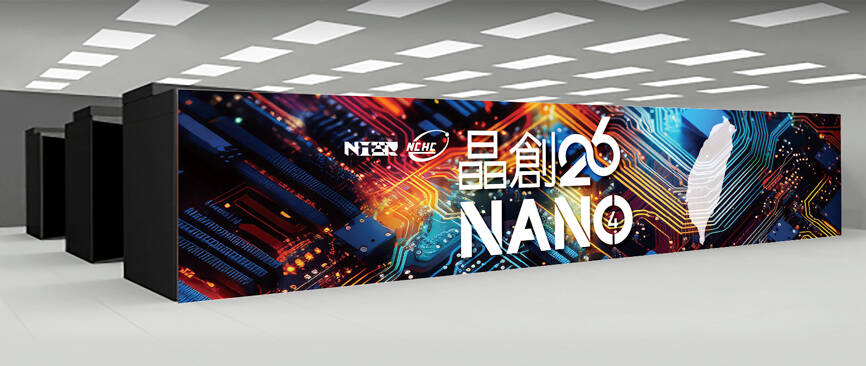
The nation’s fastest supercomputer, Nano 4 (晶創26), is scheduled to be launched in the third quarter, and would be used to train large language models in finance and national defense sectors, the National Center for High-Performance Computing (NCHC) said. The supercomputer, which would operate at about 86.05 petaflops, is being tested at a new cloud computing center in the Southern Taiwan Science Park in Tainan. The exterior of the server cabinet features chip circuitry patterns overlaid with a map of Taiwan, highlighting the nation’s central position in the semiconductor industry. The center also houses Taiwania 2, Taiwania 3, Forerunner 1 and


 RSS
RSS