


State-run banks yesterday declined to extend the deadline for Ching Fu Shipbuilding Co (慶富造船) to meet its repayment obligations, raising the prospect that the company’s contract to build six minesweepers for the navy would soon be terminated.
Termination of the contract could lead to NT$14.9 billion (US$496.57 million) in bad debts for state-run banks that participated in a syndicated loan to the troubled shipbuilder, the Ministry of Finance said.
The shipbuilder has also secured other questionable loans, such as a separate build-operate-transfer contract for a National Museum of Marine Biology and Aquarium project, bringing banks’ total exposure to the shipbuilder to about NT$20.51 billion, of which more than 70 percent is expected to be unrecoverable, the Financial Supervisory Commission said.
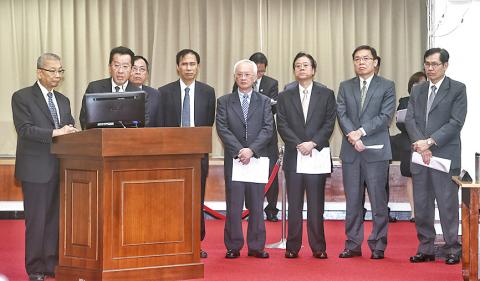
Photo: Fang Pin-chao, Taipei Times
Newly installed First Commercial Bank (第一銀行) chairman Ray Dawn (董瑞斌) and Bank of Taiwan chairman Joseph Lyu (呂桔誠) told the legislature’s Finance Committee that they would not allow an extension for Ching Fu to furnish a NT$7.9 billion advance payment bond as stipulated by its contract with the Ministry of National Defense.
The advanced payment bond is due on Friday, and the NT$35.85 billion minesweeper contract would be automatically terminated should Ching Fu Shipbuilding fail to provide the payment by Friday next week.
In light of Ching Fu’s financial troubles, the two state-run banks have ruled out preserving the contract, Lyu and Dawn said during a question-and-answer session at the legislature.
The shipbuilder has already missed a payment due last month, putting it in breach of contract, Lyu and Dawn said, adding that the company has not been making the required interest payments.
First Bank, which served as lead bank in the syndicated loan, will no longer help the shipbuilder salvage its project, Lyu said.
The Bank of Taiwan will vote against granting an extension as Ching Fu has yet to submit the required information, making it impossible for the bank and other lenders to verify its financial condition, Dawn said.
While a formal meeting with participating banks in the syndicated loan is to take place today, other lenders are expected to follow First Commercial Bank’s decision to cut its losses.
Separately, the Coast Guard Administration (CGA) on Sunday terminated its contract with Ching Fu as the shipbuilder has continued to fall behind in delivering 28 patrol boats and demanded NT$1.2 billion in compensation.
Ching Fu in May 2013 won a CGA tender to build 28 100-tonne patrol boats, and has completed and delivered 13 so far.
The CGA said the shipbuilder failed to meet Sunday’s deadline for delivery of the 14th boat after missing several deadlines earlier.
Ching Fu Shipbuilding chairman Chen Ching- nan (陳慶男) declined to answer reporters’ questions on his way to report to a police station in Kaohsiung, as he is required to do daily.
Chen was arrested in August and released on bail of NT$8 million in the case of suspected loan fraud linked to the minesweeper contract.
Additional reporting by CNA


The CIA has a message for Chinese government officials worried about their place in Chinese President Xi Jinping’s (習近平) government: Come work with us. The agency released two Mandarin-language videos on social media on Thursday inviting disgruntled officials to contact the CIA. The recruitment videos posted on YouTube and X racked up more than 5 million views combined in their first day. The outreach comes as CIA Director John Ratcliffe has vowed to boost the agency’s use of intelligence from human sources and its focus on China, which has recently targeted US officials with its own espionage operations. The videos are “aimed at
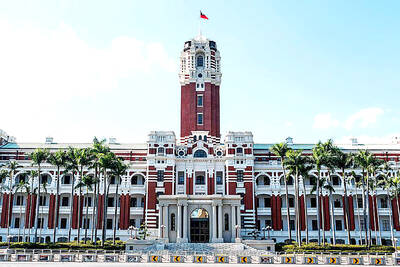
STEADFAST FRIEND: The bills encourage increased Taiwan-US engagement and address China’s distortion of UN Resolution 2758 to isolate Taiwan internationally The Presidential Office yesterday thanked the US House of Representatives for unanimously passing two Taiwan-related bills highlighting its solid support for Taiwan’s democracy and global participation, and for deepening bilateral relations. One of the bills, the Taiwan Assurance Implementation Act, requires the US Department of State to periodically review its guidelines for engagement with Taiwan, and report to the US Congress on the guidelines and plans to lift self-imposed limitations on US-Taiwan engagement. The other bill is the Taiwan International Solidarity Act, which clarifies that UN Resolution 2758 does not address the issue of the representation of Taiwan or its people in
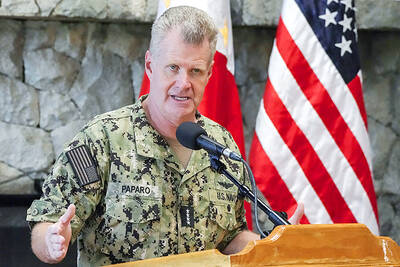
US Indo-Pacific Commander Admiral Samuel Paparo on Friday expressed concern over the rate at which China is diversifying its military exercises, the Financial Times (FT) reported on Saturday. “The rates of change on the depth and breadth of their exercises is the one non-linear effect that I’ve seen in the last year that wakes me up at night or keeps me up at night,” Paparo was quoted by FT as saying while attending the annual Sedona Forum at the McCain Institute in Arizona. Paparo also expressed concern over the speed with which China was expanding its military. While the US
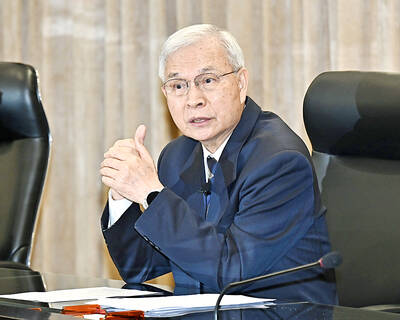
SHIFT: Taiwan’s better-than-expected first-quarter GDP and signs of weakness in the US have driven global capital back to emerging markets, the central bank head said The central bank yesterday blamed market speculation for the steep rise in the local currency, and urged exporters and financial institutions to stay calm and stop panic sell-offs to avoid hurting their own profitability. The nation’s top monetary policymaker said that it would step in, if necessary, to maintain order and stability in the foreign exchange market. The remarks came as the NT dollar yesterday closed up NT$0.919 to NT$30.145 against the US dollar in Taipei trading, after rising as high as NT$29.59 in intraday trading. The local currency has surged 5.85 percent against the greenback over the past two sessions, central


 RSS
RSS