


The government yesterday issued a strongly worded statement denouncing China’s role in the Kenyan police’s deportation of Taiwanese citizens who had been acquitted in a lawsuit in the African country to Beijing and not Taipei, calling the act an “uncivilized, illegal abduction.”
A total of eight Taiwanese were deported to China on Friday, three days after they and 15 other Taiwanese were ordered to leave Kenya within 21 days following their acquittal in a telecoms fraud trial on Tuesday last week, the Ministry of Foreign Affairs (MOFA) said in the statement.
The case involved 48 Chinese, 28 Taiwanese and one Thai, who were arrested by Kenyan police in November 2014 and later indicted on charges of unlicensed telecoms activities, unlicensed use of radio equipment and organized crime.
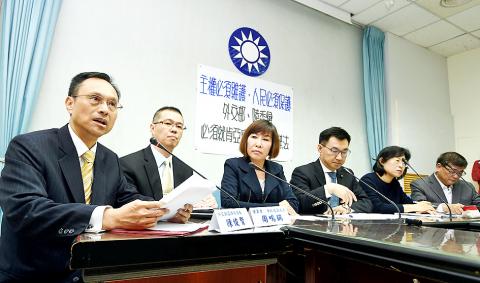
Photo: Fang Pin-chao, Taipei Times
“When the first batch of 37 defendants acquitted by the court — which included the 23 Taiwanese — went to a local police station in the Kilimani area of Nairobi on Tuesday last week to retrieve their passports, they were detained by the police for no reason,” the ministry said.
On learning of the detentions, the ministry said it instructed the Taipei Liaison Office in South Africa to negotiate with the Kenyan police, with the office urging them to release the Taiwanese in accordance with the court’s ruling and to follow the customary practice of allowing acquitted defendants to be deported to their respective home countries.
An official of the liaison office subsequently flew to Kenya on Thursday last week to visit the Taiwanese detained at Kilimani Police Station, only to learn the following day that the Chinese government was pressuring the Kenyan police to deport eight of them to China, the statement said.
The ministry said that despite the liaison office’s negotiation efforts and the issuance of an injunction by the Kenyan High Court banning police from deporting the eight Taiwanese pending a hearing tomorrow, China made use of a technicality to impede its efforts and flew the eight Taiwanese to Beijing on a China Southern Airlines aircraft on Friday.
“This uncivilized act of kidnapping is a severe infringement of the basic human rights of the deported Taiwanese. The ministry has lodged a strong protest against China’s behavior,” the ministry said, demanding an immediate return of the eight Taiwanese to Taiwan.
The ministry also urged Kenyan police to honor the court’s verdict and release the other 15 detained Taiwanese.
“While we do not have a representative office in Kenya, our liaison office in South Africa will continue its efforts to ensure the safe return of the 15 Taiwanese,” it said.
The Mainland Affairs Council, the Ministry of Justice and the Criminal Investigation Bureau are also endeavoring to urge Chinese authorities to refrain from deporting the remaining 15 Taiwanese to Beijing and to handle similar cases in accordance with cross-strait agreements in the future, the statement said.
The ministry’s Department of West Asian and African Affairs Director-General Chen Chun-shen (陳俊賢) said that if people who have been acquitted of any crime can be taken away against their will by China, then every Taiwanese suspected of wrongdoing in other parts of the world might be susceptible to the same treatment.
To discus the deportations, President Ma Ying-jeou (馬英九) yesterday morning called a meeting with Vice President Wu Den-yih (吳敦義), Premier Simon Chang (張善政) and National Security Council Secretary-General Kao Hua-chu (高華柱), the Presidential Office said.
“At the meeting, the president instructed concerned government agencies to elucidate the government’s stance,” Presidential Office spokesman Ma Wei-kuo (馬瑋國) said.
The Democratic Progressive Party (DPP) lodged a stern protest against China’s behavior, saying that its actions clearly violated the human rights of the people concerned.
“We request that relevant government agencies continue their negotiations [with Beijing], collect information on the Kenyan court’s verdict and other evidence, and demand the return of our nationals in accordance with the Cross-Strait Joint Crime-Fighting and Judicial Mutual Assistance Agreement [海峽兩岸共同打擊犯罪及司法互助協議] to safeguard their judicial human rights,” DPP spokesman Wang Min-sheng (王閔生) said.
In a statement issued later in the day, Chinese Nationalist Party (KMT) Chairwoman Hung Hsiu-chu (洪秀柱) expressed regret over the Kenyan deportations and called on Nairobi to release 15 Taiwanese still in detention.
“China’s acts of forcibly taking Taiwanese to Beijing are detrimental to the stable development of cross-strait relations. We urge the Chinese authorities to return them to Taiwan at the earliest date possible,” Hung said.
The New Power Party (NPP) said it was “extremely angry” at Kenya’s “regrettable” actions because Kenya should not have made such a “ridiculous” mistake even if that nation does not have formal diplomatic relations with Taiwan.
The NPP statement also condemned China for being “completely unscrupulous” in “kidnapping” Taiwanese, stating that the actions made agreements that China signed with Taiwan look like “worthless scraps of paper.”
The case is reminiscent of the Philippines’ controversial deportation of 14 Taiwanese fraud suspects to China for trial in February 2011 based on Manila’s “one China” policy.
They were only returned to Taiwan five months later after negotiations between Taipei and Beijing based on the 2009 Cross-Strait Joint Crime-Fighting and Judicial Mutual Assistance Agreement.
Additional reporting by Abraham Gerber

Japan has deployed long-range missiles in a southwestern region near China, the Japanese defense minister said yesterday, at a time when ties with Beijing are at their lowest in recent years. The missiles were installed in Kumamoto in the southern region of Kyushu, as Japan is attempting to shore up its military capacity as China steps up naval activity in the East China Sea. “Standoff defense capabilities enable us to counter the threat of enemy forces attempting to invade our country ... while ensuring the safety of our personnel,” Japanese Minister of Defense Shinjiro Koizumi said. “This is an extremely important initiative for
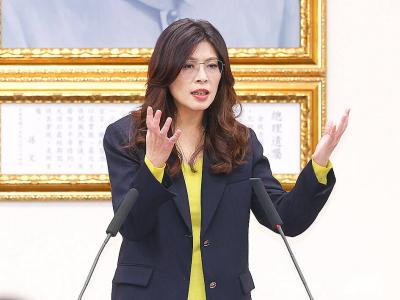
Chinese Nationalist Party (KMT) Chairwoman Cheng Li-wun (鄭麗文) today accepted an invitation from Chinese President Xi Jinping (習近平) to lead a delegation to China next month, saying she hopes to promote the peaceful development of cross-strait relations and bring stability to the Taiwan Strait. “I am grateful and happy to accept this invitation,” Cheng said in a statement from the KMT chairperson’s office. Cheng said she hopes both sides can work together to promote the peaceful development of cross-strait relations, enhance exchange and cooperation, bring stability to the Taiwan Strait and improve people’s livelihoods. At today's news conference, Cheng said any efforts to

MORE POPULAR: Taiwan Pass sales increased by 59 percent during the first quarter compared with the same period last year, the Tourism Administration said The Tourism Administration yesterday said that it has streamlined the Taiwan Pass, with two versions available for purchase beginning today. The tourism agency has made the pass available to international tourists since 2024, allowing them to access the high-speed rail, Taiwan Railway Corp services, four MRT systems and four Taiwan Tourist Shuttles. Previously, five types of Taiwan Pass were available, but some tourists have said that the offerings were too complicated. The agency said only two types of Taiwan Pass would be available, starting from a three-day pass with the high-speed rail and a three-day pass with Taiwan Railway Corp. The former costs NT$2,800

The nation’s fastest supercomputer, Nano 4 (晶創26), is scheduled to be launched in the third quarter, and would be used to train large language models in finance and national defense sectors, the National Center for High-Performance Computing (NCHC) said. The supercomputer, which would operate at about 86.05 petaflops, is being tested at a new cloud computing center in the Southern Taiwan Science Park in Tainan. The exterior of the server cabinet features chip circuitry patterns overlaid with a map of Taiwan, highlighting the nation’s central position in the semiconductor industry. The center also houses Taiwania 2, Taiwania 3, Forerunner 1 and


 RSS
RSS