


US President Barack Obama on Friday signed a bill that requires the US secretary of state to develop a strategy to obtain observer status for Taiwan in the International Criminal Police Organization (Interpol) and other international groups.
“Not later than 90 days after the date of the enactment of this act, the secretary shall transmit to [the US] Congress a report, in unclassified form, describing the United States strategy to endorse and obtain observer status for Taiwan in appropriate international organizations, including Interpol, and at other related meetings, activities and mechanisms thereafter,” according to the text of the new legislation.
The bill was sent to the White House for Obama to sign into law after it cleared the US House of Representatives and the US Senate earlier this month.

Photo: EPA
In Taipei, Taiwan’s Criminal Investigation Bureau expressed gratitude for the US’ support, but it added that there is still a long way to go before Taiwan can participate in Interpol.
The bureau said that it would continue to make every effort to join Interpol at international meetings.
Being unable to participate in Interpol makes it difficult for Taiwan to directly obtain updates on information about transnational crimes, the bureau said, adding that the nation must rely on second-hand information provided by other countries.
Taiwanese police are not allowed to take part in training organized by Interpol, it said.
Taiwan was a full member of Interpol starting in 1964 through its National Police Administration, but lost its membership in 1984, when China applied to join the organization.
Taiwan has had trouble gaining membership or participating in many international organizations because of objections from China, which sees Taiwan as a renegade province and therefore ineligible for membership as a separate entity.
In an effort to help Taiwan join international organizations, the US also passed a bill that supports Taiwan’s participation in the International Civil Aviation Organization (ICAO), which was signed into law by Obama in July 2013.
The head of Taiwan’s Civil Aeronautics Administration led a delegation to participate in the ICAO’s assembly as guests later that year, the first time Taiwan was invited to the UN specialized agency based in Montreal after the Republic of China lost its UN membership to China in 1971.
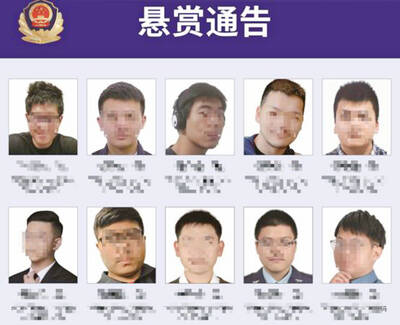
Taiwan yesterday denied Chinese allegations that its military was behind a cyberattack on a technology company in Guangzhou, after city authorities issued warrants for 20 suspects. The Guangzhou Municipal Public Security Bureau earlier yesterday issued warrants for 20 people it identified as members of the Information, Communications and Electronic Force Command (ICEFCOM). The bureau alleged they were behind a May 20 cyberattack targeting the backend system of a self-service facility at the company. “ICEFCOM, under Taiwan’s ruling Democratic Progressive Party, directed the illegal attack,” the warrant says. The bureau placed a bounty of 10,000 yuan (US$1,392) on each of the 20 people named in
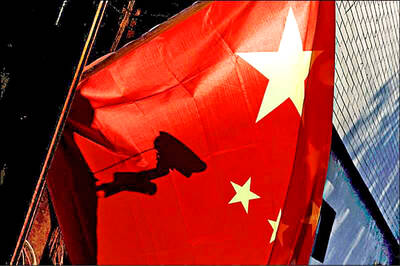
The High Court yesterday found a New Taipei City woman guilty of charges related to helping Beijing secure surrender agreements from military service members. Lee Huei-hsin (李慧馨) was sentenced to six years and eight months in prison for breaching the National Security Act (國家安全法), making illegal compacts with government employees and bribery, the court said. The verdict is final. Lee, the manager of a temple in the city’s Lujhou District (蘆洲), was accused of arranging for eight service members to make surrender pledges to the Chinese People’s Liberation Army in exchange for money, the court said. The pledges, which required them to provide identification
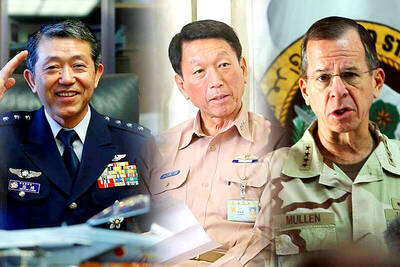
Nine retired generals from Taiwan, Japan and the US have been invited to participate in a tabletop exercise hosted by the Taipei School of Economics and Political Science Foundation tomorrow and Wednesday that simulates a potential Chinese invasion of Taiwan in 2030, the foundation said yesterday. The five retired Taiwanese generals would include retired admiral Lee Hsi-min (李喜明), joined by retired US Navy admiral Michael Mullen and former chief of staff of the Japan Self-Defense Forces general Shigeru Iwasaki, it said. The simulation aims to offer strategic insights into regional security and peace in the Taiwan Strait, it added. Foundation chair Huang Huang-hsiung
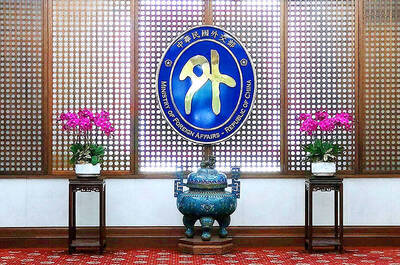
’DISTORTION’: Beijing’s assertion that the US agreed with its position on Taiwan is a recurring tactic it uses to falsely reinforce its sovereignty claims, MOFA said The Ministry of Foreign Affairs (MOFA) yesterday said Chinese state media deliberately distorted Taiwan’s sovereign status, following reports that US President Donald Trump agreed to uphold the “one China” policy in a phone call with Chinese President Xi Jinping (習近平). During the more than one-hour-long call, Xi urged Trump to retreat from trade measures that roiled the global economy and cautioned him against threatening steps on Taiwan, a Chinese government summary of the call said. China’s official Xinhua news agency quoted Xi as saying that the US should handle the Taiwan issue cautiously and avoid the two countries being drawn into dangerous


 RSS
RSS