


Japan is to increase defense spending for a third straight year as Japanese Prime Minister Shinzo Abe seeks to counter China’s claims to remote islands in the East China Sea.
The budget for the year starting April will be ¥4.98 trillion (US$42 billion), up from ¥4.84 trillion this fiscal year, according to documents obtained by Bloomberg.
Spending on defense is to account for about 5 percent of the national budget, which is set to be approved by the Cabinet today.
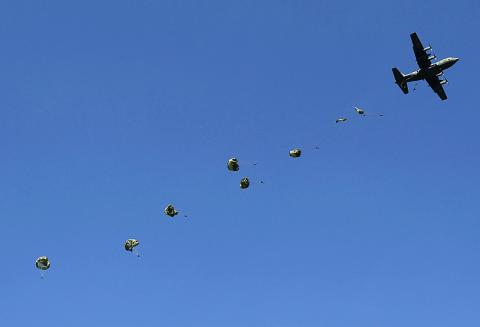
Photo: REUTERS
Japan’s defense spending is about one-third that of China’s, which boosted its military budget by more than 12 percent last year.
Ties have frayed over the sovereignty of the islets — known as the Diaoyutais (釣魚台) in Taiwan, which also claims them, the Diaoyu Archipelago (釣魚群島) in China and the Senkakus in Japan — though Chinese and Japanese officials resumed talks on Monday in Tokyo on a maritime communication mechanism to prevent accidental clashes at sea.
Ships and planes from the two nations have been tailing one another in the area since Japan bought three of the islands from a private owner in September 2012.
Yoshihide Suga, Japan’s top government spokesman, yesterday said that a certain degree of common understanding was achieved in the maritime talks.
Both sides “have reached a certain consensus” on the maritime communication mechanism and agreed to activate it “at an early date,” Chinese Ministry of Foreign Affairs spokesman Hong Lei (洪磊) said.
In August last year, Japan’s Ministry of Defense requested a record budget that included funds for 20 P-1 fixed-wing patrol aircraft, six F-35 fighter aircraft and an unspecified number of unmanned aircraft.
Japan will also allocate funds for establishing a military observation unit on Yonaguni island, close to the disputed islets.
Abe has reversed an 11-year decline in the defense budget, while in July last year his Cabinet reinterpreted the pacifist constitution to allow Japanese troops to defend other countries.
The Japanese parliament also passed a bill to increase penalties for leaking government secrets.
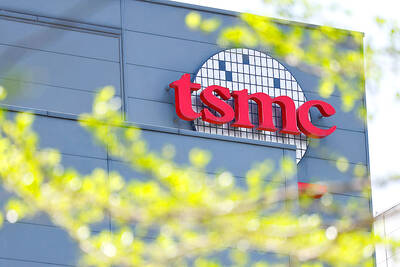
EUROPEAN TARGETS: The planned Munich center would support TSMC’s European customers to design high-performance, energy-efficient chips, an executive said Taiwan Semiconductor Manufacturing Co (TSMC, 台積電), the world’s largest contract chipmaker, yesterday said that it plans to launch a new research-and-development (R&D) center in Munich, Germany, next quarter to assist customers with chip design. TSMC Europe president Paul de Bot made the announcement during a technology symposium in Amsterdam on Tuesday, the chipmaker said. The new Munich center would be the firm’s first chip designing center in Europe, it said. The chipmaker has set up a major R&D center at its base of operations in Hsinchu and plans to create a new one in the US to provide services for major US customers,
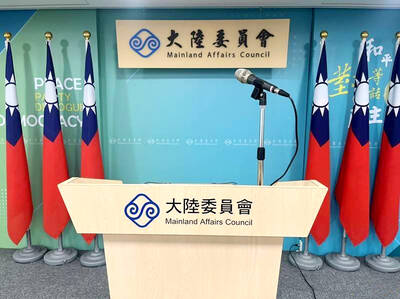
BEIJING’S ‘PAWN’: ‘We, as Chinese, should never forget our roots, history, culture,’ Want Want Holdings general manager Tsai Wang-ting said at a summit in China The Mainland Affairs Council (MAC) yesterday condemned Want Want China Times Media Group (旺旺中時媒體集團) for making comments at the Cross-Strait Chinese Culture Summit that it said have damaged Taiwan’s sovereignty, adding that it would investigate if the group had colluded with China in the matter and contravened cross-strait regulations. The council issued a statement after Want Want Holdings (旺旺集團有限公司) general manager Tsai Wang-ting (蔡旺庭), the third son of the group’s founder, Tsai Eng-meng (蔡衍明), said at the summit last week that the group originated in “Chinese Taiwan,” and has developed and prospered in “the motherland.” “We, as Chinese, should never
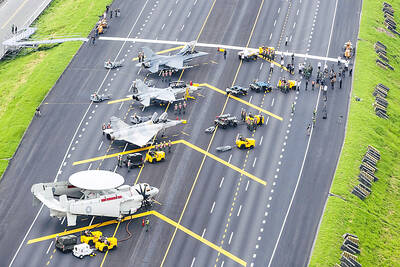
‘A SURVIVAL QUESTION’: US officials have been urging the opposition KMT and TPP not to block defense spending, especially the special defense budget, an official said The US plans to ramp up weapons sales to Taiwan to a level exceeding US President Donald Trump’s first term as part of an effort to deter China as it intensifies military pressure on the nation, two US officials said on condition of anonymity. If US arms sales do accelerate, it could ease worries about the extent of Trump’s commitment to Taiwan. It would also add new friction to the tense US-China relationship. The officials said they expect US approvals for weapons sales to Taiwan over the next four years to surpass those in Trump’s first term, with one of them saying
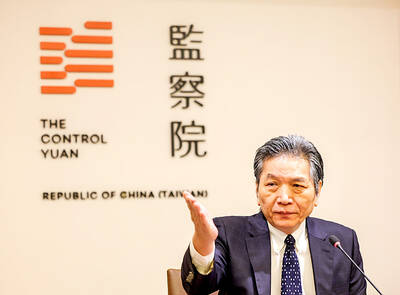
‘ABUSE OF POWER’: Lee Chun-yi allegedly used a Control Yuan vehicle to transport his dog to a pet grooming salon and take his wife to restaurants, media reports said Control Yuan Secretary-General Lee Chun-yi (李俊俋) resigned on Sunday night, admitting that he had misused a government vehicle, as reported by the media. Control Yuan Vice President Lee Hung-chun (李鴻鈞) yesterday apologized to the public over the issue. The watchdog body would follow up on similar accusations made by the Chinese Nationalist Party (KMT) and would investigate the alleged misuse of government vehicles by three other Control Yuan members: Su Li-chiung (蘇麗瓊), Lin Yu-jung (林郁容) and Wang Jung-chang (王榮璋), Lee Hung-chun said. Lee Chun-yi in a statement apologized for using a Control Yuan vehicle to transport his dog to a


 RSS
RSS