


A Taiwanese photography magazine has been pulled off shelves in China due to its theme of street protests, the publication said on Facebook, adding that all editions with related stories, including back issues, have been confiscated from locations in China that have been importing and selling the magazine.
Voices of Photography (VOP), an independent publication dedicated to contemporary photography, first broke the news on its Facebook page on Thursday, saying that they had been informed by Chinese bookstores of unannounced inspections and the confiscation of the magazine by Chinese authorities at the end of last month.
The integrated Law Enforcement in Cultural Market team, as it is called in China, was the authority said to have undertaken the action.
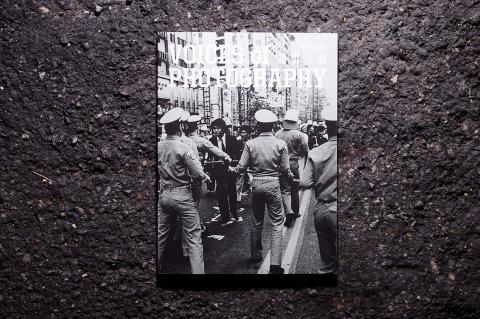
Photo courtesy of Voices of Photography
The theme of the latest issue is “Protests, Activism and Images,” in which the magazine said “the scenes of movements in Taiwan, Hong Kong, China and Japan” are brought to life through images, documenting “protest photography and image politics [on] the rise in Taiwanese social movements in the ’70s, then flourishing in the ’80s … all the way to the Sunflower movement in 2014.”
“Not only were physical bookstores affected, but online advertisements carried by Taobao [China’s biggest online marketplace], Weixin [China’s social messaging app] and Weibo [the Chinese microblogging platform] have also all been forcibly taken down,” VOP editor-in-chief Lee Wei-i (李威儀) said yesterday.
“An online bookstore selling VOP was forced to shut down completely,” he added.
The bookstores were told, Lee said, that copies of the magazine were confiscated because they were “illegally imported,” as the bookstores had failed to import them via “legal, state-authorized channels,” instead directly purchasing them from the magazine.
“It is apparent that the move targeted our latest issue featuring activism. A dealer’s copies of the latest issue were seized by Chinese customs when entering the mainland from Hong Kong. The reason given was that the products were [politically] sensitive,” Lee said.
The magazine had been on shelves without interference until this issue, Lee said, declining to specify the exact amount of time to preserve the anonymity of the involved stores.
“While there are no official documents to prove our claim, we’ve been told that Chinese authorities specifically asked for the stores’ sale and purchase records of the magazine,” he said.
The affected bookstores have informed the publication that it would be difficult for them to continue importing and displaying the magazine on their shelves.
“Chinese authorities have further increased the political pressure that would have book distributors undergo self-censorship,” VOP said in a Facebook post.
“Not only has the ban in China had a negative impact on our income and activities, but Chinese readers have also been deprived of the right to access knowledge and the flow of ideas has been obstructed,” it said.
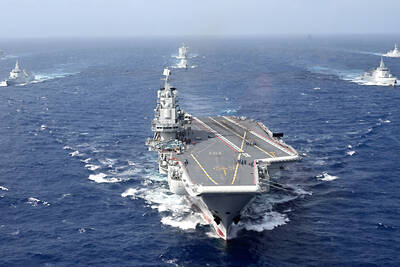
PROVOCATIVE: Chinese Deputy Ambassador to the UN Sun Lei accused Japan of sending military vessels to deliberately provoke tensions in the Taiwan Strait China denounced remarks by Japan and the EU about the South China Sea at a UN Security Council meeting on Monday, and accused Tokyo of provocative behavior in the Taiwan Strait and planning military expansion. Ayano Kunimitsu, a Japanese vice foreign minister, told the Council meeting on maritime security that Tokyo was seriously concerned about the situation in the East China and South China seas, and reiterated Japan’s opposition to any attempt to change the “status quo” by force, and obstruction of freedom of navigation and overflight. Stavros Lambrinidis, head of the EU delegation to the UN, also highlighted South China Sea
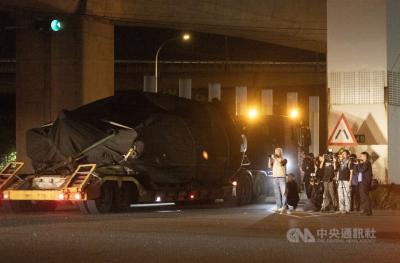
The final batch of 28 M1A2T Abrams tanks purchased from the US arrived at Taipei Port last night and were transported to the Armor Training Command in Hsinchu County’s Hukou Township (湖口), completing the military’s multi-year procurement of 108 of the tanks. Starting at 12:10am today, reporters observed more than a dozen civilian flatbed trailers departing from Taipei Port, each carrying an M1A2T tank covered with black waterproof tarps. Escorted by military vehicles, the convoy traveled via the West Coast Expressway to the Armor Training Command, with police implementing traffic control. The army operates about 1,000 tanks, including CM-11 Brave Tiger
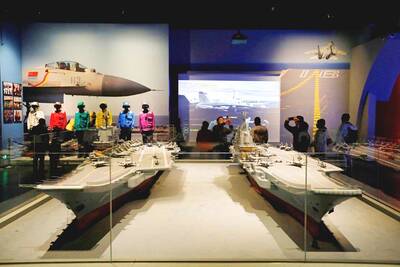
China on Wednesday teased in a video an aircraft carrier that could be its fourth, and the first using nuclear power, while making an allusion to Taiwan and vowing to further build up its islands, as it looks to boost maritime power, secure resources and bolster territorial claims. The video, issued on the eve of the 77th founding anniversary of the Chinese People’s Liberation Army Navy, featured fictional officers with names that are homophones of three commissioned aircraft carriers, the Liaoning (遼寧), Shandong (山東) and Fujian (福建). Titled Into the Deep, it showed a 19-year-old named “Hejian” (何劍) joining the group, sparking
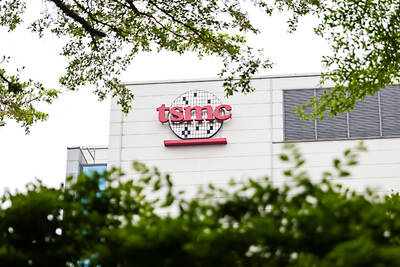
Taiwan Semiconductor Manufacturing Co (TSMC, 台積電), the world’s largest contract chipmaker, said it expects its 2-nanometer (2nm) chip capacity to grow at a compound annual rate of 70 percent from this year to 2028. The projection comes as five fabs begin volume production of 2-nanometer chips this year — two in Hsinchu and three in Kaohsiung — TSMC senior vice president and deputy cochief operating officer Cliff Hou (侯永清) said at the company’s annual technology symposium in Silicon Valley, California, last week. Output in the first year of 2-nanometer production, which began in the fourth quarter of last year, is expected to


 RSS
RSS