


Ting Hsin International Group (頂新國際集團) confirmed yesterday that it has agreed to sell its 37.17 percent stake in Taipei Financial Center Corp (TFCC, 台北金融大樓公司), the firm that operates the Taipei 101 building, to Malaysia’s IOI Properties Group Bhd for NT$25.14 billion (US$808.13 million).
The deal came after the Ministry of Finance (MOF) — the largest shareholder in TFCC with a 44.35 percent stake — in October urged Ting Hsin to liquidate its shares in TFCC, saying the firm’s involvement in a series of food safety scandals was damaging Taipei 101’s image as a national landmark.
“The decision is in line with the expectations of the government and the public, while easing financial pressure on the group and protecting employee rights,” Ting Hsin spokesman Ted Chia (賈先德) told a news conference in Taipei.

Photo: CNA
Several Taiwanese banks have decided not to extend additional credit to the group and its affiliates, saying its involvement in the most recent adulterated tainted oil scandal sparked a public outcry.
The group is more than NT$40 billion in debt and has not ruled out selling off other assets after the conclusion of the proposed TFCC deal, Chia said.
Last month, Ting Hsin said it was considering offloading assets to raise funds, with major Ting Hsin subsidiary Wei Chuan Foods Corp (味全食品工業) last week revealing plans to sell a land development unit and a plot of real estate in New Taipei City’s Sanchong District (三重).
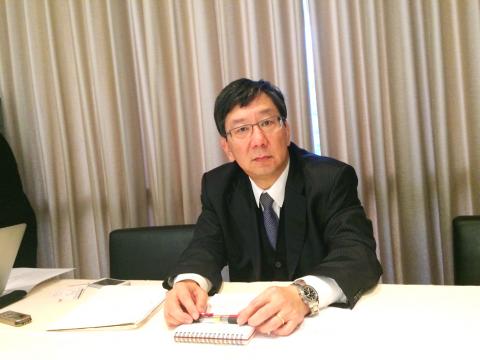
Photo: CNA
About 10 potential domestic or overseas buyers have contacted Ting Hsin and expressed interest in acquiring the group’s TFCC stake, and the company received offers higher than the IOI Properties bid it finally accepted, Chia said.
The group’s decision to ink a deal with IOI Properties — one of Malaysia’s top 10 developers — is based on the Malaysian firm’s positive attitude and strong background in land and real-estate development, Chia said.
IOI Properties is controlled by one of Malaysia’s richest businesspeople, Lee Shin Cheng (李深靜), and the deal is expected to give the Malaysian firm a stable rental income from Taipei 101.
There is also the potential for capital appreciation, given the property’s “strategic location,” a statement issued by IOI Properties said.
If the deal with IOI Properties is accepted by the government, Ting Hsin would receive about NT$17 billion in profit. In the past five years, Ting Hsin paid about NT$8 billion in total for its 37.17 percent stake in TFCC, from several private investors including China Life Insurance Co (中國人壽) and China Development Financial Holding Corp (中華開發金控).
Ting Hsin plans to use NT$3 billion from the deal for a food safety fund, an offer the group made earlier this year as the extent of the oil scandal became evident, Chia said, adding that the group has opened an account with the Industrial Bank of Taiwan (台灣工商銀行) and is discussing how to manage it with entrepreneur Samuel Yin (尹衍樑).
However, the deal has yet to undergo regulatory review or gain approval from Ting Hsin’s board of directors.
The Ministry of Economic Affairs’ Investment Commission yesterday said it has not received any proposals from Ting Hsin or IOI Properties over the deal.
Once receiving the proposal, the government would have to look at the shareholder structure of IOI Properties to make sure there is no Chinese capital involved, the commission said in a statement.
The commission said it would also solicit opinions from government agencies, including the Ministry of Finance, the Financial Supervisory Commission, the central bank and the Mainland Affairs Council, before moving ahead with the review process.
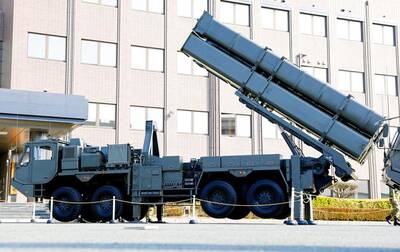
Japan has deployed long-range missiles in a southwestern region near China, the Japanese defense minister said yesterday, at a time when ties with Beijing are at their lowest in recent years. The missiles were installed in Kumamoto in the southern region of Kyushu, as Japan is attempting to shore up its military capacity as China steps up naval activity in the East China Sea. “Standoff defense capabilities enable us to counter the threat of enemy forces attempting to invade our country ... while ensuring the safety of our personnel,” Japanese Minister of Defense Shinjiro Koizumi said. “This is an extremely important initiative for
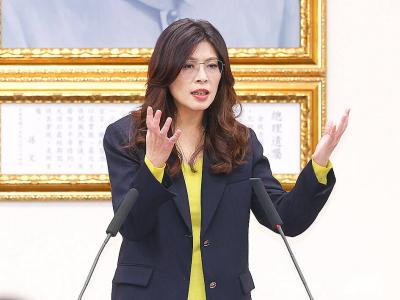
Chinese Nationalist Party (KMT) Chairwoman Cheng Li-wun (鄭麗文) today accepted an invitation from Chinese President Xi Jinping (習近平) to lead a delegation to China next month, saying she hopes to promote the peaceful development of cross-strait relations and bring stability to the Taiwan Strait. “I am grateful and happy to accept this invitation,” Cheng said in a statement from the KMT chairperson’s office. Cheng said she hopes both sides can work together to promote the peaceful development of cross-strait relations, enhance exchange and cooperation, bring stability to the Taiwan Strait and improve people’s livelihoods. At today's news conference, Cheng said any efforts to
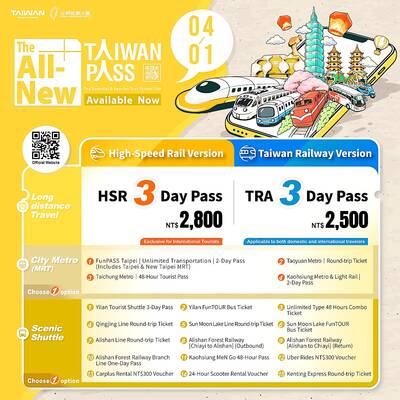
MORE POPULAR: Taiwan Pass sales increased by 59 percent during the first quarter compared with the same period last year, the Tourism Administration said The Tourism Administration yesterday said that it has streamlined the Taiwan Pass, with two versions available for purchase beginning today. The tourism agency has made the pass available to international tourists since 2024, allowing them to access the high-speed rail, Taiwan Railway Corp services, four MRT systems and four Taiwan Tourist Shuttles. Previously, five types of Taiwan Pass were available, but some tourists have said that the offerings were too complicated. The agency said only two types of Taiwan Pass would be available, starting from a three-day pass with the high-speed rail and a three-day pass with Taiwan Railway Corp. The former costs NT$2,800
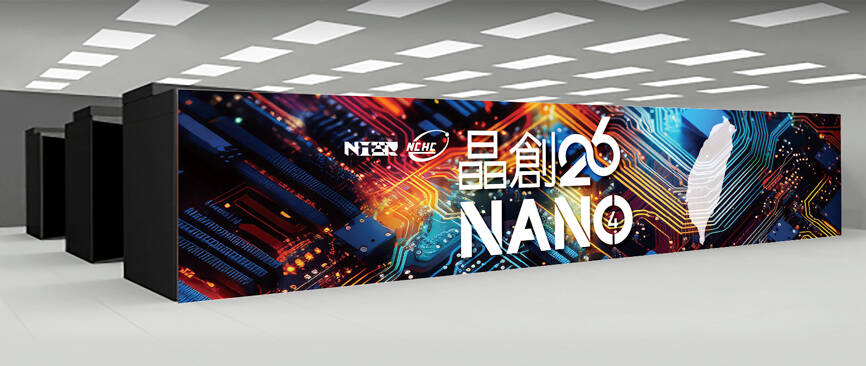
The nation’s fastest supercomputer, Nano 4 (晶創26), is scheduled to be launched in the third quarter, and would be used to train large language models in finance and national defense sectors, the National Center for High-Performance Computing (NCHC) said. The supercomputer, which would operate at about 86.05 petaflops, is being tested at a new cloud computing center in the Southern Taiwan Science Park in Tainan. The exterior of the server cabinet features chip circuitry patterns overlaid with a map of Taiwan, highlighting the nation’s central position in the semiconductor industry. The center also houses Taiwania 2, Taiwania 3, Forerunner 1 and


 RSS
RSS