


Taiwanese actor and pop idol Kai Ko (柯震東) has apologized to fans for “setting a bad example” following his arrest in Beijing for using marijuana.
State broadcaster China Central Television (CCTV) yesterday aired video footage of Ko tearing up in front of a camera in a detention center in which he said he was “very regretful, very sorry to all the people who support, like and know me.”
“Sorry I’ve let them down and been a bad influence. I’ve created a mistaken perception for young people and I really hope to tell them that this is the wrong behavior, and I’m very sad,” said Ko, whose face was pixelated in the video.
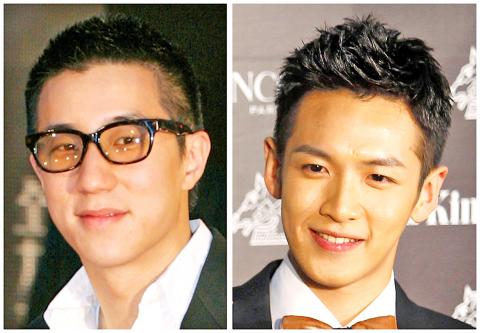
Photos: Reuters
The 23-year-old, who became a sensation in 2011 after his role in the Taiwanese blockbuster You Are the Apple of My Eye (那些年,我們一起追的女孩) and won the Golden Horse Award for Best New Actor that year for the role, said he has learned his lesson and will “try to make myself a better person.”
CCTV reported that Beijing police arrested Ko on Thursday last week at the residence of actor Jaycee Chan (房祖名), son of Hong Kong action superstar Jackie Chan (成龍), and seized more than 100g of marijuana.
Jaycee Chan, 31, has also been detained since Thursday, Beijing police said late on Monday.
CCTV also aired police video footage of the raid, in which Jaycee Chan confirmed the substance seized was marijuana and that he had had it for “a couple of years.”
There was also footage of a police officer showing Ko the positive results of a urine test and asking him if he had any questions. Ko answered: “No.”
Jaycee Chan’s management, M’Stones International, issued an apology on its Web site to the public on behalf of its client for the “social impact” his arrest has caused. It said it would “supervise his rehabilitation and help him return to the right path.”
China named Jackie Chan as an anti-drugs ambassador in 2009, while Ko starred in an Taiwanese anti-drugs video in 2011 at the invitation of the Ministry of Justice.
Chinese lawyer Wang Shikun (王世昆) said drug users can be detained for 10 to 15 days, and those who are addicted would be subject to rehabilitation. Those who accommodate drug users face a maximum sentence of three years in prison, Wang said.
Taipei District Prosecutors’ Office spokesman Huang Mou-hsin (黃謀信) said marijuana is considered a second-class narcotic in Taiwan and that Ko would have to undergo compulsory rehabilitation once he returns.
Ko’s parents and elder brother visited him yesterday at the detention center in Beijing.
Ko’s father, Ko Yao-tsung (柯耀宗), apologized for “failing to properly educate” his son, according to microblogging site sina.com.
Meanwhile, Taiwanese lawyer Lai Chung-chiang (賴中強) yesterday questioned the actions of Beijing police in light of the fact that Kai Ko had been unreachable from Thursday, when he was arrested, until Monday, when family and friends learned of his whereabouts.
The Mainland Affairs Council said the Ministry of Justice has contacted the Chinese authorities about Ko’s situation. The Straits Exchange Foundation said it is trying to gather more information.
Additional reporting by Tsou Nien-tsu, Peng Hsien-chun and The Associated Press
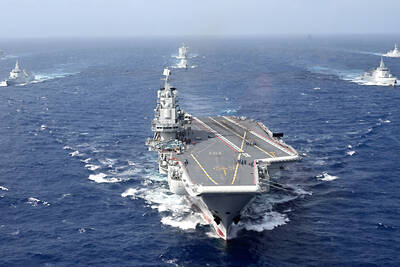
PROVOCATIVE: Chinese Deputy Ambassador to the UN Sun Lei accused Japan of sending military vessels to deliberately provoke tensions in the Taiwan Strait China denounced remarks by Japan and the EU about the South China Sea at a UN Security Council meeting on Monday, and accused Tokyo of provocative behavior in the Taiwan Strait and planning military expansion. Ayano Kunimitsu, a Japanese vice foreign minister, told the Council meeting on maritime security that Tokyo was seriously concerned about the situation in the East China and South China seas, and reiterated Japan’s opposition to any attempt to change the “status quo” by force, and obstruction of freedom of navigation and overflight. Stavros Lambrinidis, head of the EU delegation to the UN, also highlighted South China Sea
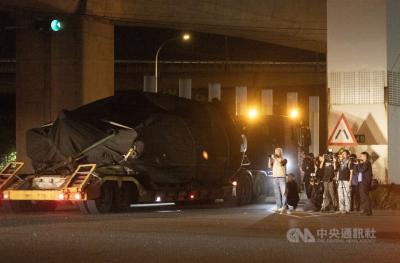
The final batch of 28 M1A2T Abrams tanks purchased from the US arrived at Taipei Port last night and were transported to the Armor Training Command in Hsinchu County’s Hukou Township (湖口), completing the military’s multi-year procurement of 108 of the tanks. Starting at 12:10am today, reporters observed more than a dozen civilian flatbed trailers departing from Taipei Port, each carrying an M1A2T tank covered with black waterproof tarps. Escorted by military vehicles, the convoy traveled via the West Coast Expressway to the Armor Training Command, with police implementing traffic control. The army operates about 1,000 tanks, including CM-11 Brave Tiger
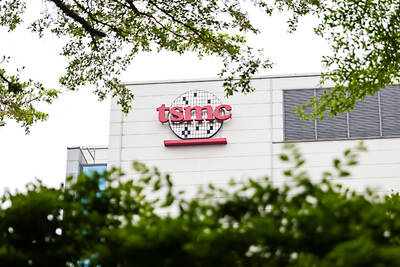
Taiwan Semiconductor Manufacturing Co (TSMC, 台積電), the world’s largest contract chipmaker, said it expects its 2-nanometer (2nm) chip capacity to grow at a compound annual rate of 70 percent from this year to 2028. The projection comes as five fabs begin volume production of 2-nanometer chips this year — two in Hsinchu and three in Kaohsiung — TSMC senior vice president and deputy cochief operating officer Cliff Hou (侯永清) said at the company’s annual technology symposium in Silicon Valley, California, last week. Output in the first year of 2-nanometer production, which began in the fourth quarter of last year, is expected to
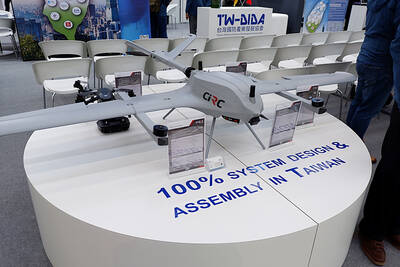
Taiwan’s drone exports surged past US$100 million in the first quarter, exceeding last year’s full-year total, with the Czech Republic emerging as the largest buyer, the Ministry of Economic Affairs said. Exports of complete drones reached US$115.85 million in the period, about 1.2 times the total recorded for all of last year, the ministry said in a report. Exports to the Czech Republic accounted for about US$100 million, far outpacing other markets. Poland, last year’s top destination, recorded about US$11.75 million in the first quarter. Taiwan’s drone exports have expanded rapidly in the past few years, with last year’s total


 RSS
RSS