


Politicians from the Chinese Nationalist Party (KMT) and the New Party gathered yesterday at an event in Taipei where they lashed out at the student-led Sunflower movement, which had protested the government’s handling of the cross-strait service trade agreement.
Former premier Hau Pei-tsun (郝柏村) called the Sunflower movement a “coup d’etat,” saying that something characterized by riots and violence “did not deserve to be called a student movement.”
The Sunflower movement cannot be compared to the May 4th movement, when thousands of Chinese students protested on May 4, 1919, against the Treaty of Versailles’ acknowledgement of Japan’s territorial claims in China, Hau said.
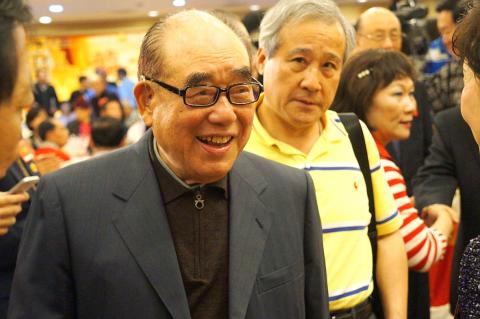
Photo: CNA
Taiwan has built up its democracy over 60 years, but the Sunflower movement now has it damaged beyond repair, Hau said.
New Party Chairman Yok Mu-ming (郁慕明) said that the way the students had behaved in leading the Sunflower movement was an “act of betrayal.”
Condemnation against the protesters is not enough, Yok said, adding that he demanded that President Ma Ying-jeou (馬英九) and law enforcement authorities look into their legal responsibility in accordance with the law and “never treat them with leniency.”
KMT Deputy Chairman Tseng Yung-chuan (曾永權) said he represented Ma — who serves as chairman of the party — at the event yesterday, which was held to celebrate the 20th anniversary of the establishment of the New Revolutionary Alliance (新同盟會).
Tseng said that the KMT had received many complaints condemning those who occupied the legislative chamber from March 18, stormed into the Executive Yuan complex on March 23 and besieged Taipei’s Zhongzheng First Police Precinct on April 11. The letters were also critical of the “irrational” hunger strike by former Democratic Progressive Party chairman Lin I-hsiung (林義雄) against the Fourth Nuclear Power Plant in New Taipei City’s Gongliao District (貢寮).
It is easy to tell that opposition parties were behind the movements and that their aim was to “usurp” the government’s power, Tseng said.
The students and others who engaged in the civil disobedience movements deserved nothing but condemnation, he added.
Former Taipei EasyCard Corp (悠遊卡)chairman Sean Lien (連勝文), the KMT’s candidate for the upcoming Taipei mayoral election who also attended the event yesterday, said the spate of protests showed that “some people with ulterior motives” attributed the problems stifling Taiwan’s economic development to cross-strait relations and had managed to turn the dissatisfaction and frustration about the situation into forces that drove people to the streets.
“This is a new crisis facing the Republic of China,” Lien said.
Meanwhile, retired general Hsu Li-nong (許歷農), head of the New Revolutionary Alliance, called for Taiwan to sign an agreement with China that both sides of the Taiwan Strait be referred to as “China.”
The alliance, whose purpose is to push for unification, is planning to bring about the signing of the agreement, Hsu said.
In response, Sunflower movement leader Lin Fei-fan (林飛帆) said: “As is often the case with a democracy, student movements are a form of social movement.”
“Throughout Taiwan’s democratization against the KMT’s authoritarian rule, Hau has blocked progress, but now he is posturing as a paragon of democracy,” Lin said. “This is an insult to Taiwanese.”
“Hau has shown a total lack of understanding about democracy or people’s rights to freedom of expression,” Lin said. “It reflects his antidemocratic, military character.”
Additional reporting by Chen Yen-ting
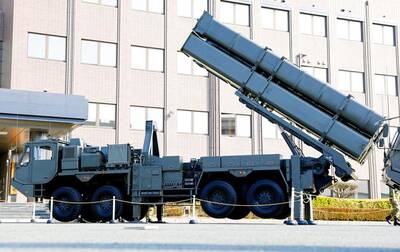
Japan has deployed long-range missiles in a southwestern region near China, the Japanese defense minister said yesterday, at a time when ties with Beijing are at their lowest in recent years. The missiles were installed in Kumamoto in the southern region of Kyushu, as Japan is attempting to shore up its military capacity as China steps up naval activity in the East China Sea. “Standoff defense capabilities enable us to counter the threat of enemy forces attempting to invade our country ... while ensuring the safety of our personnel,” Japanese Minister of Defense Shinjiro Koizumi said. “This is an extremely important initiative for
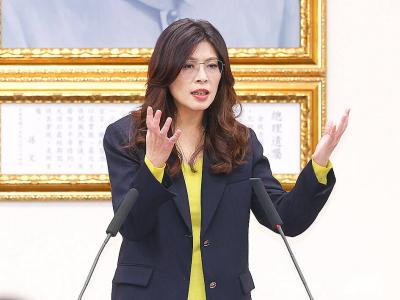
Chinese Nationalist Party (KMT) Chairwoman Cheng Li-wun (鄭麗文) today accepted an invitation from Chinese President Xi Jinping (習近平) to lead a delegation to China next month, saying she hopes to promote the peaceful development of cross-strait relations and bring stability to the Taiwan Strait. “I am grateful and happy to accept this invitation,” Cheng said in a statement from the KMT chairperson’s office. Cheng said she hopes both sides can work together to promote the peaceful development of cross-strait relations, enhance exchange and cooperation, bring stability to the Taiwan Strait and improve people’s livelihoods. At today's news conference, Cheng said any efforts to
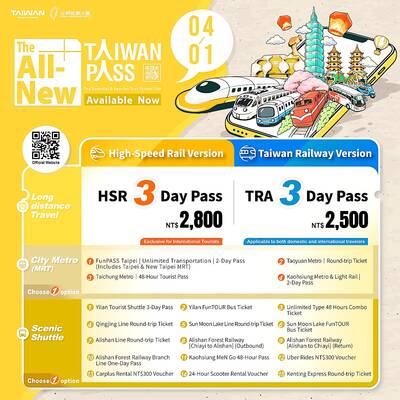
MORE POPULAR: Taiwan Pass sales increased by 59 percent during the first quarter compared with the same period last year, the Tourism Administration said The Tourism Administration yesterday said that it has streamlined the Taiwan Pass, with two versions available for purchase beginning today. The tourism agency has made the pass available to international tourists since 2024, allowing them to access the high-speed rail, Taiwan Railway Corp services, four MRT systems and four Taiwan Tourist Shuttles. Previously, five types of Taiwan Pass were available, but some tourists have said that the offerings were too complicated. The agency said only two types of Taiwan Pass would be available, starting from a three-day pass with the high-speed rail and a three-day pass with Taiwan Railway Corp. The former costs NT$2,800
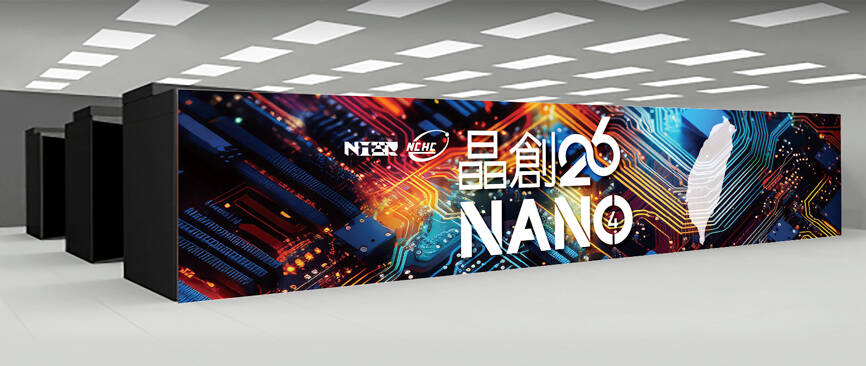
The nation’s fastest supercomputer, Nano 4 (晶創26), is scheduled to be launched in the third quarter, and would be used to train large language models in finance and national defense sectors, the National Center for High-Performance Computing (NCHC) said. The supercomputer, which would operate at about 86.05 petaflops, is being tested at a new cloud computing center in the Southern Taiwan Science Park in Tainan. The exterior of the server cabinet features chip circuitry patterns overlaid with a map of Taiwan, highlighting the nation’s central position in the semiconductor industry. The center also houses Taiwania 2, Taiwania 3, Forerunner 1 and


 RSS
RSS