


Tung Fang Mei Enterprise Co Ltd (東方美), the local agent for Japanese cosmetics brand Kanebo, said it has taken 12 products off the nation’s shelves after Kanebo announced a recall yesterday.
Kanebo recalled 54 skin-whitening products across Asia after complaints they caused discoloring that does not clear up even after use of the products was discontinued.
The products contain a substance called Rhododendrol, or 4HPB, a synthetic version of a natural compound that the firm developed, Kanebo said.
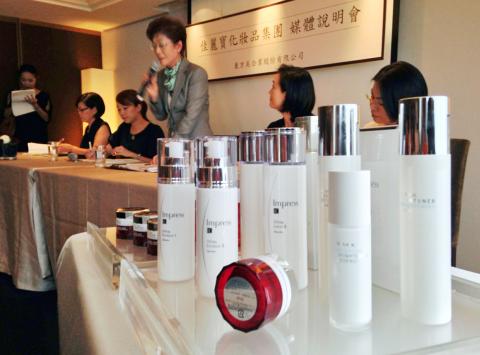
Photo: CNA
Taiwan is the largest overseas market for the products, a Kanebo spokesman in Japan told Agence France-Presse (AFP).
Consumers in Taiwan who have bought the 12 products can return them in exchange for other products until Aug. 10, Tung Fang Mei said in a statement.
It said that sales of the product were being suspended only to allay customer concerns and not because the products were problematic.
Questions have not been raised about the ingredient in any market except Japan, the statement said.
“Some consumers complained that they had white patches on their skin after using the products, and we suspect a link between the condition and 4HPB,” a Kanebo spokeswoman in Japan said.
Taiwan’s Department of Health said there have been no reports of irritation from consumers.
Major department store chains — Pacific Sogo Department Stores Co (太平洋崇光百貨), Shin Kong Mitsukoshi Department Store Co (新光三越百貨), and Far Eastern Department Stores Co (遠東百貨) — have said they will help customers who want to return the 12 products.
A Kanebo company spokesman later told AFP the company had received 39 complaints from customers in Japan since May. Fifteen had shown no improvement in their conditions even after they stopped using the products, he said.
“The problem was initially thought to be a type of skin disease, but there was a growing concern the condition could be linked to 4HPB,” which led the company to recall the products, the spokesman said.
The company has shipped a total of 4.36 million products in Japan and is recalling 450,000 that have already been sold, as well as all inventory from the Japanese market.
A total of 370,000 items have been sent to overseas markets, but at present Kanebo only plans to recall items that are on sale.
The sales suspended by Tung Fang Mei include products in the Blanchir Superior series — White Deep Clear Conditioner, White Deep Milky Conditioner and White Deep Night Conditioner — and those in the Impress series — Impress IC White Lotion, Impress IC White Emulsion, Impress IC White Fit Mask 3D and Impress Granmula Lotion.
The recall also covers Hong Kong, South Korea, Thailand, Singapore, Malaysia, Indonesia, Myanmar, the Philippines and Vietnam.
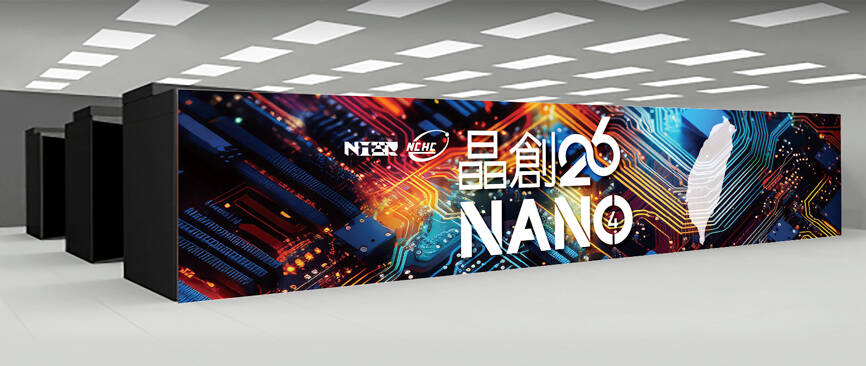
The nation’s fastest supercomputer, Nano 4 (晶創26), is scheduled to be launched in the third quarter, and would be used to train large language models in finance and national defense sectors, the National Center for High-Performance Computing (NCHC) said. The supercomputer, which would operate at about 86.05 petaflops, is being tested at a new cloud computing center in the Southern Taiwan Science Park in Tainan. The exterior of the server cabinet features chip circuitry patterns overlaid with a map of Taiwan, highlighting the nation’s central position in the semiconductor industry. The center also houses Taiwania 2, Taiwania 3, Forerunner 1 and
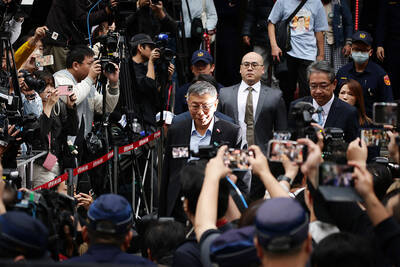
FIRST TRIAL: Ko’s lawyers sought reduced bail and other concessions, as did other defendants, but the bail judge denied their requests, citing the severity of the sentences Former Taipei mayor Ko Wen-je (柯文哲) was yesterday sentenced to 17 years in prison and had his civil rights suspended for six years over corruption, embezzlement and other charges. Taipei prosecutors in December last year asked the Taipei District Court for a combined 28-year, six-month sentence for the four cases against Ko, who founded the Taiwan People’s Party (TPP). The cases were linked to the Core Pacific City (京華城購物中心) redevelopment project and the mismanagement of political donations. Other defendants convicted on separate charges included Chinese Nationalist Party (KMT) Taipei City Councilor Angela Ying (應曉薇), who was handed a 15-year, six-month sentence; Core Pacific
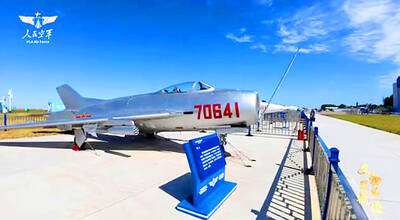
J-6 REMODEL: The converted drones are part of Beijing’s expanding mix of airpower weapons, including bombers with stand-off missiles and UAV swarms, the report said China has stationed obsolete supersonic fighters converted to attack drones at six air bases close to the Taiwan Strait, a report published this month by the Arlington, Virginia-based Mitchell Institute for Aerospace Studies said. Satellite imagery of the airfields from the institute’s “China Airpower Tracker” shows what appear to be lines of stubby, swept-winged aircraft matching the shape of J-6 fighters that first flew with the Chinese People’s Liberation Army (PLA) Air Force in the 1960s. Since their conversion to drones, the aircraft have been identified at five bases in China’s Fujian Province and one in Guangdong Province, the report said. J.

China used fake LinkedIn profiles to harvest sensitive data from NATO and EU institutions by soliciting information from staff, a European security source said on Friday. The operation, allegedly orchestrated by the Chinese Ministry of State Security, targeted dozens of employees at the military alliance or EU organizations through fictitious accounts, the source said, confirming reports in French and Belgian media. Posing as recruiters on the online professional networking platform, Chinese spies would initially request paid reports before later soliciting non-public or even classified information. One particularly active fake profile used the name “Kevin Zhang,” claiming to be the head


 RSS
RSS