


A factory cleaner from Greater Taichung who has donated more than US$130,000 to charities was recently selected by the US magazine Forbes as one of its 48 Asian heroes of philanthropy.
Chao Wen-cheng (趙文正), 68, has donated about NT$4 million (US$133,600) over the past 30 years to orphanages in his hometown of Greater Taichung, as well as to the Taiwan Fund for Children and Families, World Vision Taiwan and the Tzu Chi Foundation.
In April, he sponsored a firefighting vehicle, which cost more than NT$600,000, for Greater Taichung’s Fire Bureau.
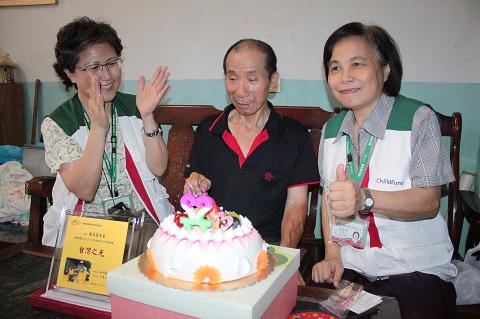
Photo: Yu Po-lin, Taipei Times
Having known the difficulties of being poor growing up in a low-income family, Chao, at 35, began donating about three-quarters of his modest salary, which is less than NT$20,000 a month, to charity after reading a story about a poor child in a newspaper.
As a father of five children, Chao also collects cans and bottles in the evenings to support his family.
“Once a young man teased me and said I look like a dog while I was finding recyclables in a garbage bin,” he said, adding: “I was almost in tears, but I ignored him as I knew I had to do it to make a living and provide a good education for my children.”
Although his children are now all grown up, Chao has no plans to stop doing what he does.
“I will never retire from my job, or from making donations to help people in need,” Chao said.
Living in an old house with no decorations and walls with faded paint in Wurih (烏日), Chao said he prefers not to spend money on himself, but to help others instead, adding that it pains him to see people suffer from poverty.
“I don’t make much money from collecting recyclables, but I saved every penny I earned and gathered them little by little,” he said.
Chao’s wife, Chao Hsieh Mei-yu (趙謝美玉), 64, supports his efforts.
“We don’t need a lot of money. My oldest child is 40 and one of them is a teacher,” Chao Hsieh said. “As long as my husband is happy, we can live a simple life and save more money to give to others.”
Taichung Mayor Jason Hu (胡志強), who wrote to the magazine to recommend Chao, said Chao was the pride of Greater Taichung and that his nomination has helped the world know the kindness of Taiwanese.
The other Taiwanese listed are all businessmen: Evergreen Group (長榮集團) founder Chang Yung-fa (張榮發), 84; Wowprime Corp (王品集團) chairman Steve Day (戴勝益), 58; and 84-year-old Chi Mei Group (奇美集團) founder Hsu Wen-long (許文龍).
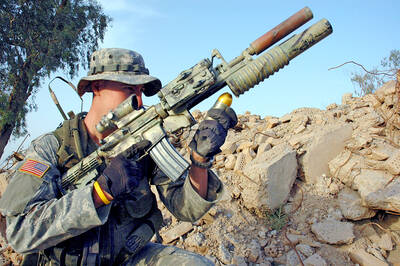
PREPAREDNESS: Given the difficulty of importing ammunition during wartime, the Ministry of National Defense said it would prioritize ‘coproduction’ partnerships A newly formed unit of the Marine Corps tasked with land-based security operations has recently replaced its aging, domestically produced rifles with more advanced, US-made M4A1 rifles, a source said yesterday. The unnamed source familiar with the matter said the First Security Battalion of the Marine Corps’ Air Defense and Base Guard Group has replaced its older T65K2 rifles, which have been in service since the late 1980s, with the newly received M4A1s. The source did not say exactly when the upgrade took place or how many M4A1s were issued to the battalion. The confirmation came after Chinese-language media reported
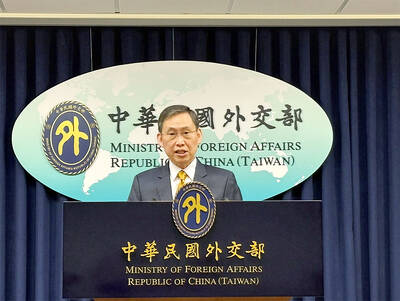
A Ministry of Foreign Affairs official yesterday said that a delegation that visited China for an APEC meeting did not receive any kind of treatment that downgraded Taiwan’s sovereignty. Department of International Organizations Director-General Jonathan Sun (孫儉元) said that he and a group of ministry officials visited Shenzhen, China, to attend the APEC Informal Senior Officials’ Meeting last month. The trip went “smoothly and safely” for all Taiwanese delegates, as the Chinese side arranged the trip in accordance with long-standing practices, Sun said at the ministry’s weekly briefing. The Taiwanese group did not encounter any political suppression, he said. Sun made the remarks when
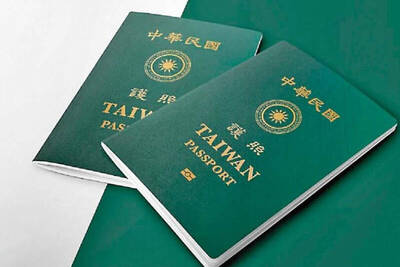
The Taiwanese passport ranked 33rd in a global listing of passports by convenience this month, rising three places from last month’s ranking, but matching its position in January last year. The Henley Passport Index, an international ranking of passports by the number of designations its holder can travel to without a visa, showed that the Taiwan passport enables holders to travel to 139 countries and territories without a visa. Singapore’s passport was ranked the most powerful with visa-free access to 192 destinations out of 227, according to the index published on Tuesday by UK-based migration investment consultancy firm Henley and Partners. Japan’s and
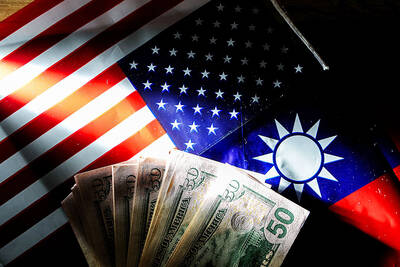
BROAD AGREEMENT: The two are nearing a trade deal to reduce Taiwan’s tariff to 15% and a commitment for TSMC to build five more fabs, a ‘New York Times’ report said Taiwan and the US have reached a broad consensus on a trade deal, the Executive Yuan’s Office of Trade Negotiations said yesterday, after a report said that Washington is set to reduce Taiwan’s tariff rate to 15 percent. The New York Times on Monday reported that the two nations are nearing a trade deal to reduce Taiwan’s tariff rate to 15 percent and commit Taiwan Semiconductor Manufacturing Co (TSMC, 台積電) to building at least five more facilities in the US. “The agreement, which has been under negotiation for months, is being legally scrubbed and could be announced this month,” the paper said,


 RSS
RSS