


The detention of a Central Police University professor yesterday on suspicion of having gathered intelligence for China has sparked much debate, with sources saying that since the signing of a cross-strait agreement on joint efforts to combat crime, China has repeatedly asked Taiwan to establish “anti-terrorism” cooperation targeting pro-Taiwanese independence groups, pro-Xinjiang independence groups, pro-Tibetan independence groups, Falun Gong practitioners and social activists.
Taiwan has so far declined to agree to cooperate because the people China lists as “terrorists” are mostly political dissidents, sources said.
Wu Chang-yu (吳彰裕), an associate professor with the Central Police University’s Department of Administrative Management, teaches Chinese political history at the university.

Photo: Taipei Times
The court granted prosecutors’ request to detain him after interrogation.
Taipei prosecutors also applied to detain Lin Po-hung (林柏宏), a police officer with the -National Police Bureau’s (NPB) Foreign Affairs Department, but the district court released Lin without bail. Prosecutors released another NPB officer, Wu Tung-lin (吳東霖), on NT$100,000 bail.
Prosecutors allege Wu Chang-yu collected information on Chinese dissidents, pro-Tibetan independence activists and the Falun Gong movement in Taiwan, and delivered that information to Chinese authorities.

Photo: Taipei Times
Prosecutors said Wu Chang-yu told investigators the information he offered was not confidential, but common information.
Wu Chang-yu also denied he received money from China, but prosecutors said they have evidence Wu Chang-yu had received at least several free flights to Chinese cities from Chinese authorities.
Wu Chang-yu’s colleagues at the university declined to comment after his arrest, but some have privately said that Wu was troublesome.
Wu Chang-yu receives broad media coverage as a fortune-teller, and the school’s Administrative Management Department has asked him to refrain from mentioning that he teaches at the school while appearing in the media, sources said.
As to whether Wu was helping Beijing gather intelligence, an academic that frequently -travels to China said that China’s intelligence gathering on Taiwan was very thorough, with complete records of who has a special background or is connected to political figures and parties in Taiwanese academia.
This has been made easier for China since President Ma Ying-jeou (馬英九) came to power because cross-strait exchanges have become more frequent, the academic said, adding that the information given to Beijing was both more up-to-date and more accurate.
According to sources, a law professor from National Chengchi University (NCCU) had gone to China on an academic -exchange this summer, but had been questioned by the Ministry of State Security (MSS) without cause and forcibly detained for two to three days.
Academics who are aware of such proceedings said it was not the first time that had happened, and there have been incidents of Taiwanese academics being harassed by the MSS before.
However, the academic added that it was harder to understand why it was still happening, because since Ma came into power, he has claimed that cross-strait relations have improved greatly.
Additional reporting by AFP
Translated by Jake Chung, Staff Writer
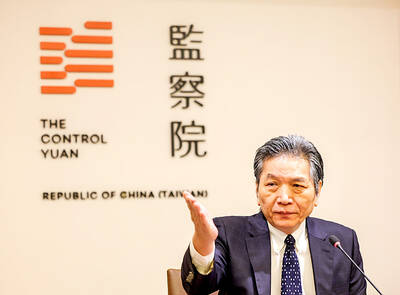
‘ABUSE OF POWER’: Lee Chun-yi allegedly used a Control Yuan vehicle to transport his dog to a pet grooming salon and take his wife to restaurants, media reports said Control Yuan Secretary-General Lee Chun-yi (李俊俋) resigned on Sunday night, admitting that he had misused a government vehicle, as reported by the media. Control Yuan Vice President Lee Hung-chun (李鴻鈞) yesterday apologized to the public over the issue. The watchdog body would follow up on similar accusations made by the Chinese Nationalist Party (KMT) and would investigate the alleged misuse of government vehicles by three other Control Yuan members: Su Li-chiung (蘇麗瓊), Lin Yu-jung (林郁容) and Wang Jung-chang (王榮璋), Lee Hung-chun said. Lee Chun-yi in a statement apologized for using a Control Yuan vehicle to transport his dog to a
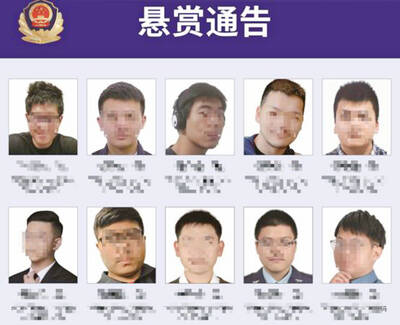
Taiwan yesterday denied Chinese allegations that its military was behind a cyberattack on a technology company in Guangzhou, after city authorities issued warrants for 20 suspects. The Guangzhou Municipal Public Security Bureau earlier yesterday issued warrants for 20 people it identified as members of the Information, Communications and Electronic Force Command (ICEFCOM). The bureau alleged they were behind a May 20 cyberattack targeting the backend system of a self-service facility at the company. “ICEFCOM, under Taiwan’s ruling Democratic Progressive Party, directed the illegal attack,” the warrant says. The bureau placed a bounty of 10,000 yuan (US$1,392) on each of the 20 people named in
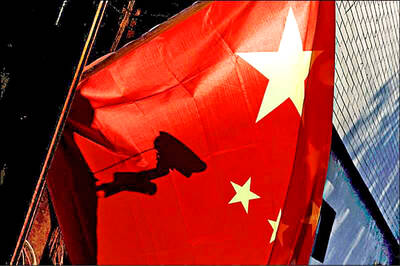
The High Court yesterday found a New Taipei City woman guilty of charges related to helping Beijing secure surrender agreements from military service members. Lee Huei-hsin (李慧馨) was sentenced to six years and eight months in prison for breaching the National Security Act (國家安全法), making illegal compacts with government employees and bribery, the court said. The verdict is final. Lee, the manager of a temple in the city’s Lujhou District (蘆洲), was accused of arranging for eight service members to make surrender pledges to the Chinese People’s Liberation Army in exchange for money, the court said. The pledges, which required them to provide identification

INDO-PACIFIC REGION: Royal Navy ships exercise the right of freedom of navigation, including in the Taiwan Strait and South China Sea, the UK’s Tony Radakin told a summit Freedom of navigation in the Indo-Pacific region is as important as it is in the English Channel, British Chief of the Defence Staff Admiral Tony Radakin said at a summit in Singapore on Saturday. The remark came as the British Royal Navy’s flagship aircraft carrier, the HMS Prince of Wales, is on an eight-month deployment to the Indo-Pacific region as head of an international carrier strike group. “Upholding the UN Convention on the Law of the Sea, and with it, the principles of the freedom of navigation, in this part of the world matters to us just as it matters in the


 RSS
RSS