


Former US president Bill Clinton, who arrived last night on a less-than-24 hour visit to Taipei, lauded President Ma Ying-jeou’s (馬英九) cross-strait policy over dinner before making a speech on Taiwan’s economic future at the Taiwan International Convention Center.
Taipei Mayor Hau Lung-bin (郝龍斌), who attended the event, arrived about 10 minutes late, and Clinton’s speech began about 15 minutes later than scheduled.
Prior to the event, Clinton, who landed at Taipei’s Songshan Military Airport on a private jet, attended a welcoming banquet hosted by Ma and Vice President Vincent Siew (蕭萬長).
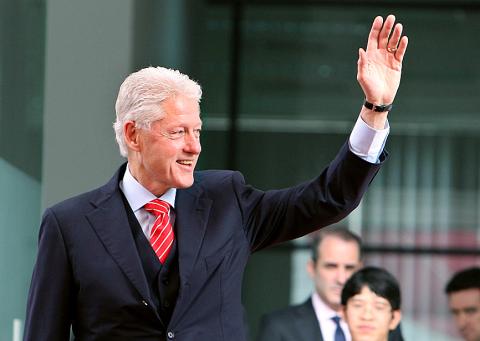
Photo: EPA
Afterward, Minister of Foreign Affairs Timothy Yang (楊進添) provided reporters with an overview of the discussion between Clinton and Ma during the vegetarian dinner. Clinton allegedly commended Ma’s cross-strait policies, in particular the Economic Cooperation Framework Agreement, Yang said.
Ma and Clinton touched on the development of the political scene in East Asia and also discussed Taiwan’s democratic development, he said.
Clinton told Ma he once told former Chinese president Jiang Zemin (江澤民) not to worry about Taiwanese democracy, Yang quoted him as saying.
“He [Clinton] said there are two kinds of pain. One is [a] toothache. If we leave it alone, it may get worse. The other kind is a child’s skin scrape. If we leave them alone, the wounds will heal by themselves,” Yang said.
“The issue of Taiwan is like the scrape. If we leave the scrapes alone, they will recover. The Taiwan issue will be resolved as time goes by,” he quoted Clinton as saying.
A participant of last night’s speech who spoke on condition of anonymity said the conference hall was about three-fourths full, but two-thirds of the 300 VIP seats were empty.
Data from the organizers showed that the prices of the tickets ranged between NT$1,800 and NT$12,000.
Clinton is scheduled to leave Taiwan in this afternoon.
This was Clinton’s sixth visit to Taiwan, his most recent being in 2005.
At press time, Clinton’s speech was ongoing.
See Clinton on page 2

An Emirates flight from Dubai arrived at Taiwan Taoyuan International Airport yesterday afternoon, the first service of the airline since the US and Israel launched strikes against Iran on Saturday. Flight EK366 took off from the United Arab Emirates (UAE) at 3:51am yesterday and landed at 4:02pm before taxiing to the airport’s D6 gate at Terminal 2 at 4:08pm, data from the airport and FlightAware, a global flight tracking site, showed. Of the 501 passengers on the flight, 275 were Taiwanese, including 96 group tour travelers, the data showed. Tourism Administration Deputy Director-General Huang He-ting (黃荷婷) greeted Taiwanese passengers at the airport and

POSSIBILITIES EMERGE: With Taiwan’s victory and Japan’s narrow win over Australia, Taiwan now have a chance to advance if South Korea also beat the Aussies Taiwan has high hopes that the national baseball team would advance to the World Baseball Classic (WBC) quarter-finals after clinching a crucial 5-4 victory over South Korea in a nail-biting extra-inning game at the Tokyo Dome yesterday. Boosted by three home runs — two solo shots by Yu Chang (張育成) and Cheng Tsung-che (鄭宗哲) and a two-run homer by Stuart Fairchild — the triumph gave Taiwan a much-needed second victory in the five-team Pool C, where only the top two finishers would advance to the knockout stage in Miami, Florida. Entering extra innings with the game tied at four apiece, Taiwan scored
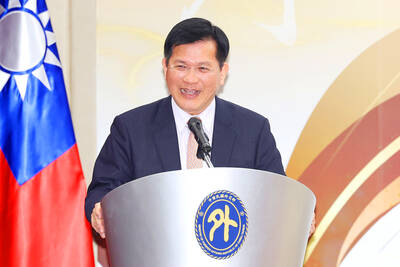
MISSION OF PEACE: The foreign minister urged Beijing to respect Taiwan’s existence as an independent nation, and work together to ensure peace and stability in the region Minister of Foreign Affairs Lin Chia-lung (林佳龍) yesterday rejected Chinese Minister of Foreign Affairs Wang Yi’s (王毅) comments about Taiwan, criticizing China as a “troublemaker” in the international community and a disruptor of cross-strait peace. Speaking at a news conference on the sidelines of the Chinese National People’s Congress, Wang said that Taiwan has always been a territory of China and that it would be impossible for it to become its own country. The “return” of Taiwan to China was the natural outcome of the Chinese people’s resistance against Japan in World War II, and that any pursuit of independence was “doomed
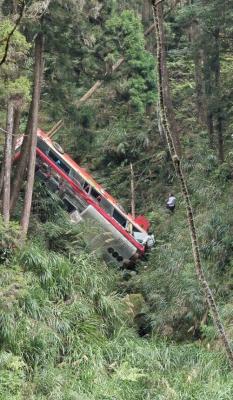
One person was killed and another seven injured today when a tourist shuttle bus plunged 30m to 40m down a ravine in Nantou County, the Tourism Administration said. The bus is suspected to have suddenly accelerated out of control near the flower center of the Sun-Link-Sea Forest Recreation Area, a popular attraction during cherry blossom season. Of the eight onboard, a 66-year-old man was killed, four were seriously injured and three sustained minor injuries, including the driver. The Nantou County Police Department said it received a report of the incident at 12:15pm and dispatched seven teams to assist. All surviving passengers have been transferred


 RSS
RSS