


International Committee of Sports for the Deaf (ICSD) president Donalda Ammons yesterday praised Taipei’s Summer Deaflympics as the “best ever” in the Games’ 85-year history.
Ammons said she was impressed by the event in many ways, including its venues, its organization and efficiency, the setup of the programs and the volunteers.
She said organizers resolved any problems that arose quickly. The efficiency was “phenomenal,” she said, adding that past organizers had usually taken hours or even days to solve problems.
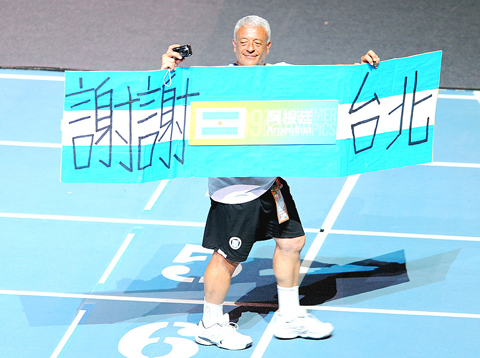
PHOTO: CHANG CHIA-MING, TAIPEI TIMES
There was an exceptional number of volunteers, who were ever smiling and ready to help.
Ammons also praised the high quality of the referees and said media coverage of the event was more than the Deaflympics had ever received.
Organizers were also meticulous about visual information at the event, presenting crucial information on big screens and score boards.
“As a deaf person, I felt like a first-class citizen,” she said.
ICSD vice president David Lanesman of Israel expressed similar gratitude for the care put into the event, saying it made him “feel like a human being.”
ICSD sports director Josef Willmerdinger of Germany said Taipei had a huge heart and that he had never experienced such warmth anywhere else.
“Taipei is the best,” he said.
Presenting Ammons with a key to the city and a certificate of honorary Taipei citizenship, Taipei Mayor Hau Lung-bin (郝龍斌) thanked the ICSD president for her unwavering dedication and contributions to promoting human rights and sports for the deaf.
Taipei was also grateful for her help with organizing the Deaflympics, Hau said.
Hau gave Ammons a CD with photos, saying he hoped she would remember Taiwan, to which Ammons responded that she would never forget Taiwan, with or without photographs.
Hau also presented flowers and cash awards to Deaflympics athletes Ho Chiu-mei (何秋美), Ho Chiu-hsiang (何秋香) and An Ching-lung (安慶隆).
The Ho sisters won silver medals in women’s doubles tennis and An took home the bronze in the decathlon.
Describing the success of the Deaflympics as “the pride of Taiwan,” the mayor said the Ho sisters’ silver medals were more valuable than golds because they had brought the spirit of the Games and Taiwan into full play.
Ho Chiu-hsiang said although she was injured in the pair’s final match, she kept playing because she knew she would regret it the rest of her life if she gave up.
An said he was happy to improve his personal best performances at the Deaflympics.
He added that he hoped the government would invest more in helping young athletes develop and compete internationally.
He asked the government to help hearing-impaired athletes find jobs, to which Hau said it was the government’s duty to meet their needs, including with job opportunities and training.
The Taipei Deaflympics, which opened on Sept. 5 and closed yesterday, were the first held in Asia.

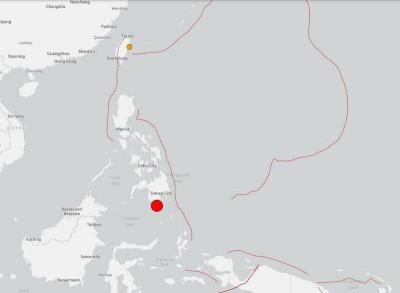
A magnitude 7.8 earthquake struck off the southern coast of Mindanao in the Philippines at 7:38am today, prompting the US Tsunami Warning System to issue an alert for neighboring countries, including Taiwan. The system issued a purple alert indicating a "tsunami threat." The potential threat zone includes Taiwan, the Philippines, Papua New Guinea, Yap and Palau. There were no immediate reports of major damage in the Philippines or Indonesia. The quake struck at a depth of 10km, said the German Research Centre for Geosciences, which had earlier pegged the earthquake at magnitude 8.2. Phivolcs, the Philippine agency, said the quake was magnitude 7 and
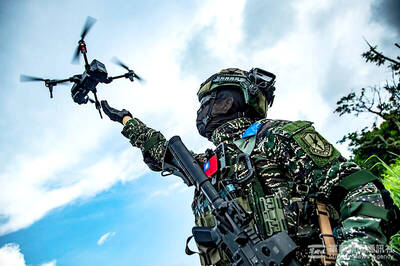
RESILIENCE: Taiwan plays a key role in semiconductors, energy, information infrastructure and advanced manufacturing, AIT Director Raymond Greene said Taiwan’s continued investment in deterrence and resilience remains vital, especially in uncrewed systems and other emerging technologies, American Institute in Taiwan (AIT) Director Raymond Greene said yesterday. Greene made the remarks at the annual National Strategic Summit on Supply Chain Resilience held by the Research Institute for Democracy, Society and Emerging Technology (DSET), a government-backed think tank. As Taiwan last year became the US’ fourth-largest trading partner and supply chain security is becoming more important, cooperation in emerging technologies continues to deepen between the two countries, he said. The US is committed to accelerating innovation, building key infrastructure, strengthening cooperation

The National Chungshan Institute of Science and Technology yesterday showcased its locally developed variants of the Vision 60 robotic patrol dog, which it plans to deploy on the nation’s outlying territories in the South China Sea. The variants were produced under the Joint Lab project — created by the institute and domestic companies — and assembled with domestically produced motors, lenses and artificial intelligence (AI) systems alongside licensed tech from the US, Missile and Rocket Systems Research Division deputy director Jen Kuo-kang (任國光) told the media event at a military base in Taipei’s Dazhi (大直) area. Taiwan has built up its strengths

RIGHT DIRECTION: Taiwan’s efforts to prevent forced labor include a proposal to ‘fully prohibit’ employers from withholding workers’ documents, an official said Taiwan is to establish a mechanism to restrict imports of goods linked to forced labor, the Executive Yuan said yesterday, after the US proposed imposing additional tariffs on Taiwanese goods over labor concerns. “The Ministry of Labor and the Ministry of Economic Affairs are to establish an interministerial review procedure,” Executive Yuan spokesperson Michelle Lee (李慧芝) said at a news briefing in Taipei. “The government is to use the Foreign Trade Act [貿易法] as the legal basis to restrict imports of goods produced with forced labor” and bring its supply chain governance more in line with international standards on human rights, resilience


 RSS
RSS