


Chinese President Hu Jintao (胡錦濤) and President Ma Ying-jeou (馬英九) corresponded with each other yesterday, with the former sending Ma a message congratulating him on his election as Chinese Nationalist Party (KMT) chairman, and the latter responding with a courtesy reply.
The two expressed the hope that both sides of the Taiwan Strait would work to create peace.
China sent a similar message when Ma was elected as KMT chairman in 2005. He served as chairman from 2005 to 2007 but resigned after being indicted for alleged misuse of his special allowance fund as Taipei mayor.
In Hu’s congratulatory message yesterday, he referred to Ma as “Mr” Hu said he hoped the KMT and the Chinese Communist Party (CCP) would continue to push for the peaceful development of cross-strait relations and further deepen mutual trust.
Hu also said he hoped to see the two parties make unceasing efforts to work for the well-being of the people and “create the great renaissance of the Chinese nation.”
Addressing “Mr Hu” as the General Secretary of the CCP, Ma said in his response to Hu that because of the joint efforts of the KMT and the CCP, cross-strait ties have walked down the road of peaceful development, stability and mutual prosperity based on the so-called “1992 consensus.”
Such a development not only met the expectations of people on both sides of the Taiwan Strait, but also won the recognition of the international community, Ma said in his message to Hu.
Ma urged the two sides to comply with the will of the people and make efforts to consolidate peace in the Taiwan Strait. He also called on both sides to restructure regional stability and advance cross-strait development and prosperity under the 16-word principle.
The 16-word principle referred to his proposal of “looking at the reality, building mutual trust, putting aside disputes and creating a win-win situation.”
While Hu referred to himself as the CCP General Secretary, in his reply Ma did not mention any title. The date on Ma’s message also left out the country’s name which, in general practice, precedes the year, month and day. In Ma’s message, it showed only “98 (2009) July 27.”
KMT Spokesman Lee Chien-jung (李建榮), who read out the two statements, said the Presidential Office said that this had been common practice for Ma since he took office in May last year. Besides, it was easy to figure out that 98 referred to the Republic of China calendar, he said.
Lee irked reporters when he declined to show the two statements and denied this had anything to do with Beijing.
Meanwhile, at a separate setting yesterday, a number of KMT legislators said the low voting turnout in Sunday’s chairmanship election could be the result of the Ma administration’s poor performance.
Ma, the sole candidate, received 285,354 of 303,987 votes, or 93.87 percent. Turnout was 56.95 percent.
KMT Legislator Justin Chou (周守訓) said the turnout reflected the dissatisfaction of many members with the government’s administrative performance.
“This is alarming,” Chou said.
KMT Legislator Lu Hsueh-chang (呂學樟), who represents the constituency in Hsinchu which had the lowest turnout (31.88 percent) in the chairmanship election, said the turnout showed that Ma had hurt the feelings of the party’s Hakka members by being disrespectful to outgoing KMT Chairman Wu Poh-hsiung (吳伯雄), who is a Hakka, during his chairmanship campaign.
But Legislative Speaker Wang Jin-pyng (王金平) disagreed, saying Ma had won the support of a great number of party members in the election.
ADDITIONAL REPORTING BY FLORA WANG
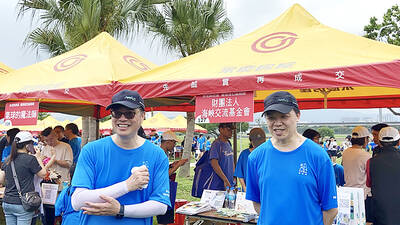
SECURITY: As China is ‘reshaping’ Hong Kong’s population, Taiwan must raise the eligibility threshold for applications from Hong Kongers, Chiu Chui-cheng said When Hong Kong and Macau citizens apply for residency in Taiwan, it would be under a new category that includes a “national security observation period,” Mainland Affairs Council (MAC) Minister Chiu Chui-cheng (邱垂正) said yesterday. President William Lai (賴清德) on March 13 announced 17 strategies to counter China’s aggression toward Taiwan, including incorporating national security considerations into the review process for residency applications from Hong Kong and Macau citizens. The situation in Hong Kong is constantly changing, Chiu said to media yesterday on the sidelines of the Taipei Technology Run hosted by the Taipei Neihu Technology Park Development Association. With
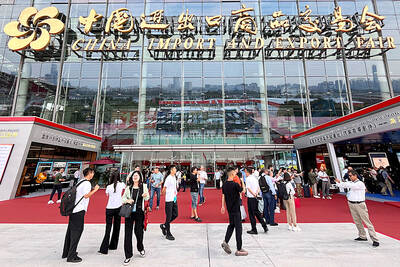
CARROT AND STICK: While unrelenting in its military threats, China attracted nearly 40,000 Taiwanese to over 400 business events last year Nearly 40,000 Taiwanese last year joined industry events in China, such as conferences and trade fairs, supported by the Chinese government, a study showed yesterday, as Beijing ramps up a charm offensive toward Taipei alongside military pressure. China has long taken a carrot-and-stick approach to Taiwan, threatening it with the prospect of military action while reaching out to those it believes are amenable to Beijing’s point of view. Taiwanese security officials are wary of what they see as Beijing’s influence campaigns to sway public opinion after Taipei and Beijing gradually resumed travel links halted by the COVID-19 pandemic, but the scale of
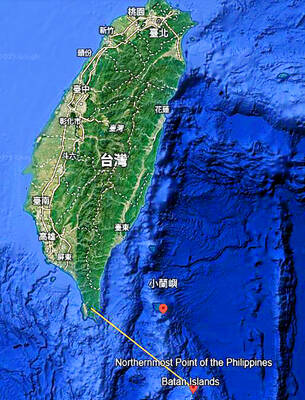
A US Marine Corps regiment equipped with Naval Strike Missiles (NSM) is set to participate in the upcoming Balikatan 25 exercise in the Luzon Strait, marking the system’s first-ever deployment in the Philippines. US and Philippine officials have separately confirmed that the Navy Marine Expeditionary Ship Interdiction System (NMESIS) — the mobile launch platform for the Naval Strike Missile — would take part in the joint exercise. The missiles are being deployed to “a strategic first island chain chokepoint” in the waters between Taiwan proper and the Philippines, US-based Naval News reported. “The Luzon Strait and Bashi Channel represent a critical access
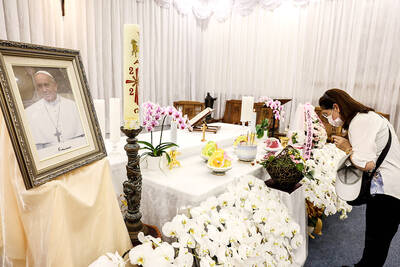
Pope Francis is be laid to rest on Saturday after lying in state for three days in St Peter’s Basilica, where the faithful are expected to flock to pay their respects to history’s first Latin American pontiff. The cardinals met yesterday in the Vatican’s synod hall to chart the next steps before a conclave begins to choose Francis’ successor, as condolences poured in from around the world. According to current norms, the conclave must begin between May 5 and 10. The cardinals set the funeral for Saturday at 10am in St Peter’s Square, to be celebrated by the dean of the College


 RSS
RSS