


A Thai court denied bail yesterday to a purported Russian arms dealer who is wanted by the US, saying it feared the suspect might try to flee the country, his lawyer said.
Viktor Bout, 41, was arrested in Thailand last week at a Bangkok luxury hotel after a US-led sting operation. He was charged with conspiracy for trying to smuggle missiles and rocket launchers to a rebel group in Colombia that is a US-designated terrorist organization.
Bout, also known as "The Merchant of Death," is being held in a Thai prison while authorities investigate whether he used the country as a base to negotiate the deal with terrorists. The Russian denies any wrongdoing and applied for bail yesterday.
"The court has denied bail," Bout's lawyer, Lak Nitiwatanavichan, said. "The suspect is being detained on severe charges for alleged engagement with international terrorists and the court said if it grants bail the suspect might escape."
Suspects can be held for up to 84 days in Thailand without being formally charged.
If convicted, Bout could face 10 years in prison on the Thai charge, and 15 years in the US.
An alleged associate of Bout's, Andrew Smulian, appeared on Monday in a New York City courtroom to face similar charges, prosecutors in New York said. Smulian, who was arrested on Friday in New York, did not enter a plea and was held without bail.
To capture Bout, undercover agents from the US Drug Enforcement Administration posed as rebels from the Revolutionary Armed Forces of Colombia seeking to purchase millions of dollars in weapons.
The US and UN have long identified Bout as a weapons smuggler whose alleged list of customers included former dictator Charles Taylor of Liberia, Libyan leader Muammar Qaddafi, late dictator Mobutu Sese Seko of Zaire, now the Congo, and both sides of the civil war in Angola.
Bout also reportedly supplied arms to warring parties in Afghanistan before the 2001 fall of the Taliban's Islamic regime.
A former Soviet air force officer, Bout allegedly built his contacts in the post-Soviet arms industry into a business dealing arms to combatants in conflicts around the world. He is generally believed to have been a model for the arms dealer portrayed by Nicolas Cage in the 2005 movie Lord of War.

SECURITY: As China is ‘reshaping’ Hong Kong’s population, Taiwan must raise the eligibility threshold for applications from Hong Kongers, Chiu Chui-cheng said When Hong Kong and Macau citizens apply for residency in Taiwan, it would be under a new category that includes a “national security observation period,” Mainland Affairs Council (MAC) Minister Chiu Chui-cheng (邱垂正) said yesterday. President William Lai (賴清德) on March 13 announced 17 strategies to counter China’s aggression toward Taiwan, including incorporating national security considerations into the review process for residency applications from Hong Kong and Macau citizens. The situation in Hong Kong is constantly changing, Chiu said to media yesterday on the sidelines of the Taipei Technology Run hosted by the Taipei Neihu Technology Park Development Association. With

CARROT AND STICK: While unrelenting in its military threats, China attracted nearly 40,000 Taiwanese to over 400 business events last year Nearly 40,000 Taiwanese last year joined industry events in China, such as conferences and trade fairs, supported by the Chinese government, a study showed yesterday, as Beijing ramps up a charm offensive toward Taipei alongside military pressure. China has long taken a carrot-and-stick approach to Taiwan, threatening it with the prospect of military action while reaching out to those it believes are amenable to Beijing’s point of view. Taiwanese security officials are wary of what they see as Beijing’s influence campaigns to sway public opinion after Taipei and Beijing gradually resumed travel links halted by the COVID-19 pandemic, but the scale of
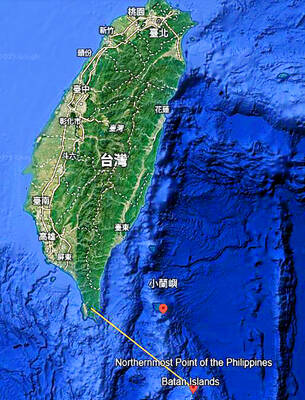
A US Marine Corps regiment equipped with Naval Strike Missiles (NSM) is set to participate in the upcoming Balikatan 25 exercise in the Luzon Strait, marking the system’s first-ever deployment in the Philippines. US and Philippine officials have separately confirmed that the Navy Marine Expeditionary Ship Interdiction System (NMESIS) — the mobile launch platform for the Naval Strike Missile — would take part in the joint exercise. The missiles are being deployed to “a strategic first island chain chokepoint” in the waters between Taiwan proper and the Philippines, US-based Naval News reported. “The Luzon Strait and Bashi Channel represent a critical access
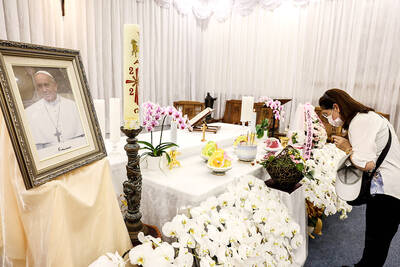
Pope Francis is be laid to rest on Saturday after lying in state for three days in St Peter’s Basilica, where the faithful are expected to flock to pay their respects to history’s first Latin American pontiff. The cardinals met yesterday in the Vatican’s synod hall to chart the next steps before a conclave begins to choose Francis’ successor, as condolences poured in from around the world. According to current norms, the conclave must begin between May 5 and 10. The cardinals set the funeral for Saturday at 10am in St Peter’s Square, to be celebrated by the dean of the College


 RSS
RSS