


The Taipei District Court yesterday morning opened documents related to secret diplomatic missions in the "state affairs fund" case after the president failed to produce information supporting his claim that the documents should be protected by legislation on classified information.
Prosecutor Chang Hsi-huai (
Court spokesman Liu Shou-sung (劉壽嵩) said the court ruled that the files could not be considered secret, as President Chen Shui-bian (陳水扁) and the Presidential Office had failed to produce documents proving that the files fall under the protection of the Classified National Security Information Protection Act (國家機密保護法).
Chang urged defense attorneys to read the documents as soon as possible.
"Lawyers are entitled to read the documents at the court. They might very well find information that aids their clients' case in the documents," he said.
Three sets of documents were sealed by Prosecutor Eric Chen (陳瑞仁) after he completed his investigation into the president's use of the "fund."
Eric Chen said yesterday that he had sealed the documents to prevent the release of sensitive information, although he added that he did not consider the documents to be under the protection of the Classified National Security Information Protection Act.
Defense lawyers yesterday called on the president to seek a ruling on the matter from the Council of Grand Justices before the court meets again on Feb. 2 to determine whether the "state affairs fund" case should continue.
Presidential Office Deputy Secretary-General Cho Jung-tai (卓榮泰) said that the president would "seriously" consider the lawyers' proposal, as it seemed a good way to resolve the constitutional dispute between the court and the Presidential Office.
However, it would take some time to map out a plan, as seeking a constitutional interpretation would be a "huge project," he said.
Wellington Koo (顧立雄), one of first lady Wu Shu-jen's (吳淑珍) defense lawyers in the case, told a press conference late yesterday afternoon that members of her legal team considered the president to be the only individual entitled to file the request, because he is duty-bound to protect the constitutional order and national security.
Koo said the legal team would not ask to review the documents unless the dispute is settled.
"The purpose is to safeguard the presidency rather than his career, and he should not be put off by the possibility of criticism that the move is a scheme aimed at prolonging the court proceedings," he said.
Koo added that the president might want to ask the council to decide whether it was constitutional for Eric Chen to have questioned him and to have listed him as an accomplice in the indictment.
The Democratic Progressive Party caucus has lodged a request with the council to rule on the constitutionality of Eric Chen's questioning of the president, but the council has not decided whether to take up the case.
Attorney Yang Feng-wan (楊芳婉) said that they would like to see the Council of Grand Justices take a stance on where the line between judicial and presidential power should be drawn.
Attorney Richard Lee (李勝琛) said that the president's "state secrets privilege" was regulated by the Constitution rather than the Classified National Security Information Protection Act, which he said gives the president the right to refuse the court's request that he surrender documents which concern state secrets.
also see story:
DPP supports interpretation request
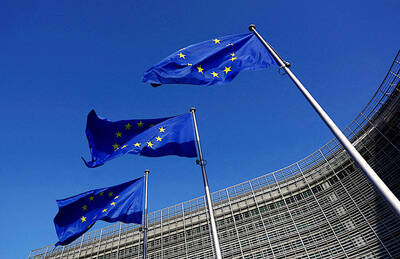
LEVERAGE: China did not ‘need to fire a shot’ to deny Taiwan airspace over Africa when it owns ‘half the continent’s debt,’ a US official said, calling it economic warfare The EU has raised concerns about overflight rights following the delay of President William Lai’s (賴清德) planned state visit to the Kingdom of Eswatini after three African nations denied overflight clearance for his charter at the last minute. Taiwanese allies Paraguay and Saint Kitts and Nevis, as well as several US lawmakers and the Inter-Parliamentary Alliance on China (IPAC) condemned China for allegedly pressuring the countries. Lai was scheduled to fly directly to Taiwan’s only African ally from yesterday to Sunday to celebrate the 40th anniversary of King Mswati III’s accession and his 58th birthday, but Seychelles, Mauritius and Madagascar suddenly revoked
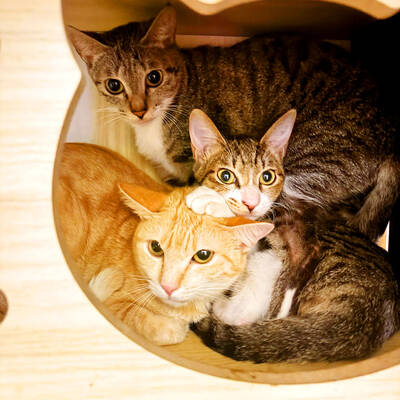
The number of pet cats in Taiwan surpassed that of pet dogs for the first time last year, reaching 1,742,033, a 32.8 percent increase from 2023, the Ministry of Agriculture said yesterday, citing a survey. By contrast, the number of pet dogs declined slightly by 1.2 percent over the same period to 1,462,528, the ministry said. Despite the shift, households with dogs still slightly outnumber those with cats by 1.2 percent. However, while the number of households with multiple dogs has remained relatively stable, households keeping more than two cats have increased, contributing to the overall rise in the feline population. The trend
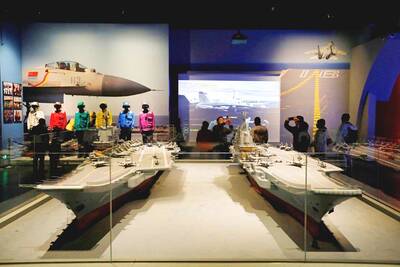
China on Wednesday teased in a video an aircraft carrier that could be its fourth, and the first using nuclear power, while making an allusion to Taiwan and vowing to further build up its islands, as it looks to boost maritime power, secure resources and bolster territorial claims. The video, issued on the eve of the 77th founding anniversary of the Chinese People’s Liberation Army Navy, featured fictional officers with names that are homophones of three commissioned aircraft carriers, the Liaoning (遼寧), Shandong (山東) and Fujian (福建). Titled Into the Deep, it showed a 19-year-old named “Hejian” (何劍) joining the group, sparking
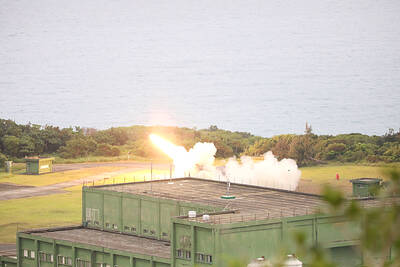
Taiwan has signed six arms procurement offers from the US totaling more than NT$208 billion (US$6.59 billion) covering long-range precision strike systems, missile stockpile replenishment and joint production of large-caliber ammunition, the Ministry of National Defense said yesterday. The government’s proposed NT$1.25 trillion special defense budget has been stalled in the Legislative Yuan as opposition lawmakers question the amount and procurement items, while the Presidential Office and defense ministry say that the full amount is necessary to safeguard Taiwan. Minister of National Defense Wellington Koo (顧立雄) on Monday briefed the legislature’s Foreign Affairs and National Defense Committee on the defense budget for


 RSS
RSS