


Nine North Korean refugees were arrested in China in October and deported, even after they requested help from South Korean diplomats, officials said yesterday.
The nine, relatives of South Korean prisoners of war, were deported from the Chinese northeast border city of Shenyang, and many were placed in detention centers in the Stalinist state as punishment, officials have told a news magazine.
The refugees had earlier fled across the border to Shenyang and sought assistance from the diplomats to defect to South Korea, the Monthly Chosun magazine reported.
The diplomats took the nine, aged between 20 and 70, to a hotel where they were arrested the next morning after the manager tipped off Chinese police.
The refugees are relatives of three South Korean prisoners of war who settled in the North after the Korean War of 1950-1953.
The South Korean foreign ministry yesterday expressed "deep regret" at the incident, vowing to do its utmost to help such prisoners of war return to the South with their North Korean children and wives.
The revelations, initially reported by a local newspaper, were a fresh embarrassment to the ministry that issued a similar apology two weeks ago after one of its consular offices in China mishandled a call for help from a South Korean abductee who fled the North after 31 years.
"We think it is very regrettable" that the defectors could not come to South Korea, the ministry said in a statement.
China does not recognize fleeing North Koreans as refugees and is required to send them back to their impoverished homeland under a treaty with Pyongyang.
However, Beijing has allowed defectors to leave the country if they take refuge at foreign diplomatic missions or their cases draw media attention in an apparent attempt to avoid international criticism.
The same South Korean consulate caused public uproar earlier this month after revelations that one of its officials spoke angrily to an elderly South Korean abductee in a phone call seeking the office's help after he fled the North after 31 years.
The consular official allegedly pressed the abductee, Choi Wook-il, to explain how he found his mobile phone number, without trying to help him, during the phone conversation last month.
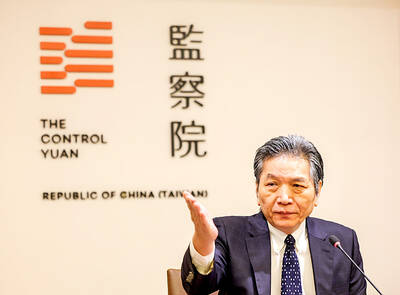
‘ABUSE OF POWER’: Lee Chun-yi allegedly used a Control Yuan vehicle to transport his dog to a pet grooming salon and take his wife to restaurants, media reports said Control Yuan Secretary-General Lee Chun-yi (李俊俋) resigned on Sunday night, admitting that he had misused a government vehicle, as reported by the media. Control Yuan Vice President Lee Hung-chun (李鴻鈞) yesterday apologized to the public over the issue. The watchdog body would follow up on similar accusations made by the Chinese Nationalist Party (KMT) and would investigate the alleged misuse of government vehicles by three other Control Yuan members: Su Li-chiung (蘇麗瓊), Lin Yu-jung (林郁容) and Wang Jung-chang (王榮璋), Lee Hung-chun said. Lee Chun-yi in a statement apologized for using a Control Yuan vehicle to transport his dog to a
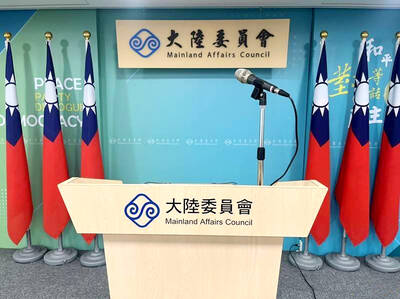
BEIJING’S ‘PAWN’: ‘We, as Chinese, should never forget our roots, history, culture,’ Want Want Holdings general manager Tsai Wang-ting said at a summit in China The Mainland Affairs Council (MAC) yesterday condemned Want Want China Times Media Group (旺旺中時媒體集團) for making comments at the Cross-Strait Chinese Culture Summit that it said have damaged Taiwan’s sovereignty, adding that it would investigate if the group had colluded with China in the matter and contravened cross-strait regulations. The council issued a statement after Want Want Holdings (旺旺集團有限公司) general manager Tsai Wang-ting (蔡旺庭), the third son of the group’s founder, Tsai Eng-meng (蔡衍明), said at the summit last week that the group originated in “Chinese Taiwan,” and has developed and prospered in “the motherland.” “We, as Chinese, should never
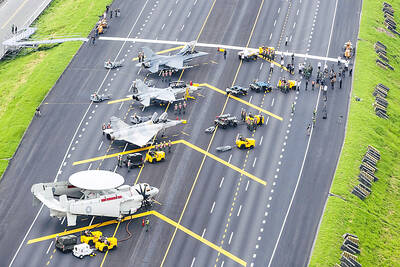
‘A SURVIVAL QUESTION’: US officials have been urging the opposition KMT and TPP not to block defense spending, especially the special defense budget, an official said The US plans to ramp up weapons sales to Taiwan to a level exceeding US President Donald Trump’s first term as part of an effort to deter China as it intensifies military pressure on the nation, two US officials said on condition of anonymity. If US arms sales do accelerate, it could ease worries about the extent of Trump’s commitment to Taiwan. It would also add new friction to the tense US-China relationship. The officials said they expect US approvals for weapons sales to Taiwan over the next four years to surpass those in Trump’s first term, with one of them saying
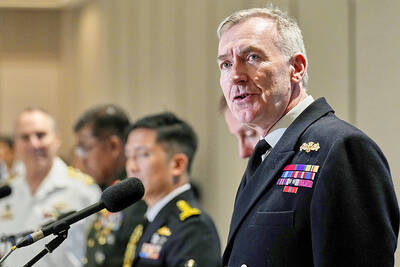
INDO-PACIFIC REGION: Royal Navy ships exercise the right of freedom of navigation, including in the Taiwan Strait and South China Sea, the UK’s Tony Radakin told a summit Freedom of navigation in the Indo-Pacific region is as important as it is in the English Channel, British Chief of the Defence Staff Admiral Tony Radakin said at a summit in Singapore on Saturday. The remark came as the British Royal Navy’s flagship aircraft carrier, the HMS Prince of Wales, is on an eight-month deployment to the Indo-Pacific region as head of an international carrier strike group. “Upholding the UN Convention on the Law of the Sea, and with it, the principles of the freedom of navigation, in this part of the world matters to us just as it matters in the


 RSS
RSS