


The country's first national certification system for Mandarin teachers who wish to teach overseas has been established and will take effect at the end of this year, the Ministry of Education (MOE) said yesterday.
According to the system, these Mandarin teachers -- regardless of their nationality -- will be certified either through examinations or qualification inspections.
The first examinations are expected to be held on Nov. 4 and Nov. 5 and the qualified teachers will receive their certificates by the end of December.
The test subjects include Chinese linguistics, Mandarin teaching, Chinese society and culture, Chinese literature and Mandarin oral fluency.
To obtain a certificate, candidates must score 60 out of 100 points in the first four categories, and pass at least the fourth out of six levels of oral proficiency.
Examinees do not have to pass all of the subjects at the same time, but can complete the requirements over three years, the MOE said.
Hsin Shih-chang (信世昌), chairman of the Graduate Institute of Teaching Chinese as a Second Language at National Taiwan Normal University, said that the issue of which pinyin system to use in the exams will not be a problem. He said the exams may involve a test of the ability to compare and contrast different pinyin systems.
Candidates of any nationality may take the exams, provided they have a college degree that is approved by the MOE.
Graduates of departments or programs of teaching Mandarin as a second language certified by the MOE may be exempted from having to take tests in Chinese linguistics, Mandarin teaching and Chinese society and culture.
The MOE will announce next month the programs or departments it will certify as allowing a candidate such an exemption.
In addition to graduates of such programs, current Mandarin teachers in local universities with at least three years of teaching experiences and a total of 1,800 teaching hours can apply for the certificate from September 1 to August 31 next year. The ministry said that late applications will not be accepted.
MOE Administrative Vice Minister Lu Mu-lin (呂木琳) said that 22 local universities have Mandarin programs for foreigners and host approximately more than 8,000 foreign students. However, he estimated that these schools could accommodate double that number of students.
Hsin said that about 2,400 high schools in the US are in need of Mandarin teachers and he believes that teachers with the certificate will be very competitive in the job market.
He said that the institute has been planning the certification system with the MOE since last summer.
According to the ministry, the certificate will be valid for life.
Anyone with the certificate will be given the priority in the MOE's recommendations for candidates who wish to teach abroad.
The exams will be held annually both in Taiwan and abroad.
The certification system is Taiwan's latest gambit in its growing competition with China for the global Mandarin-teaching market.
In the past, there was no official Mandarin teaching proficiency test in Taiwan except the computerized Chinese Proficiency Test (CPT), which was launched by the Center for Chinese Language and Culture Studies at National Taiwan Normal University.
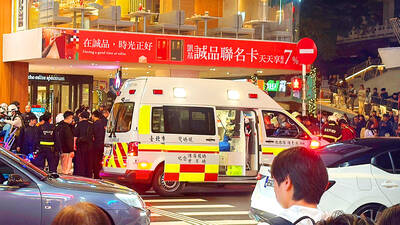
TRAGEDY STRIKES TAIPEI: The suspect died after falling off a building after he threw smoke grenades into Taipei Main Station and went on a killing spree in Zhongshan A 27-year-old suspect allegedly threw smoke grenades in Taipei Main Station and then proceeded to Zhongshan MRT Station in a random killing spree that resulted in the death of the suspect and two other civilians, and seven injured, including one in critical condition, as of press time last night. The suspect, identified as a man surnamed Chang Wen (張文), allegedly began the attack at Taipei Main Station, the Taipei Fire Department said, adding that it received a report at 5:24pm that smoke grenades had been thrown in the station. One man in his 50s was rushed to hospital after a cardiac arrest

SAFETY FIRST: Double the number of police were deployed at the Taipei Marathon, while other cities released plans to bolster public event safety Authorities across Taiwan have stepped up security measures ahead of Christmas and New Year events, following a knife and smoke bomb attack in Taipei on Friday that left four people dead and 11 injured. In a bid to prevent potential copycat incidents, police deployments have been expanded for large gatherings, transport hubs, and other crowded public spaces, according to official statements from police and city authorities. Taipei Mayor Chiang Wan-an (蔣萬安) said the city has “comprehensively raised security readiness” in crowded areas, increased police deployments with armed officers, and intensified patrols during weekends and nighttime hours. For large-scale events, security checkpoints and explosives
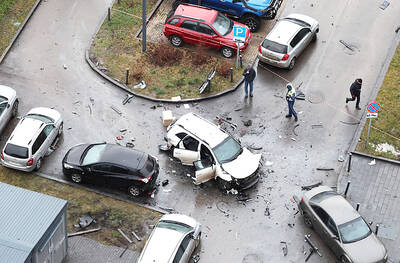
A car bomb killed a senior Russian general in southern Moscow yesterday morning, the latest high-profile army figure to be blown up in a blast that came just hours after Russian and Ukrainian delegates held separate talks in Miami on a plan to end the war. Kyiv has not commented on the incident, but Russian investigators said they were probing whether the blast was “linked” to “Ukrainian special forces.” The attack was similar to other assassinations of generals and pro-war figures that have either been claimed, or are widely believed to have been orchestrated, by Ukraine. Russian Lieutenant General Fanil Sarvarov, 56, head
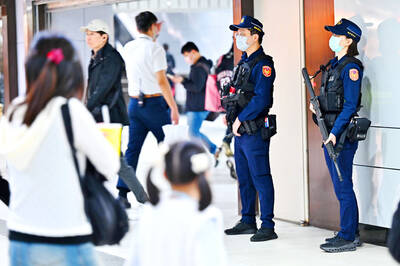
PUBLIC SAFETY: The premier said that security would be tightened in transport hubs, while President Lai commended the public for their bravery The government is to deploy more police, including rapid response units, in crowded public areas to ensure a swift response to any threats, President William Lai (賴清德) said yesterday after a knife attack killed three people and injured 11 in Taipei the previous day. Lai made the remarks following a briefing by the National Police Agency on the progress of the investigation, saying that the attack underscored the importance of cooperation in public security between the central and local governments. The attack unfolded in the early evening on Friday around Taipei Main Station’s M7 exit and later near the Taipei MRT’s Zhongshan


 RSS
RSS