


US Secretary of State Condoleezza Rice admitted yesterday that the US may make mistakes in its "war on terrorism" and promised to put them right if they happened.
"We recognize any policy will sometimes result in errors, and when it happens, we will do everything we can to rectify it," Rice said at the start of a European tour overshadowed by allegations of illegal CIA methods against terrorist suspects.
Rice also said the Bush administration will use "every lawful means" to combat international terrorism and does not condone torture.
"We have an obligation to defend our people and we will use every lawful means to do so," Rice said after talks with German Chancellor Angela Merkel in Berlin.
Merkel said Rice's assurances were "important" for her to hear and said the meeting, the highest-ranking official contact between Berlin and Washington since Merkel became chancellor last month, signaled a "good start" for future German-US relations.
Rice, however, declined to comment on the case of a German man, Khaled el-Masri, who was allegedly abducted to Afghanistan and imprisoned there for five months last year until the CIA realized it had the wrong man.
But Merkel said the US government had acknowledged it blundered over Masri, who plans to sue the CIA in a case to be filed in the US later yesterday.
"I'm pleased to say that we spoke about the individual case, which was accepted by the United States as a mistake, and so I'm very pleased the foreign minister [Rice] has reiterated that if mistakes are made, they must immediately be rectified," Merkel told a joint news conference.
Masri's case has caused a furore in Germany, fueled by a US newspaper report that the former interior minister was told of the case in May last year and agreed to a request from the US ambassador to keep it quiet.
Merkel said she would ask Foreign Minister Frank-Walter Steinmeier to report on the Masri case to the parliamentary committee responsible for supervising security services.
Rice was not challenged directly over reports that the US had run secret prisons in Eastern Europe, which Washington has refused to confirm or deny.
But she reiterated her vigorous defense of US methods in its war on 21st century militants.
"If you don't get to them before they commit their crimes, they will commit mass murder," she said. "We have an obligation to defend our people and we will use every lawful means to do so."
Rice said combating terrorism required close security cooperation, but intelligence methods could not be made public nor specific cases discussed.
"Without good intelligence, you can simply not protect innocent civilians from the kind of attacks we have experienced around the globe," she said.
She stressed that the US operated strictly "within the context of laws and our international obligations," an assurance welcomed by Merkel.
Europe's leading human rights watchdog is probing the press reports on CIA secret prisons, as well as flights by CIA planes across the continent, which it believes may have been used to covertly transport terrorist suspects.
The EU and at least eight of its members have sought clarification from Washington.
A new TV report on Monday cited current and former CIA officials saying al-Qaeda suspects had been held in Europe until last month, but then were then sent to a new CIA facility in the north African desert.
ABC News said two secret prisons operated by the US Secret Service in Poland and Romania were closed just ahead of Rice's visit to Europe.
It said the US scrambled to get all the suspects off European soil before Rice arrived.
Polish Defense Minister Radoslaw Sikorski told ABC News: "My president has said there is no truth in these reports."

The CIA has a message for Chinese government officials worried about their place in Chinese President Xi Jinping’s (習近平) government: Come work with us. The agency released two Mandarin-language videos on social media on Thursday inviting disgruntled officials to contact the CIA. The recruitment videos posted on YouTube and X racked up more than 5 million views combined in their first day. The outreach comes as CIA Director John Ratcliffe has vowed to boost the agency’s use of intelligence from human sources and its focus on China, which has recently targeted US officials with its own espionage operations. The videos are “aimed at
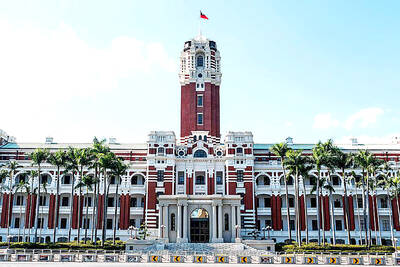
STEADFAST FRIEND: The bills encourage increased Taiwan-US engagement and address China’s distortion of UN Resolution 2758 to isolate Taiwan internationally The Presidential Office yesterday thanked the US House of Representatives for unanimously passing two Taiwan-related bills highlighting its solid support for Taiwan’s democracy and global participation, and for deepening bilateral relations. One of the bills, the Taiwan Assurance Implementation Act, requires the US Department of State to periodically review its guidelines for engagement with Taiwan, and report to the US Congress on the guidelines and plans to lift self-imposed limitations on US-Taiwan engagement. The other bill is the Taiwan International Solidarity Act, which clarifies that UN Resolution 2758 does not address the issue of the representation of Taiwan or its people in
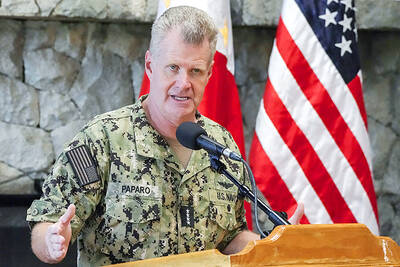
US Indo-Pacific Commander Admiral Samuel Paparo on Friday expressed concern over the rate at which China is diversifying its military exercises, the Financial Times (FT) reported on Saturday. “The rates of change on the depth and breadth of their exercises is the one non-linear effect that I’ve seen in the last year that wakes me up at night or keeps me up at night,” Paparo was quoted by FT as saying while attending the annual Sedona Forum at the McCain Institute in Arizona. Paparo also expressed concern over the speed with which China was expanding its military. While the US
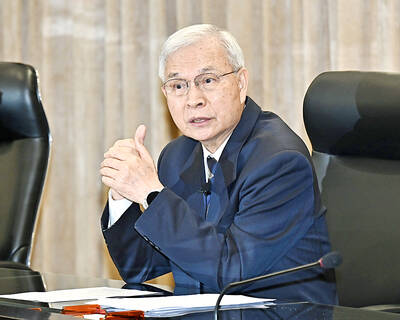
SHIFT: Taiwan’s better-than-expected first-quarter GDP and signs of weakness in the US have driven global capital back to emerging markets, the central bank head said The central bank yesterday blamed market speculation for the steep rise in the local currency, and urged exporters and financial institutions to stay calm and stop panic sell-offs to avoid hurting their own profitability. The nation’s top monetary policymaker said that it would step in, if necessary, to maintain order and stability in the foreign exchange market. The remarks came as the NT dollar yesterday closed up NT$0.919 to NT$30.145 against the US dollar in Taipei trading, after rising as high as NT$29.59 in intraday trading. The local currency has surged 5.85 percent against the greenback over the past two sessions, central


 RSS
RSS