


An Iranian military transport plane crashed into a 10-story apartment building as it was trying to make an emergency landing yesterday, smashing a hole in the top of the building and setting it ablaze. At least 119 people were killed.
All 94 people on the plane were killed, most of them Iranian journalists heading to cover military maneuvers in the south. Twenty five residents of the apartment building also died, and 90 were injured, Tehran state radio said.
A large gash was torn in the top floor of the 10-story building. Flames leaped out of windows from the roof and several other floors as panicked residents fled the Towhid residential complex, a series of high-rise apartment buildings for army personnel in the Azadi suburb of Tehran.
Wreckage rained down, hitting a nearby gas station, police said. Cars parked below were smashed by falling debris.
At the foot of the blackened building, what appeared to be a pile of wreckage was in flames.
Firefighters managed to put out the fire in the building, which was damaged and charred but still standing. Police cordoned off the air, preventing journalists and a crowd of thousands of people from nearing the site. Many in the crowd were screaming, afraid their relatives had been killed.
"It was like an earthquake," said Reza Sadeqi, a 25-year-old merchant, who saw the plane hit the building. "The force of the crash threw me about 3 meters inside my shop."
"I felt the heat of the fire caused by the crash. It was like being in hell," he said.
The C-130 aircraft had just taken off from the nearby Mehrabad airport en route to Bandar Abbas, a port city in southern Iran. It experienced a technical problem and was returning the Mehrabad for an emergency landing when it hit the building, state-run television said.
The plane, which belonged to the army air force, carried 84 passengers and 10 crew members, Iranian television reported. All aboard were killed, the mayor of Tehran, Mohammad Bagher Ghalibaf, told reporters.
In April, an Iranian airlines Boeing 707 with 157 people aboard skidded off a runway at Tehran airport and caught fire, killing three people. Last year, a Ukrainian-built aircraft carrying aerospace scientists crashed in central Iran, killing all 44 people aboard.
In 2003, a Russian-made Ilyushin-76 carrying members of the elite Revolutionary Guards crashed in the mountains of southeastern Iran, killing 302 people. And in 1988, an Iran Air A300 Airbus was shot down by USS Vincennes over the Persian Gulf, killing 290.

The CIA has a message for Chinese government officials worried about their place in Chinese President Xi Jinping’s (習近平) government: Come work with us. The agency released two Mandarin-language videos on social media on Thursday inviting disgruntled officials to contact the CIA. The recruitment videos posted on YouTube and X racked up more than 5 million views combined in their first day. The outreach comes as CIA Director John Ratcliffe has vowed to boost the agency’s use of intelligence from human sources and its focus on China, which has recently targeted US officials with its own espionage operations. The videos are “aimed at
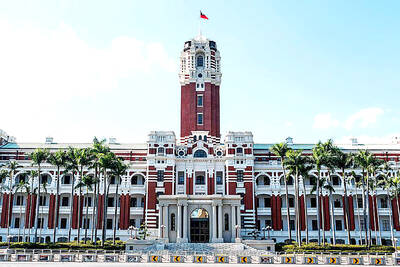
STEADFAST FRIEND: The bills encourage increased Taiwan-US engagement and address China’s distortion of UN Resolution 2758 to isolate Taiwan internationally The Presidential Office yesterday thanked the US House of Representatives for unanimously passing two Taiwan-related bills highlighting its solid support for Taiwan’s democracy and global participation, and for deepening bilateral relations. One of the bills, the Taiwan Assurance Implementation Act, requires the US Department of State to periodically review its guidelines for engagement with Taiwan, and report to the US Congress on the guidelines and plans to lift self-imposed limitations on US-Taiwan engagement. The other bill is the Taiwan International Solidarity Act, which clarifies that UN Resolution 2758 does not address the issue of the representation of Taiwan or its people in
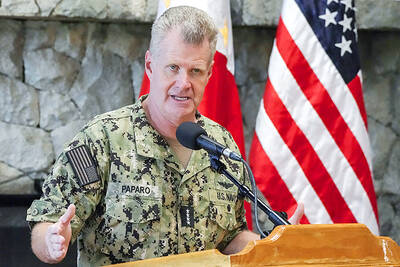
US Indo-Pacific Commander Admiral Samuel Paparo on Friday expressed concern over the rate at which China is diversifying its military exercises, the Financial Times (FT) reported on Saturday. “The rates of change on the depth and breadth of their exercises is the one non-linear effect that I’ve seen in the last year that wakes me up at night or keeps me up at night,” Paparo was quoted by FT as saying while attending the annual Sedona Forum at the McCain Institute in Arizona. Paparo also expressed concern over the speed with which China was expanding its military. While the US
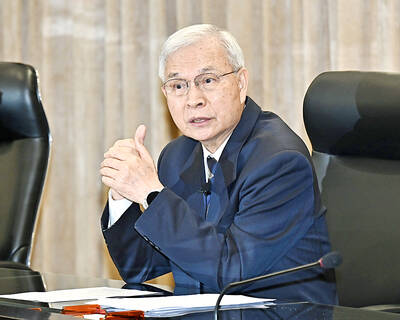
SHIFT: Taiwan’s better-than-expected first-quarter GDP and signs of weakness in the US have driven global capital back to emerging markets, the central bank head said The central bank yesterday blamed market speculation for the steep rise in the local currency, and urged exporters and financial institutions to stay calm and stop panic sell-offs to avoid hurting their own profitability. The nation’s top monetary policymaker said that it would step in, if necessary, to maintain order and stability in the foreign exchange market. The remarks came as the NT dollar yesterday closed up NT$0.919 to NT$30.145 against the US dollar in Taipei trading, after rising as high as NT$29.59 in intraday trading. The local currency has surged 5.85 percent against the greenback over the past two sessions, central


 RSS
RSS