


Chinese Nationalist Party (KMT) Chairman Lien Chan (
"How can you embark on a `thanksgiving and unity tour' when you don't work to unite party headquarters first?" said Chiu Teh-hung (
KMT spokesman Alex Tsai (
party integration
Saying he is not against Lien soliciting support from the grassroots, Chiu said the priority should be integrating views within the party, noting discrepancies over the party's political stance and Lien's recent proposal to merge the KMT with the People First Party (PFP).
"The party authorities should first work to integrate their own views and establish a common base on the party's direction before touring towns and asking the grassroots to unite behind the party," Chiu said.
Chiu is a member of the "Chunghsing [rejuvenation] Elite Group" (
The group has been urging the party since the March 20 presidential election to step up internal reforms.
Niu Tso-hsun (鈕則勳), a member of another group of young KMT members called the "567 alliance," said Lien's tour "should be one that focuses on listening to what local supporters really think and want."
"Reform should be the thrust of Lien's tour," Niu said, adding that he hopes the tour can help the party form a democratic system internally and gather opinions from the bottom up.
Taiwan Solidarity Union (TSU) Legislator Lo Chin-ming (
"Lien might not have realized that his moves these past couple of months have turned off many of the so-called light-blues among his supporters in central and southern Taiwan and led to a significant drop in his support rate in these areas," Lo said.
"Some KMT members seeking seats in central and southern Taiwan are actually secretly hoping that Lien will not stump for them," Lo said. "They view Lien as possible poison to their electoral outlook."
more harm than good
Chiu said some KMT members are finding their party affiliation a liability.
"There are people who want to be nominated by the party for December's legislative election, but they refrain from mentioning the KMT when they interact with locals for their support," said Chiu, who is also chief of staff for the vice speaker of the Miaoli County Council.
Chiu said that, due to the party leadership's preoccupation with the presidential election at the expense of reforms and the upcoming legislative elections, KMT members are skirting party headquarters and working on their own to win local support as they prepare for December.
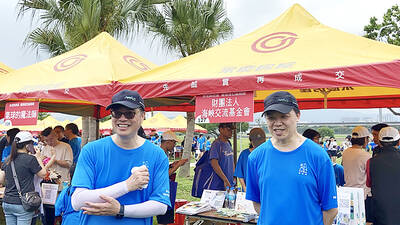
SECURITY: As China is ‘reshaping’ Hong Kong’s population, Taiwan must raise the eligibility threshold for applications from Hong Kongers, Chiu Chui-cheng said When Hong Kong and Macau citizens apply for residency in Taiwan, it would be under a new category that includes a “national security observation period,” Mainland Affairs Council (MAC) Minister Chiu Chui-cheng (邱垂正) said yesterday. President William Lai (賴清德) on March 13 announced 17 strategies to counter China’s aggression toward Taiwan, including incorporating national security considerations into the review process for residency applications from Hong Kong and Macau citizens. The situation in Hong Kong is constantly changing, Chiu said to media yesterday on the sidelines of the Taipei Technology Run hosted by the Taipei Neihu Technology Park Development Association. With

CARROT AND STICK: While unrelenting in its military threats, China attracted nearly 40,000 Taiwanese to over 400 business events last year Nearly 40,000 Taiwanese last year joined industry events in China, such as conferences and trade fairs, supported by the Chinese government, a study showed yesterday, as Beijing ramps up a charm offensive toward Taipei alongside military pressure. China has long taken a carrot-and-stick approach to Taiwan, threatening it with the prospect of military action while reaching out to those it believes are amenable to Beijing’s point of view. Taiwanese security officials are wary of what they see as Beijing’s influence campaigns to sway public opinion after Taipei and Beijing gradually resumed travel links halted by the COVID-19 pandemic, but the scale of
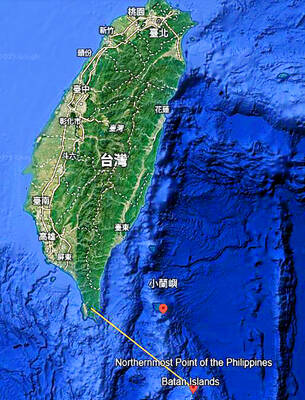
A US Marine Corps regiment equipped with Naval Strike Missiles (NSM) is set to participate in the upcoming Balikatan 25 exercise in the Luzon Strait, marking the system’s first-ever deployment in the Philippines. US and Philippine officials have separately confirmed that the Navy Marine Expeditionary Ship Interdiction System (NMESIS) — the mobile launch platform for the Naval Strike Missile — would take part in the joint exercise. The missiles are being deployed to “a strategic first island chain chokepoint” in the waters between Taiwan proper and the Philippines, US-based Naval News reported. “The Luzon Strait and Bashi Channel represent a critical access
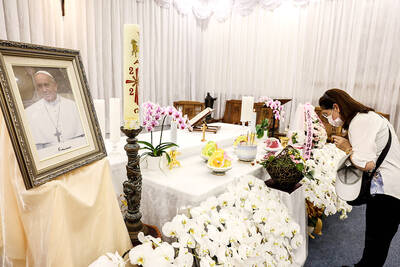
Pope Francis is be laid to rest on Saturday after lying in state for three days in St Peter’s Basilica, where the faithful are expected to flock to pay their respects to history’s first Latin American pontiff. The cardinals met yesterday in the Vatican’s synod hall to chart the next steps before a conclave begins to choose Francis’ successor, as condolences poured in from around the world. According to current norms, the conclave must begin between May 5 and 10. The cardinals set the funeral for Saturday at 10am in St Peter’s Square, to be celebrated by the dean of the College


 RSS
RSS