


More than a million antiwar protesters poured into the streets of cities around the globe on Saturday's anniversary of the invasion of Iraq to demand the withdrawal of US-led troops.
From Sydney to Tokyo, from Santiago, Chile, to Madrid, London, New York and San Francisco, demonstrators condemned US policy in Iraq and said they did not believe Iraqis are better off or the world safer because of the war.
Journalists estimated that at least a million people streamed through Rome, in probably the biggest single protest.
In London, two anti-war protesters evaded security to climb the landmark Big Ben clock tower at the Houses of Parliament, unfurling a banner reading "Time for Truth."
About 25,000 demonstrators gathered in central London, many carrying "Wanted" posters bearing images of US President George W. Bush and British Prime Minister Tony Blair, his main war ally.
In most places, the demonstrators numbered in the tens of thousands, compared with hundreds of thousands who marched in big cities on Feb. 15 last year, to try to prevent the conflict.
The peaceful protests began in Asia and moved to Europe and the Americas in what organizers billed "a global day of action."
In New York, scene of the Sept. 11, 2001, hijacked plane strikes by Islamic militants, tens of thousands created a sea of signs in midtown Manhattan, many of them criticizing Bush, who is running for re-election in November.
Among the signs spotted in the crowd were, "Money For Jobs and Education not for War and Occupation" and "Bush Lies" and "End Occupation of Iraq."
In San Francisco, a diverse group of protesters gathered for a raucous rally in front of city hall.
Also See Stories:
Bush and Blair want UN back in Iraq
Bush ordered terror adviser to find Iraq link

The CIA has a message for Chinese government officials worried about their place in Chinese President Xi Jinping’s (習近平) government: Come work with us. The agency released two Mandarin-language videos on social media on Thursday inviting disgruntled officials to contact the CIA. The recruitment videos posted on YouTube and X racked up more than 5 million views combined in their first day. The outreach comes as CIA Director John Ratcliffe has vowed to boost the agency’s use of intelligence from human sources and its focus on China, which has recently targeted US officials with its own espionage operations. The videos are “aimed at
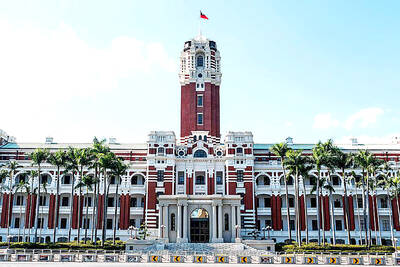
STEADFAST FRIEND: The bills encourage increased Taiwan-US engagement and address China’s distortion of UN Resolution 2758 to isolate Taiwan internationally The Presidential Office yesterday thanked the US House of Representatives for unanimously passing two Taiwan-related bills highlighting its solid support for Taiwan’s democracy and global participation, and for deepening bilateral relations. One of the bills, the Taiwan Assurance Implementation Act, requires the US Department of State to periodically review its guidelines for engagement with Taiwan, and report to the US Congress on the guidelines and plans to lift self-imposed limitations on US-Taiwan engagement. The other bill is the Taiwan International Solidarity Act, which clarifies that UN Resolution 2758 does not address the issue of the representation of Taiwan or its people in
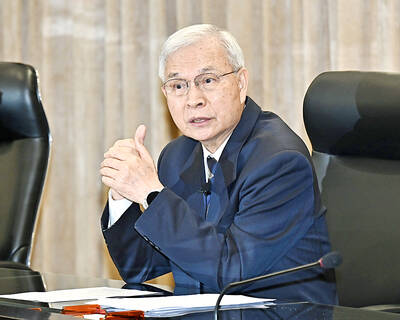
SHIFT: Taiwan’s better-than-expected first-quarter GDP and signs of weakness in the US have driven global capital back to emerging markets, the central bank head said The central bank yesterday blamed market speculation for the steep rise in the local currency, and urged exporters and financial institutions to stay calm and stop panic sell-offs to avoid hurting their own profitability. The nation’s top monetary policymaker said that it would step in, if necessary, to maintain order and stability in the foreign exchange market. The remarks came as the NT dollar yesterday closed up NT$0.919 to NT$30.145 against the US dollar in Taipei trading, after rising as high as NT$29.59 in intraday trading. The local currency has surged 5.85 percent against the greenback over the past two sessions, central
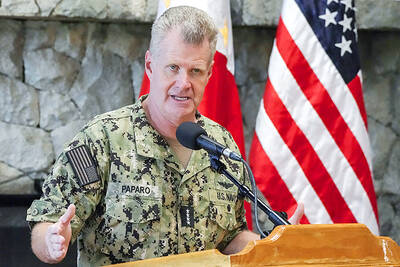
US Indo-Pacific Commander Admiral Samuel Paparo on Friday expressed concern over the rate at which China is diversifying its military exercises, the Financial Times (FT) reported on Saturday. “The rates of change on the depth and breadth of their exercises is the one non-linear effect that I’ve seen in the last year that wakes me up at night or keeps me up at night,” Paparo was quoted by FT as saying while attending the annual Sedona Forum at the McCain Institute in Arizona. Paparo also expressed concern over the speed with which China was expanding its military. While the US


 RSS
RSS