


The two main candidates in next month's Taipei mayoral election clashed over public order, traffic ticketing and localization in their second televised debate yesterday.
After fielding questions from a panel of journalists and an academic, DPP candidate Lee Ying-yuan (李應元) and Mayor Ma Ying-jeou (馬英九) of the KMT questioned each other about their policies.
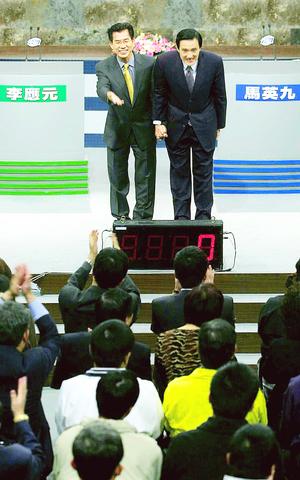
PHOTO: CHIANG YING-YING, TAIPEI TIMES
Against the backdrop of the killing of KMT Taipei City Councilor Chen Chin-chi (
Chen was shot four times in front of a Shihlin restaurant at lunchtime on Saturday.
At the beginning of the debate, Ma apologized to the Taipei public for Chen's slaying.
Condemning the murder, Lee accused Ma of failing to keep order in the city.
"The murder is another example of Taipei City's deteriorating public order under Ma's mayoral tenure," Lee said.
Lee questioned Ma's record in controlling the city's police force and cracking down on such things as Ecstasy use following scandals involving police corruption. Lee said violent crime had increase by 20 percent since Ma took office.
Ma responded that Taipei City had less crime than the nation's other four major cities.
In yesterday's debate, Lee also kept on the offensive over garbage bags, restating his pledge to halve the price of the bags if he is elected.
Ma was quick to reject Lee's proposal, saying he would not change the price of trash bags as it includes not just the trash bags but also the cost of processing the trash.
"[The present price of the trash bags] is an ideal tool to help reduce the amount of waste the city produces as well as to increase the recycling rate," Ma said.
When asked by panel member Rick Chu (
Ma replied that though he did not object to the idea, some names should be kept for historical reasons.
The two candidates were at odds, however, over plans for Taipei's Sungshan Airport, with Ma accusing Lee of presenting proposals that are not feasible.
"No matter how I work out the math, I don't see how is it possible that, as Lee claims, it would take only 24 minutes for people to travel between Taipei and CKS International Airport, where Lee proposes relocating Sungshan Airport," Ma said, adding that based on his own estimation, it would take at least one hour to cover the distance.
Lee said that the difference in calculations was a result of using different points of reference.
"I am right in my statistics if Ma were to start the calculation from the same point," Lee said.
He said that once the high-speed rail link is completed, it would take only about 10 minutes to travel from Taipei to Taoyuan.
The debate then moved on to the number of traffic tickets issued in Taipei, with Lee accusing Ma's administration of using the law to generate money for city coffers.
Lee said the 4.8 million tickets written in the past year was a record and earned the administration about NT$4.4 billion.
Ma said that the strict enforcement of traffic laws was the best way to reduce the number of people breaking the law.
Both candidates said afterward they were happy with their performances in the debate, with Ma telling a press conference that everything had gone according to plan. The Lee camp said its candidate's performance had exceeded expectations.
According to a poll conducted by TVBS following yesterday's debate, 66 percent of respondents said that Ma had performed better than his contender, while 14 percent thought Lee had done better. The remaining 20 percent had no preference.
Although Lee had expressed a desire to hold a third debate, Ma said at his press conference that two debates would be enough, especially as both of them will appear again in two televised presentations in which they will outline their visions and policies. The presentations, sponsored by the Central Election Commission, will be held on Friday and Dec. 1.
Also on the panel were editor in chief of the United Evening News Fu Yi-ping (
Also see story:

The CIA has a message for Chinese government officials worried about their place in Chinese President Xi Jinping’s (習近平) government: Come work with us. The agency released two Mandarin-language videos on social media on Thursday inviting disgruntled officials to contact the CIA. The recruitment videos posted on YouTube and X racked up more than 5 million views combined in their first day. The outreach comes as CIA Director John Ratcliffe has vowed to boost the agency’s use of intelligence from human sources and its focus on China, which has recently targeted US officials with its own espionage operations. The videos are “aimed at
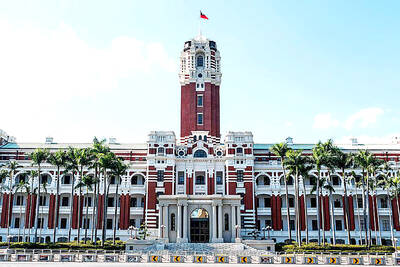
STEADFAST FRIEND: The bills encourage increased Taiwan-US engagement and address China’s distortion of UN Resolution 2758 to isolate Taiwan internationally The Presidential Office yesterday thanked the US House of Representatives for unanimously passing two Taiwan-related bills highlighting its solid support for Taiwan’s democracy and global participation, and for deepening bilateral relations. One of the bills, the Taiwan Assurance Implementation Act, requires the US Department of State to periodically review its guidelines for engagement with Taiwan, and report to the US Congress on the guidelines and plans to lift self-imposed limitations on US-Taiwan engagement. The other bill is the Taiwan International Solidarity Act, which clarifies that UN Resolution 2758 does not address the issue of the representation of Taiwan or its people in
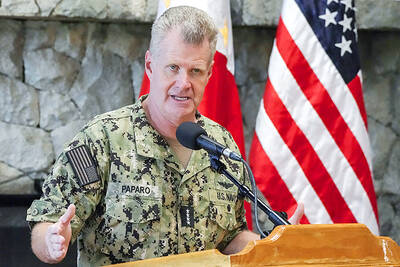
US Indo-Pacific Commander Admiral Samuel Paparo on Friday expressed concern over the rate at which China is diversifying its military exercises, the Financial Times (FT) reported on Saturday. “The rates of change on the depth and breadth of their exercises is the one non-linear effect that I’ve seen in the last year that wakes me up at night or keeps me up at night,” Paparo was quoted by FT as saying while attending the annual Sedona Forum at the McCain Institute in Arizona. Paparo also expressed concern over the speed with which China was expanding its military. While the US
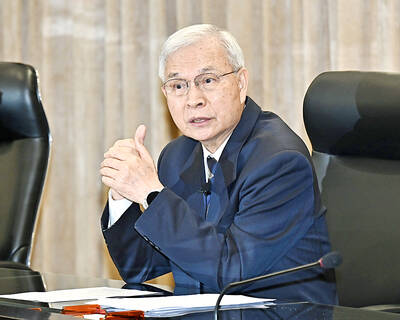
SHIFT: Taiwan’s better-than-expected first-quarter GDP and signs of weakness in the US have driven global capital back to emerging markets, the central bank head said The central bank yesterday blamed market speculation for the steep rise in the local currency, and urged exporters and financial institutions to stay calm and stop panic sell-offs to avoid hurting their own profitability. The nation’s top monetary policymaker said that it would step in, if necessary, to maintain order and stability in the foreign exchange market. The remarks came as the NT dollar yesterday closed up NT$0.919 to NT$30.145 against the US dollar in Taipei trading, after rising as high as NT$29.59 in intraday trading. The local currency has surged 5.85 percent against the greenback over the past two sessions, central


 RSS
RSS