


The midwestern US, equally devout in its worship of God as in its worship of gas-guzzling four-wheel-drive vehicles, is about to be asked to choose between the two.
"What Would Jesus Drive?" is the slogan dominating a television advertising campaign about to blanket cities in Iowa, Indiana and Missouri, along with the southern state of North Carolina.
The question presumably did not arise in first-century Galilee, but the Christian group behind the ads believes the answer would not include sports utility vehicles, the fuel-inefficient, environmentally unfriendly monsters that rule America's roads.
"We have confessed Christ to be our savior and Lord, and for us, that includes our transportation choices," the Reverend Jim Ball, of the Washington-based Evangelical Environmental Network, said.
"Most folks don't think of transportation as a moral issue, but we're called to care for kids and for the poor, and filling their lungs with pollution is the opposite of caring for them."
The campaign's slogan is inspired by What Would Jesus Do?, a phrase ubiquitous among young Christians in the US who sport it on bracelets, clothing and customized Bible covers.
"We take seriously the question What Would Jesus Do?", Mr Ball said. "What Would Jesus Drive? is just a more specific version. What would he want me to do as a Christian? Would he want me to use public transportation?"
A coalition of religious groups, led by Christians and Jews, are due to launch a related campaign later this month in Detroit, America's car capital, where they have called for a meeting with representatives from the big three manufacturers, Ford, General Motors and DaimlerChrysler.
Though all three companies have begun to launch hybrid cars powered partly by electricity, SUVs, vans and pickups still account for half the new vehicles sold in the US. TV ads abound declaring them "professional grade" and built "like a rock".
Car companies say they are only responding to demand.
"If people would be demanding tailfins on cars, we'd be making tailfins on cars," said Eron Shosteck, of the Alliance of Automobile Manufacturers.
At least one car maker is fighting on the same territory as Ball: Chevrolet has been touring a series of nationwide evangelical rock concerts entitled Chevrolet Presents: Come Together and Worship.
"This may be a sign of the times," Rabbi James Rudin, spokesman for the American Jewish Committee, said recently. "But it's not a good sign."


The CIA has a message for Chinese government officials worried about their place in Chinese President Xi Jinping’s (習近平) government: Come work with us. The agency released two Mandarin-language videos on social media on Thursday inviting disgruntled officials to contact the CIA. The recruitment videos posted on YouTube and X racked up more than 5 million views combined in their first day. The outreach comes as CIA Director John Ratcliffe has vowed to boost the agency’s use of intelligence from human sources and its focus on China, which has recently targeted US officials with its own espionage operations. The videos are “aimed at
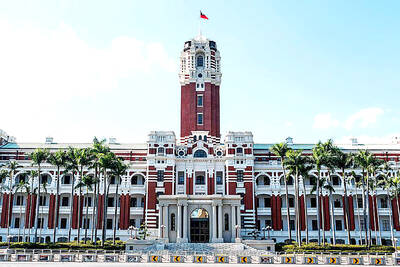
STEADFAST FRIEND: The bills encourage increased Taiwan-US engagement and address China’s distortion of UN Resolution 2758 to isolate Taiwan internationally The Presidential Office yesterday thanked the US House of Representatives for unanimously passing two Taiwan-related bills highlighting its solid support for Taiwan’s democracy and global participation, and for deepening bilateral relations. One of the bills, the Taiwan Assurance Implementation Act, requires the US Department of State to periodically review its guidelines for engagement with Taiwan, and report to the US Congress on the guidelines and plans to lift self-imposed limitations on US-Taiwan engagement. The other bill is the Taiwan International Solidarity Act, which clarifies that UN Resolution 2758 does not address the issue of the representation of Taiwan or its people in
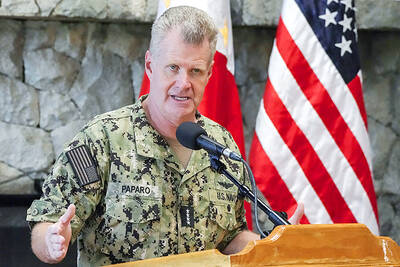
US Indo-Pacific Commander Admiral Samuel Paparo on Friday expressed concern over the rate at which China is diversifying its military exercises, the Financial Times (FT) reported on Saturday. “The rates of change on the depth and breadth of their exercises is the one non-linear effect that I’ve seen in the last year that wakes me up at night or keeps me up at night,” Paparo was quoted by FT as saying while attending the annual Sedona Forum at the McCain Institute in Arizona. Paparo also expressed concern over the speed with which China was expanding its military. While the US
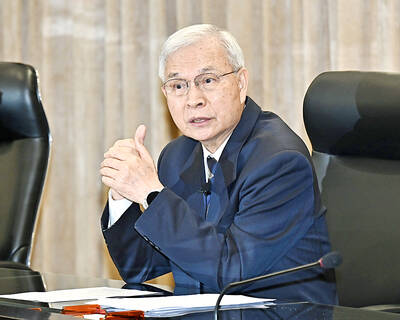
SHIFT: Taiwan’s better-than-expected first-quarter GDP and signs of weakness in the US have driven global capital back to emerging markets, the central bank head said The central bank yesterday blamed market speculation for the steep rise in the local currency, and urged exporters and financial institutions to stay calm and stop panic sell-offs to avoid hurting their own profitability. The nation’s top monetary policymaker said that it would step in, if necessary, to maintain order and stability in the foreign exchange market. The remarks came as the NT dollar yesterday closed up NT$0.919 to NT$30.145 against the US dollar in Taipei trading, after rising as high as NT$29.59 in intraday trading. The local currency has surged 5.85 percent against the greenback over the past two sessions, central


 RSS
RSS