


Hundreds of Afghan Taliban soldiers surrendered themselves to Northern Alliance forces outside of besieged Kunduz yesterday, loosening the hardline militia's grip on its last northern bastion.
Ethnic Uzbek general Rashid Dostum said about 600 fighters had surrendered to his forces to the west of the town.
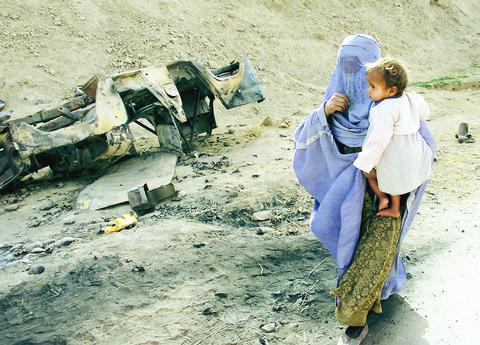
PHOTO: REUTERS
Also, several hundred Taliban soldiers streamed out of Kunduz to the east, CNN television reported. It showed footage of a stream of fighters crossing a bridge at Bangi atop pick-up trucks and at least one tank and one armored personnel carrier.
Separately, the US military said up to 70 warplanes had struck Kandahar and the caves and mountains of southern Afghanistan on Friday in the hunt for Osama bin Laden.
It said it had dropped a 7,000kg "Daisy Cutter" bomb on Wednesday on the Taliban's main stronghold of Kandahar, at the center of the four southern provinces it still controls.
As efforts to establish a new, broad-based government for Afghanistan continued, former president Burhanuddin Rabbani, nominal leader of the Northern Alliance, said he would set aside personal ambition in the cause of consensus.
Kunduz is the last Taliban bastion in northern Afghanistan after lightning gains by the Northern Alliance on the back of a US bombing campaign, now seven weeks old, intended to eliminate the Taliban as punishment for harboring Osama bin Laden.
Surrender negotiations have been complicated by the presence of Arab, Pakistani and Chechen fighters loyal to bin Laden's al-Qaeda group -- the main target of Washington's war on terror -- who expect no mercy from the opposing forces who loathe them.
The discovery of up to 600 bodies in Mazar-i-Sharif, taken by Dostum two weeks ago, and Washington's determination that the defenders of Kunduz should not escape, have fuelled fears of a bloodbath, perhaps drawing in thousands of trapped civilians.
Pakistan, Britain, the international Red Cross and the UN have all expressed concern.
The Northern Alliance says foreign fighters who surrender will have to stand trial, but many al-Qaeda fighters are said to be determined to struggle to the death.Fighters with Alliance commander General Daoud Husaini, to the east of Kunduz, said that Dostum's representatives were in Kunduz conducting negotiations for the remainder of an estimated 15,000 defenders to surrender.
They said he had set a deadline of 5pm local time Sunday for the remaining troops to give up.
Reuters Television saw truckloads of fighters who had surrendered arrive outside Mazar-i-Sharif, held by Dostum, about 180km west of Kunduz.
"Six hundred people have surrendered to us. Some of them are foreign mercenaries," he said. "We will now separate the local Taliban forces from the foreigners."
Alliance commanders in the west said Afghan Taliban fighters who surrendered would be disarmed and then set free.
The focus of the American bombing has already shifted to the Kandahar region in the south, the Taliban's heartland.
The "Daisy Cutter" dropped near Kandahar -- designed to devastate an area 550m across and demoralize enemy forces -- was only the third used in the campaign so far.
Major Brad Lowell, a spokesman for US Central Command, said US jets were also systematically targeting caves and tunnels that might be used as hiding places by bin Laden and his al-Qaeda network.
The US military also said it might use the Pacific island of Guam, which is American territory, to imprison members of al-Qaeda captured in Afghanistan.
Hamid Karzai, a supporter of deposed Afghan monarch Zahir Shah, said his forces had cut off a key Taliban supply line by taking Tkhata Pul, on the road from Kandahar to the Pakistan.
But a Taliban spokesman as saying that Agha's forces had been pushed back in heavy fighting at Bala Zera, some 100km east of Kandahar.


The CIA has a message for Chinese government officials worried about their place in Chinese President Xi Jinping’s (習近平) government: Come work with us. The agency released two Mandarin-language videos on social media on Thursday inviting disgruntled officials to contact the CIA. The recruitment videos posted on YouTube and X racked up more than 5 million views combined in their first day. The outreach comes as CIA Director John Ratcliffe has vowed to boost the agency’s use of intelligence from human sources and its focus on China, which has recently targeted US officials with its own espionage operations. The videos are “aimed at
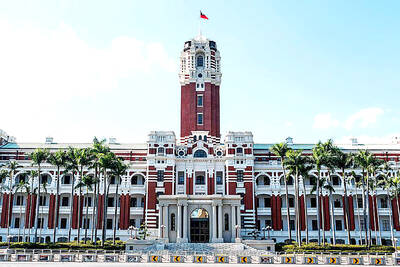
STEADFAST FRIEND: The bills encourage increased Taiwan-US engagement and address China’s distortion of UN Resolution 2758 to isolate Taiwan internationally The Presidential Office yesterday thanked the US House of Representatives for unanimously passing two Taiwan-related bills highlighting its solid support for Taiwan’s democracy and global participation, and for deepening bilateral relations. One of the bills, the Taiwan Assurance Implementation Act, requires the US Department of State to periodically review its guidelines for engagement with Taiwan, and report to the US Congress on the guidelines and plans to lift self-imposed limitations on US-Taiwan engagement. The other bill is the Taiwan International Solidarity Act, which clarifies that UN Resolution 2758 does not address the issue of the representation of Taiwan or its people in
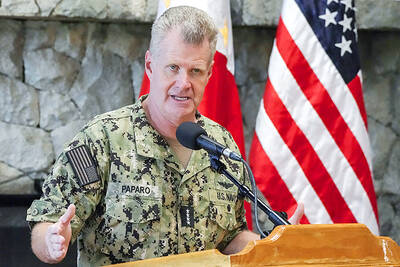
US Indo-Pacific Commander Admiral Samuel Paparo on Friday expressed concern over the rate at which China is diversifying its military exercises, the Financial Times (FT) reported on Saturday. “The rates of change on the depth and breadth of their exercises is the one non-linear effect that I’ve seen in the last year that wakes me up at night or keeps me up at night,” Paparo was quoted by FT as saying while attending the annual Sedona Forum at the McCain Institute in Arizona. Paparo also expressed concern over the speed with which China was expanding its military. While the US
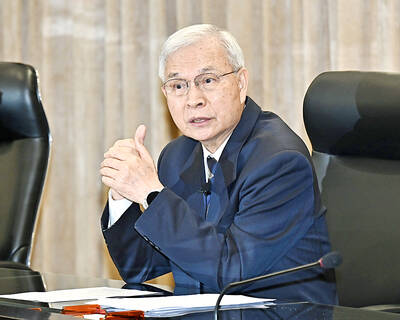
SHIFT: Taiwan’s better-than-expected first-quarter GDP and signs of weakness in the US have driven global capital back to emerging markets, the central bank head said The central bank yesterday blamed market speculation for the steep rise in the local currency, and urged exporters and financial institutions to stay calm and stop panic sell-offs to avoid hurting their own profitability. The nation’s top monetary policymaker said that it would step in, if necessary, to maintain order and stability in the foreign exchange market. The remarks came as the NT dollar yesterday closed up NT$0.919 to NT$30.145 against the US dollar in Taipei trading, after rising as high as NT$29.59 in intraday trading. The local currency has surged 5.85 percent against the greenback over the past two sessions, central


 RSS
RSS