


The Journalist magazine (新新聞) will not be allowed to rely on the testimonies of three secret witnesses as it defends itself from libel charges brought by Vice President Annette Lu (呂秀蓮).
The Taipei District Court yesterday denied the magazine's request that the testimonies be permitted, saying the vice president's right to an open trial outweighed The Journalist's desire for secrecy, which it said was necessary in order to protect its press freedom.
"Though the plaintiff in this case is the vice president of the country, the court believes everyone is equal before the law and the rights to which the vice president is entitled to -- in accordance with the law -- shall be no more than, but no less than, ordinary citizens'," said Lai Yung-hua (賴泱樺), the trial judge hearing the civil dispute between Lu and The Journalist.
Lai said the libel trial was a matter of public concern, and that the public has the right to know the merits of the case through open proceedings in order to monitor political figures and the media.
During an April 9 hearing, The Journalist had asked that the court hear the testimonies of three "secret" news sources. The magazine says the sources were instrumental to its report last year that said the vice president was spreading rumors of an affair between President Chen Shui-bian (
The magazine also requested that Lu's lawyers not be granted access to transcripts of the secret witnesses' testimonies.
In handing down his decision, Lai said that secret proceedings would interfere with the vice president's right to a fair trial.
Though The Journalist has argued that identifying its news sources would threaten their careers, Lai said the magazine had failed to sufficiently identify the source of these potential "threats."
The Journalist also claimed that because its three witnesses are famous, revealing their identities would have an "extraordinary impact on the country." The magazine also raised the specter of Taiwan being "struck with an unprecedented disaster" if the identities of its witnesses were revealed.
In response to yesterday's ruling, Lo Ming-ton (羅明通), a lawyer for The Journalist, said the magazine would file for a constitutional review of the decision within 10 days.
Lo argued that Lai should have allowed the secret hearing to protect the magazine's news sources, and by not doing so it violated the constitutional guarantee to a free press. The magazine holds that if the media is not allowed to keep their sources secret, it would chill free speech in Taiwan.
Lai said that the trial would proceed as normal, despite the magazine's intention to seek a constitutional review of his decision.
The judge also ordered The Journalist to decide in two weeks whether it will call the three news sources to testify in public. Further efforts to reach a settlement were again rejected yesterday.
The magazine is still seeking an out-of-court settlement with the vice president, but a deal remains far off as both sides are deeply split over an agreement, said Wang Chien-chuang (
Yu Mei-nu (
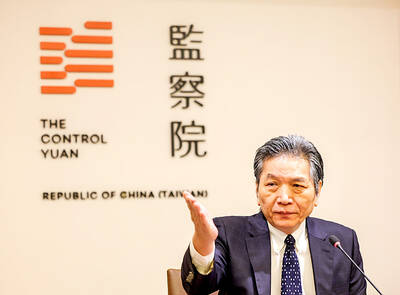
‘ABUSE OF POWER’: Lee Chun-yi allegedly used a Control Yuan vehicle to transport his dog to a pet grooming salon and take his wife to restaurants, media reports said Control Yuan Secretary-General Lee Chun-yi (李俊俋) resigned on Sunday night, admitting that he had misused a government vehicle, as reported by the media. Control Yuan Vice President Lee Hung-chun (李鴻鈞) yesterday apologized to the public over the issue. The watchdog body would follow up on similar accusations made by the Chinese Nationalist Party (KMT) and would investigate the alleged misuse of government vehicles by three other Control Yuan members: Su Li-chiung (蘇麗瓊), Lin Yu-jung (林郁容) and Wang Jung-chang (王榮璋), Lee Hung-chun said. Lee Chun-yi in a statement apologized for using a Control Yuan vehicle to transport his dog to a
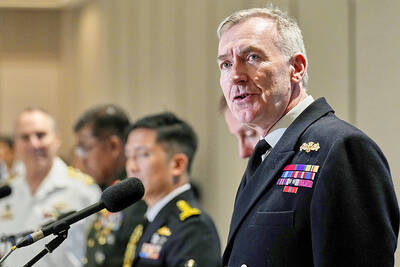
INDO-PACIFIC REGION: Royal Navy ships exercise the right of freedom of navigation, including in the Taiwan Strait and South China Sea, the UK’s Tony Radakin told a summit Freedom of navigation in the Indo-Pacific region is as important as it is in the English Channel, British Chief of the Defence Staff Admiral Tony Radakin said at a summit in Singapore on Saturday. The remark came as the British Royal Navy’s flagship aircraft carrier, the HMS Prince of Wales, is on an eight-month deployment to the Indo-Pacific region as head of an international carrier strike group. “Upholding the UN Convention on the Law of the Sea, and with it, the principles of the freedom of navigation, in this part of the world matters to us just as it matters in the
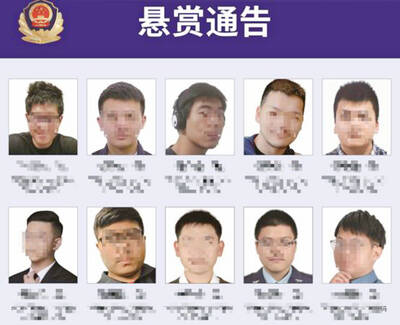
Taiwan yesterday denied Chinese allegations that its military was behind a cyberattack on a technology company in Guangzhou, after city authorities issued warrants for 20 suspects. The Guangzhou Municipal Public Security Bureau earlier yesterday issued warrants for 20 people it identified as members of the Information, Communications and Electronic Force Command (ICEFCOM). The bureau alleged they were behind a May 20 cyberattack targeting the backend system of a self-service facility at the company. “ICEFCOM, under Taiwan’s ruling Democratic Progressive Party, directed the illegal attack,” the warrant says. The bureau placed a bounty of 10,000 yuan (US$1,392) on each of the 20 people named in
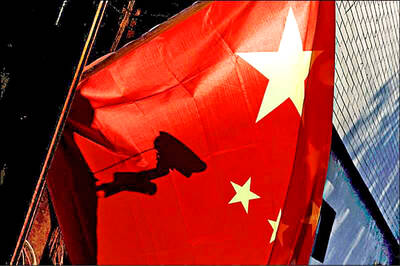
The High Court yesterday found a New Taipei City woman guilty of charges related to helping Beijing secure surrender agreements from military service members. Lee Huei-hsin (李慧馨) was sentenced to six years and eight months in prison for breaching the National Security Act (國家安全法), making illegal compacts with government employees and bribery, the court said. The verdict is final. Lee, the manager of a temple in the city’s Lujhou District (蘆洲), was accused of arranging for eight service members to make surrender pledges to the Chinese People’s Liberation Army in exchange for money, the court said. The pledges, which required them to provide identification


 RSS
RSS