

What is the real energy policy of the Chinese Nationalist Party (KMT)? Consider: at the moment Kuosheng Nuclear Power Plant in New Taipei City’s Wanli District (萬里) is full of spent fuel. It can only be unloaded once there is dry storage for it. However, New Taipei City, run by the KMT for years, has not issued a completion certificate for the necessary soil and water infrastructure. Hence, Kuosheng cannot be restarted. The KMT controlled the legislature until 2016 but did nothing to erect a legal framework for restarting the nuclear power plants. The KMT itself shut down construction of the Lungmen Nuclear Power Plant in New Taipei City’s (新北市) Gongliao District (貢寮). If the KMT’s rhetoric and performative referendums are ignored, objective reality appears to indicate that the KMT does not want nuclear power.
What about renewable energy? If the KMT’s focus on solar energy in this election is any indicator, the KMT does not want renewable energy either. It was surprising to me that the KMT decided to make this an open public issue after carefully and quietly opposing solar for years. But they are, according to local media reports, feeling threatened in all six municipalities in the current election.
OBSTRUCTIONS TO SOLAR
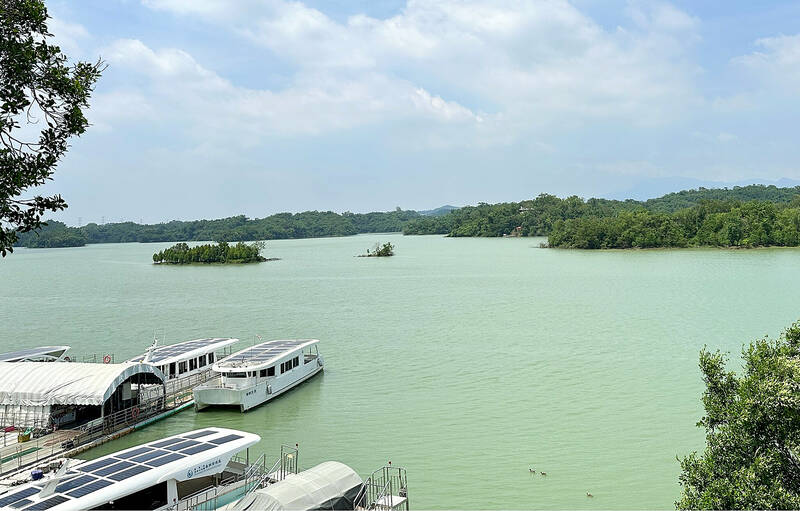
Photo: Yang Chin-cheng, Liberty Times
On Tuesday this week the KMT posted on X about its joint rally in Tainan, adding “From solar panels on drinking water reservoirs to cleared hillsides, southern Taiwan deserves accountability.”
The attacks on solar power, which the KMT has elevated to a nationwide policy, are open displays of the KMT’s animosity toward renewables.
Obstructions to solar power have long been KMT policy at all levels of government. Recall again: the KMT controlled the legislature through 2016, long after Taiwan began implementing renewable energy. The legislature has failed to erect offices at the local government level responsible for pushing through renewable projects, forcing local governments to issue needed documents on an ad hoc basis. If local governments do not want renewable energy projects, they can easily slow or halt their developments simply by losing the paperwork. That is what often happens in areas controlled by the ruling party, as Shen Chia-ling (沈嘉玲) and Tai Hsing-sheng (戴興盛) observe in a paper on barriers to renewable energy.
File courtesy of the Feitsui Reservoir Administration
Such quiet obstructionism takes place outside the public eye, just as the KMT mayors’ of New Taipei City have halted the restart of Kuosheng Nuclear Power Plant without drawing much public opprobrium. The KMT in November last year passed legislation restricting the application of solar power, particularly on reservoirs. At the time Democratic Progressive Party (DPP) Legislator Chen Pei-yu (陳培瑜) pointed out that new amendments could make it difficult for Taiwanese firms to meet their 2050 RE100 Initiative Goals for 100 percent renewable energy use. In hindsight that appears to be the purpose of the legislation.
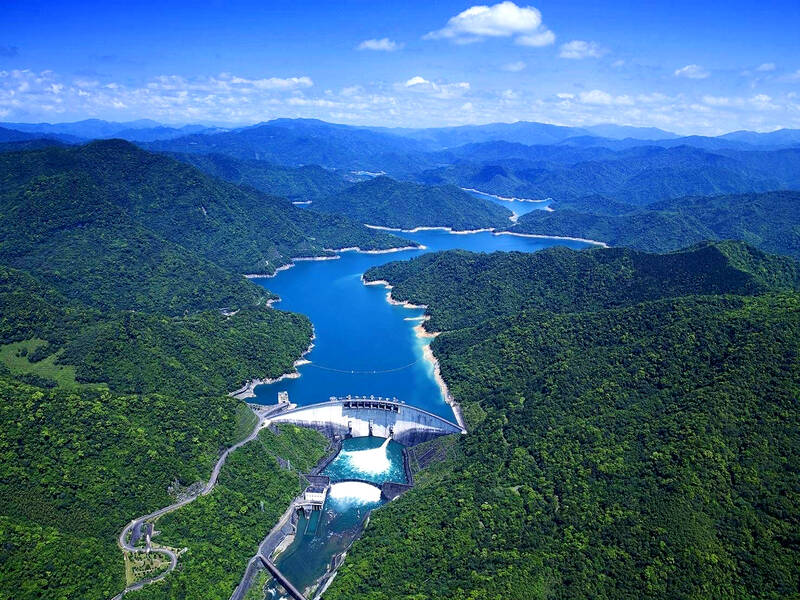
In the current election the notion of solar power on reservoirs is once again under attack from the KMT. The KMT appears to have seized on an annual survey of the Water Resources Agency (WRA) asking about solar power, which the agency says is normal procedure in the promotion of green energy, to claim that the ruling party wants to install solar power on Feitsui Reservoir (翡翠水庫), an important source of drinking water for Taipei. The WRA has clearly stated it has no such plans. Nor can it, since the reservoir is controlled by the Taipei Feitsui Reservoir Administration, which is separate from the Taiwan Water Corporation (Yes, the Celestial Dragon City has its own water company). There is thus no possibility of solar panels on Feitsui Reservoir as long as the KMT controls Taipei City.
KMT AS ENVIRONMENTALISTS?
Hence, from the perspective of this election, this entire “issue” appears to be cooked up by the KMT to attack the DPP. The KMT is pretending that the DPP is polluting and the KMT is protecting the water supply. Anyone who took five minutes to think about the KMT’s longstanding attitude towards protecting water supplies, especially during the authoritarian era when the rivers of Taipei were open cesspools that stank like corpses on a battlefield, would laugh loud and long over the KMT’s sudden conversion to environmentalism.
The KMT may be taking inspiration from Taichung Mayor Lu Shiow-yen’s (盧秀燕) 2018 election campaign, when Lu ran on an “anti-pollution” platform. At her inauguration she distributed 10,000 glass jars of “mountain air.” She conducted a very public campaign against the nearby thermal power plants. Sharp politics perhaps, but the pollution problem could easily have been addressed by meaningful regulation of factories and implementation of renewables, issues long neglected by the KMT.
Throughout this apparently manufactured controversy, the DPP has consistently pointed out that solar panels are features of reservoirs in numerous countries, and have never been linked to water pollution.
Speaking to reporters last week, Minister of Environment Peng Chi-ming (彭啟明) said that many trials, including a test that left broken pieces of solar panels in a body of water, yielded no pollutants. Despite that, the KMT mayoral candidate in Tainan, Hsieh Lung-chieh (謝龍介), has pledged to kill the solar energy project on Wushantou Reservoir (烏山頭水庫), while the DPP’s Chen Ting-fei (陳亭妃) said she would not allow it to be renewed after 2032. In Taoyuan the major party candidates have sparred over solar installations on Taoyuan’s famous ponds.
NATIONALIZING LOCAL ELECTIONS
Perhaps the most interesting facet of the solar energy attack is that, as its tweet on Tainan indicates, it has become a national issue, a facet of the KMT strategy of “nationalizing” the election. The referendum on nuclear power is also part of that strategy, as is the NT$20,000 cash handout. The KMT on Saturday called for banning solar power facilities on reservoirs that provide drinking water or act as emergency water sources. Their proposed bill was sent directly to the second reading for cross-party negotiations.
I have noted on many occasions before that the KMT attacks on President William Lai (賴清德) of the DPP follow the same playbook it used against DPP president Chen Shui-bian (陳水扁). That playbook also included pious defenses of Feitsui Reservoir that functioned as attacks on the government. When the KMT’s Ma Ying-jeou (馬英九) was mayor of Taipei in 2005 during the Chen administration, he protested the construction of a section of the Taipei-Yilan freeway because it might threaten the water quality at Feitsui Reservoir. This cost Ma nothing since the highway was going in regardless. Thus, his protests were simply anti-DPP theater. If Ma had truly been concerned about water quality at Feitsui, he might have put resources into attacking the then-growing eutrophication problem of the reservoir, which the central government finally moved on in January of 2008.
What is the KMT’s real energy policy? If it is quietly suppressing nuclear power, squeezing renewable energy and neglecting geothermal development, its policies effectively force Taiwan to rely on fossil fuel imports.
Only the state across the Strait benefits from that.
Notes from Central Taiwan is a column written by long-term resident Michael Turton, who provides incisive commentary informed by three decades of living in and writing about his adoptive country. The views expressed here are his own.
Nov. 23 to Nov. 29 With the Golden Lion Cinemax closing on Nov. 1, Kinmen is now without a movie theater. This wasn’t always the case; the frontline island once boasted at least 16 cinemas. Built primarily to entertain troops stationed there during Kinmen’s four decades following the Chinese Civil War, they were also popular with civilians. The theaters were often packed, with long lines forming to buy tickets. While waiting for screenings, people would visit nearby shops, often helping turn the surrounding streets into bustling business and entertainment districts. But with
As we watch this exciting local election reach its climax, we should be asking what all these politicians are getting themselves into. Debt, of course. Managing the nation’s local debt situation doesn’t get much publicity, but it is a major problem for local governments. The United Daily News (UDN) reported in September that city councilors in Taoyuan have expressed concern about the debt being incurred by funding the city’s numerous large construction projects. These include the Aerotropolis complex, the MRT green line and moving the railway underground. According to UDN, total public debt reached approximately NT$34.6 billion at the end
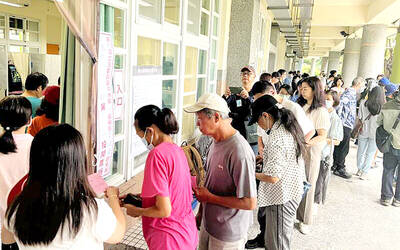
On Nov. 28, voters will collect their ballots for mayors and councilors, and they will receive one more sheet. It asks: “Do you support the government using nuclear power to boost the economy and thereby abolish the ‘nuclear-free homeland’ energy policy?” This is the fourth national referendum on nuclear power since 2018. What would a “yes” vote require the government to do? The answer lies in the Referendum Act (公民投票法). It is narrower than the campaign suggests. Su Yen-tu (蘇彥圖), a legal scholar at Academia Sinica, explained the distinction in an interview on Nov. 12. The Chinese Nationalist Party (KMT) drafted
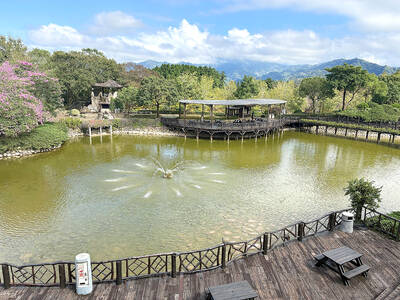
Built by Taiwanese businessman Liao Chi-cheng (廖繼誠) with the intention of creating a large-scale leisure and tourism destination, Xinshe Castle (新社莊園) took 15 years to complete. Over the course of those years, it faced many uphill battles against locals and conservation regulators, who struggled to fully embrace the sweeping European-style estate its mastermind envisioned. But on July 1st, 2005, set amidst the mountaineous depths of Xinshe District (新社區), Taichung’s mushroom capital, Xinshe Castle opened to the public. An expansive region already boasting the Dakeng Scenic Area (大坑), Taiwan’s iconic Sea of Flowers festival and year-round sprawl of lavender fields, cypress groves and hiking trails


 RSS