

When it comes to their kids, many parents don’t trust tech companies any more.
Social media companies have spent the better part of the last decade arguing that their platforms are safe for teens, but quite a few parents aren’t convinced. They, along with a growing number of regulators, have increasingly accused companies like Meta of designing products that are addictive to younger users.
AI firm OpenAI, thrust into the public consciousness much more recently than Meta, has had to defend against dozens of lawsuits alleging chatbot ChatGPT lacks safety guardrails. Now, workers at the world’s leading AI firms have warned that their employers prioritize competing with each other over building their models safely.
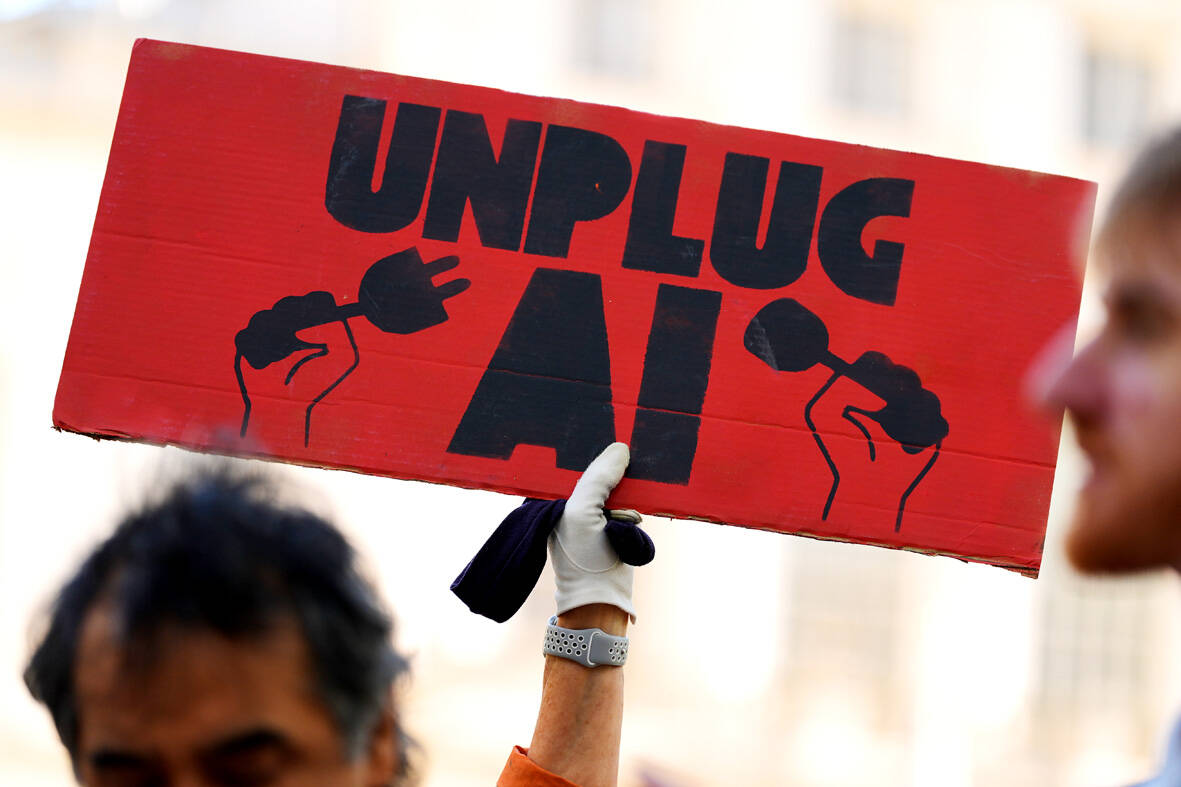
Photo: AP
Both the AI and social media companies have denied the claims, and introduced additional safety measures such as parent-linked teen accounts.
Still, for many parents, lawsuits and public accusations have been enough to change their minds about whether to allow their children to use both social media and AI.
Parents were asked whether their perspective on their children’s use of social media or AI has changed in the last year and whether they plan to let their kids use either technology. The vast majority of those who responded said they no longer wanted their children to use social media, and many of them said they also try to steer their children away from AI.
“They are the most precious thing in my life,” Caroline Gray Ford, a 42-year-old parent from Cambridge, UK. “So why would I ever turn them over to a bunch of tech companies whose sole motivation is to profit from their time and harvest their data?”
TECH WORKER TORN BETWEEN TWO WORLDS
I work in tech, specifically in the AI sphere, and honestly I worry about the future that’s going to be there for my kids. Not in a doomsayer way, but, being realistic, the world is going to be a very different place when they grow up. I’m torn between two worlds — the world I work in, and that supports their upbringing, and the knowledge that the very work is destroying their future — whether that be on an economic or environmental level.
Do I feel the need to encourage them to use AI? Yes. Do I want to? No. On the flipside, social media is out. They can use WhatsApp to connect and build real-world relationships. But otherwise no good can come of it.
— Andy, 43, London, UK
THE MOM WARY OF SOCIAL MEDIA AND AI
The recent major lawsuits against Meta, along with decisions by non-US governments to limit social media use for under-16s, have enabled me to have meaningful conversations with my daughter about the real risks of social media use for her age group. She still asks to use these products, but I remind her of the decisions we’ve made, together, to wait until she’s older before she can use them.
My 11-year-old is not permitted to use social media on her own. As for AI chatbots, she may occasionally use them if they show up on a Google search when we are looking up a topic, but I encourage her to check the validity of anything AI-generated. She’s very aware of AI hallucinations, and hates AI images. She will actually call me or her older sister out if we accidentally share an AI-generated image.
Our family is very eco-conscious — we’re aware that AI uses massive amounts of water and energy, so we try to avoid AI apps as a family, if there are other options at our disposal to obtain information.
— Kate, 47, Philadelphia, Pennsylvania
TECHNOLOGY IN SCHOOLS
My perspective has become significantly more cautious.
As a parent and someone who works in AI, I’m increasingly concerned about the gap between the way these technologies are marketed and the risks they can pose to children. I want my daughter to grow up understanding and using technology, including AI, but I don’t think children should be treated as unwitting test subjects for products whose effects on their learning, development and wellbeing are not yet fully understood.
What’s particularly concerning is how early these tools are being introduced through schools, often with little meaningful parental involvement or choice. I’m increasingly questioning whether companies are prioritizing children’s interests or engagement and profit, and whether schools and local authorities are doing enough to scrutinize the technology they’re putting in front of children.
I don’t think children are being adequately educated about how to use these tools safely or critically. There’s a huge difference between teaching children how to use technology and simply putting devices and apps in front of them.
But I also think the responsibility shouldn’t fall solely on parents. Schools and local authorities need to ensure that children are being taught digital literacy and critical thinking alongside the introduction of these tools.
— Anonymous, Scottish borders
VIDEO GAME SKEPTIC
I have been skeptical about social media and AI since the beginning. I see in my 12-year-old son the obsessive grip that social media has on him. I include videogaming here, as it comes with YouTube influencers, and interaction with others on Discord servers. It is shaping his childhood and worldview in a way that I don’t like. I’m particularly concerned about digital media crowding out IRL activities that help him grow as a person and understand the world – like reading, exploring, playing with other kids face-to-face ...
My son has been given a Chromebook at school (no choice given to parents), and has a laptop for gaming, with time limits. Managing his screen time is a cat-and-mouse game that everyone hates at home. He has found ways of circumventing restrictions as only a creative child can. He is unable to control his impulse to go on his devices – that’s difficult enough for adults, let alone a child. The lack of guardrails and regulation of children’s access to digital technology means that millions of individual households have to manage and set the rules themselves. It’s stressful and poisons the atmosphere at home.
— Anonymous, Madrid


There was a time when Chinese master Yuan Shimao thought martial arts were all about punching and kicking. As a young practitioner, he focused on speed and strength. “I trained that way for many years without becoming still enough to search within myself,” said Yuan, who founded a kung fu academy in central China in 2004. “But as you gradually settle into stillness, you begin to understand what the scriptures mean by spirit,” he added. “You can begin to rediscover yourself.” That process is known as “entering the Dao” in martial arts. It is a guiding principle at Yuan’s academy in the sacred

The Nuclear Safety Commission (NSC, 核安會) on Sept. 24 approved the re-operation plan that Taiwan Power Co (Taipower, 台電) filed in March for the Ma-anshan Nuclear Power Plant in Pingtung County, after three rounds of review and 589 comments. Taipower now has to carry out the work in the plan and its own inspections on ageing, radiation and seismic resistance, then report back to the commission for review and on-site checks. Minister of Economic Affairs Kung Ming-hsin (龔明鑫) has named 2028 as the earliest restart. The NSC has given no date. THE DEBATE No challenge has been identified as to whether Ma-anshan

Oct. 12 to Oct. 18 After 11 years in prison on Green Island, Yen Shih-hung (顏世鴻) was finally due for release when a camp guard asked him for NT$20,000 to help pay his bride price. Yen refused. The next day, officials deemed that he had “failed to improve his thinking” and ordered him to undergo further political reeducation on Siaoliouciou (小琉球), where prisoners were also subjected to forced labor. He spent another 19 months there before regaining his freedom in January 1964. Yen’s punishment stemmed from his joining the Taiwan Provincial Student Affairs Committee

Cognitive warfare, says the Ministry of National Defense (MND), is the People’s Republic of China’s (PRC) use of “political, economic, cultural, military and legal means, with the intent to divide internal unity and undermine social stability” in Taiwan. Last week offered several examples. PRC media in October last year reported that the Chongqing Municipal Public Security Bureau had opened an investigation into Democratic Progressive Party (DPP) Legislator Puma Shen (沈伯洋), the DPP’s mayoral candidate for Taipei in next month’s election, for “Taiwan independence” activities. This was a cognitive warfare ploy, designed to unsettle the targeted person and to establish the idea


 RSS
RSS