

Nichole Sims started using a tanning bed at 15 because she said everyone around her was doing it, especially before events like homecoming dances and prom.
Eight years later, she was diagnosed with melanoma — a potentially life-threatening skin cancer.
During that time, Sims has seen tanning become even more popular among young people online. She tries to counter the misinformation on social media that touts tanning as a mood booster and beauty requirement by sharing her own experience.
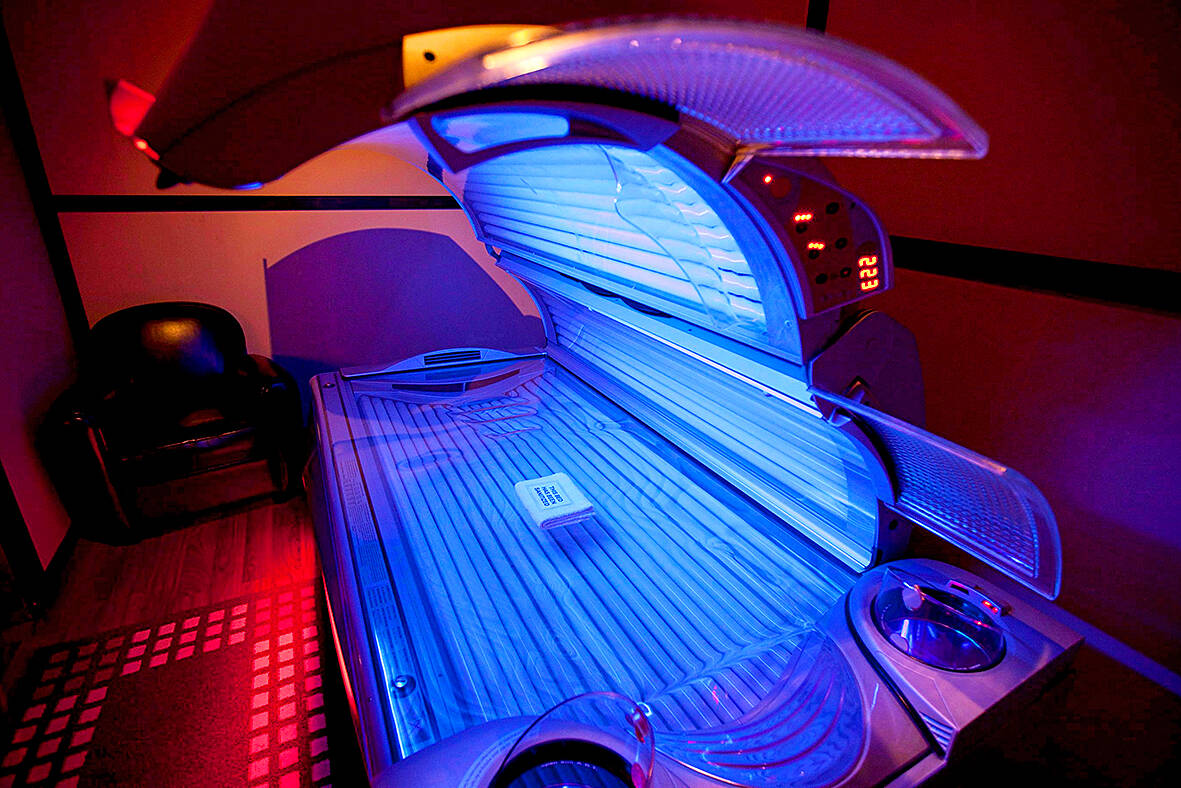
Photo: AP
“I just feel like our generation doesn’t really look into a lot of risks. They just kind of live in the moment,” Sims said.
Experts are concerned about a resurgence in the popularity of tanning among young adults as social media has helped tanning in general make a comeback. A video of a girl sharing her “tanning secrets” and showing off a bikini tan line has racked up more than 11 million views, while people in the comments joke, “The earth probably won’t last long anyway, I’d rather go out tan than pale.”
More than 100,000 new melanomas will be diagnosed in the US this year, and about 8,500 people are expected to die from melanoma, according to the American Cancer Society. Even more worrisome, some influencers are encouraging the use of tanning beds.
“Being young in the world we live in now, being tan and pretty, it goes together,” Sims said.
INCREASED CANCER RISK
Pedram Gerami and his team at Northwestern University’s medical school sought to find out what was happening at a cellular level with tanning bed users. They had nearly three times the risk of developing melanoma as those who did not use tanning beds.
Gerami took skin samples from tanning bed users and compared them with samples from nonusers. His team examined the DNA sequences of melanocytes, skin cells that can turn into moles, melanoma or other cancers.
When melanocytes are exposed to UV light, they can mutate. Tanning beds can emit more than 10 times as much UV light as the sun.
The DNA mutation rate of melanocytes in tanning bed users was more than double that of nonusers whose only exposure to UV is outdoor sun, Gerami said.
“You only need like two or three (mutations) in the right place for it to turn into a melanoma,” Gerami said. “If you get one or two of them from the tanning bed use … it kind of just primes all these cells to be ready and that much closer to getting to melanoma.”
Misconceptions about tanning are more likely among youth
Gen Z adults are less informed about sun protection and more likely to believe misconceptions about tanning, according to a survey last year by the American Academy of Dermatology.
More than one-fifth of young adults said they prioritized getting a tan over protecting their skin and more than half believed common myths like having a “base tan” would protect against sunburn, the survey results said.
Some videos on TikTok ridicule warnings by experts that unprotected UV exposure can lead to increased risk for skin cancer, including falsely saying that sunscreen can cause cancer, too. Others urge people to tan outside when the UV index is the highest, when experts advise the public to avoid sun exposure.
“Tanning is sort of cool again … and all the education about skin cancer and skin aging is sort of taking a backseat for the younger generation,” said Anthony Rossi, a dermatologist at Memorial Sloan Kettering Cancer Center.
Rossi said he recalls using tanning beds when he was younger and understands the appeal, but years after he stopped using them, he developed a non-melanoma skin cancer, he said.
“There’s really no such thing as a safe tan,” he said.
HALTING REGULATIONS
The WHO has long classified tanning beds as a cancer-causing agent in the same category as tobacco and asbestos.
Using tanning beds before age 20 can increase your chances of developing melanoma by 47 percent, according to the American Academy of Dermatology.
California became the first state to ban tanning beds for minors in 2012. More than a dozen states have followed suit since, and many others require in-person parental consent.
But the US Food and Drug Administration withdrew a proposed rule in March that would have barred anyone under 18 years old from using tanning beds in the US. The rule was first introduced in 2015.
The FDA said it withdrew the rule in light of “concerns regarding possible unintended consequences” in its memo, drawing concern from experts that the action could send mixed messages to the public.
TALKING ABOUT TANNING DANGERS
Teenagers can be a tough group to persuade because they have less capacity at that age to consider long-term health consequences, but there are ways to get the message across, said Sherry Pagoto, a psychologist and professor at University of Connecticut who has studied indoor tanning behavior and tanning bed culture for decades.
“What resonates more with them is physical appearance, because that’s why they’re doing it,” Pagoto said.
Rather than talking about skin cancer, parents can emphasize how excess sun exposure can cause skin to look leathery or wrinkly, she said. They can take their teen to a dermatologist to take a UV photo that shows the skin damage that isn’t yet visible to the naked eye.
Pagoto also said it’s important for parents to model safe behavior, as many teen girls acquire their tanning habits from their mothers. Making sunscreen easily accessible around the house and buying self-tanner for your teen can be a gentle way to nudge them away from unsafe tanning.
“Change can sometimes take time. So if you’re feeling frustrated ... sometimes you just kind of have to wait for their process to unfold,” Pagoto said.

Unable to solve the enduring mystery of why Taiwan does not attract tourists in the desired numbers (despite the collective screams of all of us knowledgeable long-term foreigners watching the government flail uselessly at the problem), policymakers have decided to establish a Taiwan Tourism Institute (台灣觀光研訓院), which was inaugurated last week to great fanfare and almost certain futility. Premier Cho Jung-tai (卓榮泰), speaking at the opening ceremony for the institute, said that “we hope that the Taiwan Tourism Institute could function like ITRI [Industrial Technology Research Institute] and develop Taiwan’s tourism industry.” The chip industry dates back to the 1960s, but

This paper ran a piece this week on the rampant smuggling of Kaoliang liquor from Kinmen through customs to Xiamen in the People’s Republic of China (PRC). Our paper reported that “Chinese frequently approach passengers heading to Xiamen and offer them 80 yuan (US$11.82) to carry kaoliang liquor through customs.” The couriers are then photographed and the images sent to smugglers on the other side of customs at the Wutong Ferry Terminal. The liquor couriers can pay half the cost of their ferry ticket from the transaction, the report said. In the PRC this tactic of splitting smuggling of goods

July 27 to Aug. 2 Chiang A-hsin’s (姜阿新) father did not want him to work. As one of the wealthiest families in the Hsinchu area, the Chiangs owned enough property and other assets to live comfortably, and his father reportedly spent much of his time smoking opium. Whenever Chiang came up with a business idea, his father rejected it. “He wanted me to be like him, just sit back and enjoy life. This pained me very much,” he later told his son-in-law, Liao Pan-yun (廖潘運), who wrote about his family in The Days of Golden
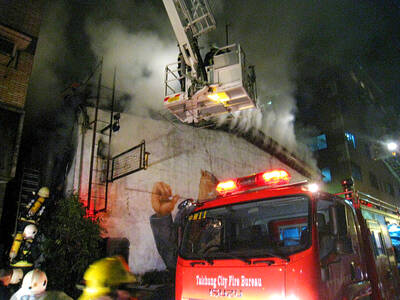
Prior to March 6, 2011, Taichung was the place to be. Known as the “city of culture” in the 1920s, Martial Law crackdowns had made Taichung a sleepy backwater by the 1990s. Taipei, and even the port city of Kaohsiung, were more exciting and cosmopolitan. In the 2000s, Taichung began to punch well above its weight. Taiwan joined the WTO, the High Speed Rail arrived and the Central Taiwan Science Park opened. In 2001, former foreign minister Jason Hu (胡志強) was elected mayor, and he set about reimagining the city as a cosmopolitan center for business, sports, arts and culture. His


 RSS
RSS