


Iconic UK metalcore band While She Sleeps brought their electrifying energy to Legacy Taipei for a sold-out concert last week hosted by Icon Promotions. With a fervent audience of 1,200, including members of prominent local bands like The Destroyers and Flesh Juicer in attendance, the atmosphere crackled with anticipation even before the first riff.
As the doors opened, a snaking line of eager fans awaited entry, setting the tone for an evening filled with high-octane metal mastery. Setting the stage for the evening’s energy were the Japanese all-female openers, electronicore band Hanabie. Their vibrant Harajuku-core sound resonated strongly, evident in the enthusiastic reception they received. Their bouncy and brutal melodies, along with their colorful stage presence, added an exciting prelude to the night’s events.
Led by vocalist Lawrence Taylor, While She Sleeps delivered a performance that encapsulated 15 years of musical synergy. Taylor’s magnetic presence dominated the stage while guitarists Sean Long and Mat Welsh anchored the show with their intense focus on intricate metal arrangements. Drummer Adam Savage’s tattooed arms blurred in a speed inherent to Metalcore, expertly keeping the beat. Bassist Aaran McKenzie’s animated maneuvers and Taylor’s crowd-surfing antics added an unpredictable yet enthralling dimension to the spectacle.

Photo: Steven Vigar
The band’s setlist, a parade of hits including fan-favorites Sleeps Society and Silence Speaks, resonated deeply with the dedicated audience. Notably, a lucky fan joined the band on stage for a rendition of Systemic, showcasing the band’s commitment to engaging their followers.
While the musical quality was impeccable, the band’s connection with the audience was the highlight. Taylor’s playful banter and moments of audience interaction, like reminiscing about their previous sold-out show in Taipei and shouting the memorable “Can I get a Hoya?” fostered a sense of camaraderie between performers and fans. Taylor screamed, jumped off speakers, crowd-surfed, jeered and high-fived the crowd, keeping the packed house fully engaged from the anticipated beginning to the sweat-soaked end.
The concert acted as a prelude to While She Sleeps’ forthcoming album, SELF HELL, teased with the enigmatic single of the same name. This evolution in sound seemed to both intrigue and puzzle some fans, illustrating the band’s bold inspirations and experimentation, a move that might polarize their fanbase but showcases their growth after over 15 years in the industry.

Photo: Steven Vigar
The night concluded in an explosive encore, fueled by the crowd chanting the band’s name, securing an indelible memory for their devoted Taiwan fans. While She Sleeps, once more, affirmed their reign as metalcore heavyweights, melding artist and audience in an unforgettably passionate and evolutionary musical journey.

Photo: Steven Vigar

Photo: Steven Vigar

Taiwan’s English education system is being pulled apart by three opposing forces. Bilingual Nation 2030 pulls students toward English and global communication. Artificial Intelligence (AI) readiness pulls them toward digital judgment, verification and AI-mediated work. But Taiwan’s old exam culture pulls them back toward memorization, grammar drills, timed reading and correct answers. If the education system keeps using old exams to define success, it risks producing graduates who are neither genuinely bilingual nor genuinely AI-ready, but trained for tasks machines can already perform. The first force is Bilingual Nation 2030. Launched in 2018, the policy aimed to “help Taiwan’s workforce connect

It seems every few days one bumps into one of those “real man” comments in which Taiwan is urged to “face reality” or similar, and “make a deal,” with the speaker implying that soon it will be too late. “Deal” advocates always present themselves as having a superior grip on reality, and the manly ability to make the “hard choice.” Their testosterone-laden language often echoes that of Taiwan sellout advocates. Note that such commentary always specifies a process (“make a deal, work with, make progress”), never the end state of what occupation by a violent authoritarian colonialist state will entail. In

“Taiwan’s Opposition Leader Comes to US With a Message Straight Out of Beijing” read a May 31 headline in the Wall Street Journal. Top US administration officials and members of Congress almost certainly read the WSJ, and if there was a bullet point takeaway that people in Washington should absorb ahead of Chinese Nationalist Party (KMT) Chair Cheng Li-wun’s (鄭麗文) arrival in DC on June 9, that headline is it. The last few columns have discussed this very topic, and the timing is not coincidental. While those top officials likely do not read the Taipei Times, judging by the number
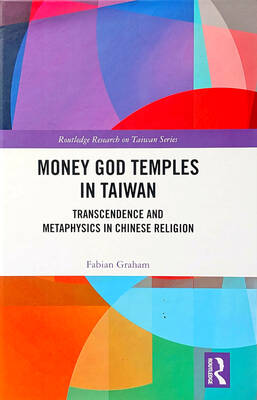
As someone who normally steers clear of books with “transcendence” or “metaphysics” in their subtitles, this reviewer — a casual observer of local belief systems since the 1990s — found Fabian Graham’s Money God Temples in Taiwan a challenging read. Those who’ve only dipped their toes into temple culture will likely need to parse several sections with special care if they’re to keep up with the author, a British ethnographic researcher whose previous books have investigated religious practices among ethnic Chinese in Southeast Asia. This scholarly volume examines a facet of Taiwan’s religious landscape that didn’t exist a century ago, and


 RSS
RSS