

The 22nd Taipei Arts Festival (臺北藝術節) opens tonight with three productions, a slightly scaled-down pandemic version that seeks to keep its tradition of big ideas, challenging programs and international connections alive and moving forward in an increasingly uncertain world.
The theme of this year’s festival is “Super@#S%?” — as good a term as any when descriptives and superlatives seem not only inadequate, but somewhat irrelevant in a world where so many people cannot imagine being able to return to theaters, either as performers or audience members — they are too worried about having a job and their health.
Technically, however, it is meant represent humans pursuit for the “super” amid the COVID-19 pandemic.
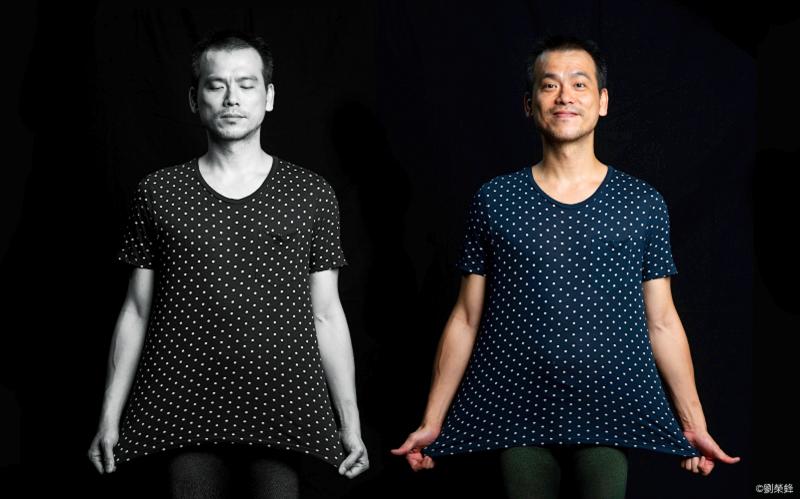
Photo courtesy of Taipei Arts Festival
For a man whose carefully deliberated festival program went to hell six months ago, and who has three premieres to oversee this weekend, Singaporean Tang Fu-kuen (鄧富權) looked surprisingly relaxed yesterday as we met for a chat in the Fortress Cafe at Taipei’s Zhongshan Hall.
“It’s going to be a really crazy weekend, three shows,” he said, as he plotted how he was going to see Dances for Wu-Kang Chen (攏是為著‧陳武康) at the hall, CosmicWander: OnGon+NeZha at the Shuiyuan Theater and Sun Moon Lake is a Concrete Box (日月潭是一個水泥盒) at the Taipei Backstage Pool.
PERFECT METAPHOR
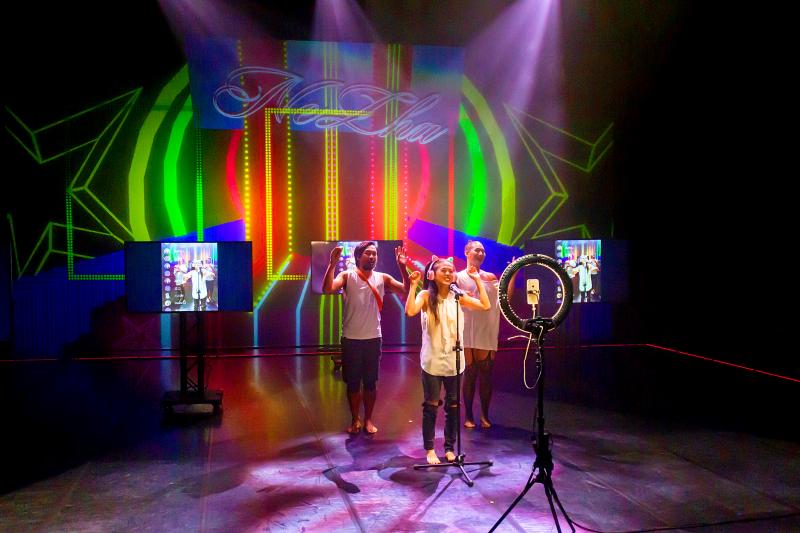
Photo courtesy of Taipei Arts Festival
Considering all the trouble and angst Tang and his team have had to go through to reach this weekend, it seems apt that they — and the performers and audience — have to go through a sewage plant to get to the pool studio for that third program by Taiwanese artist Xia Lin (林亭君), and Canadians Sheryl Cheung (張欣) and Liam Morgan, as well as two later Think Bar (共想吧) productions.
“Even though our offices are right above the plant, we had never been there before,” Tang said.
The pool area only holds 60 people, and admission is free, albeit with advance registration, so all three productions there are already booked. For some of the other shows in regular theaters, there are still tickets to move.
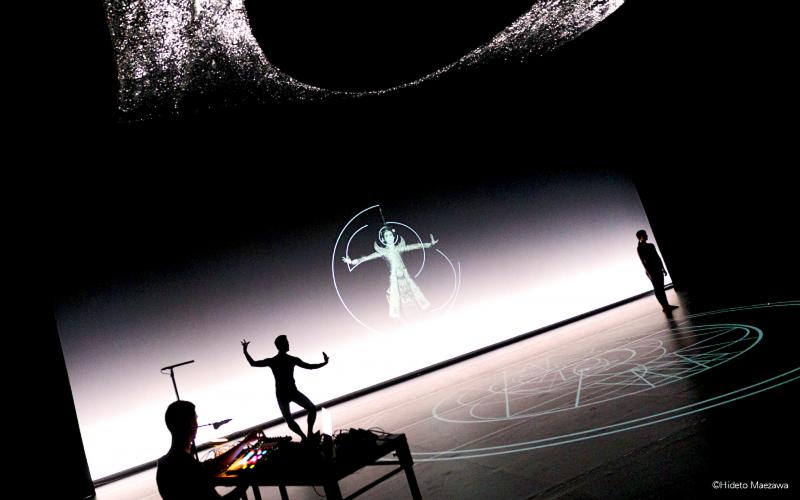
Photo courtesy of Hideto Maezawa
“So far the box office is doing alright now, a show taking 500 to 600 is the ceiling,” Tang said, noting that it was only about a week before the tickets went on sale that the government eased its restrictions on the number of people allowed in theaters.
“If we could pack in 500, that would be great,” Tang said.
The festival is about 20 percent smaller than last year’s, 13 productions over seven weeks, compared with 16, and the number of performances has also been scaled down, but as Tang stressed: “They are all premieres.”
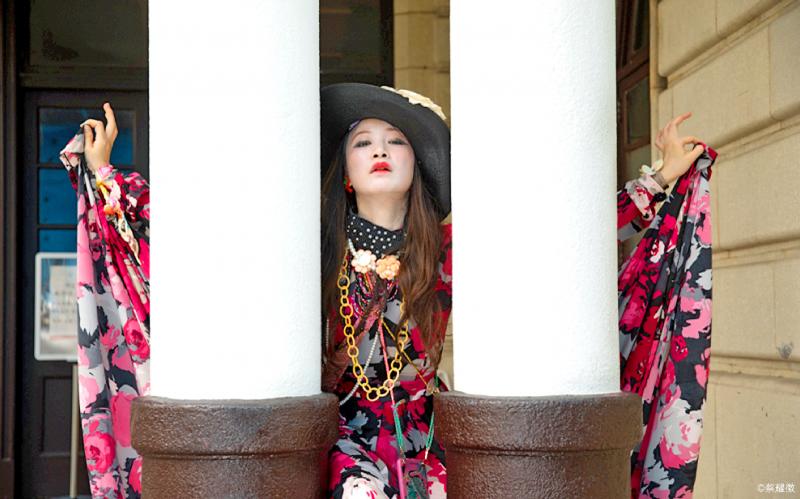
Photo courtesy of Taipei Arts Festival
The festival has been divided into three parts: the Pandemic Program (疫起策畫), the Main Program (核心節目) and the Think Bar, one of the innovations that Tang introduced when he took over as curator three years ago.
“By March, when we had to overhaul the program, I chose five performances, and framed the theme as pandemic response,” Tang said.
Some of the planned shows by foreign companies were canceled early on in response to the spread of COVID-19. For other artists, local and foreign, Tang said he laid out three conditions.
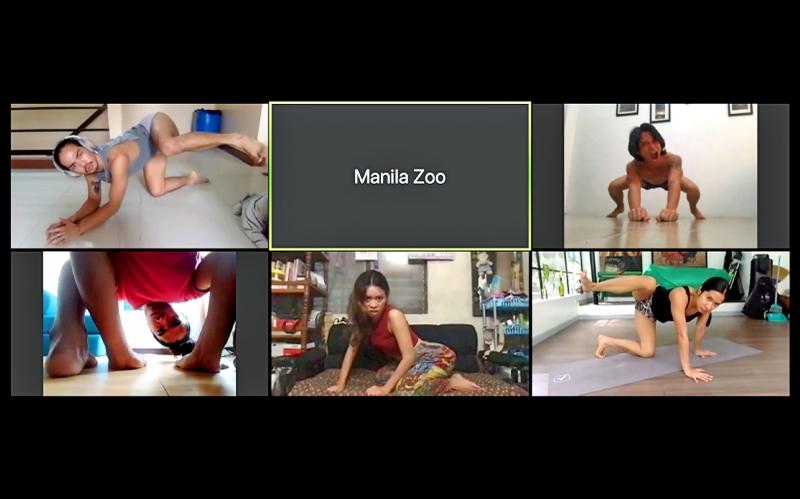
Photo courtesy of Taipei Arts Festival
The first, for foreigners was: “Would you accept a 14-day quarantine… That’s the basic condition, it’s fundamental. Several said no,” Tang said, noting that most would also face being quarantined again once they returned home, so that meant at least one month’s commitment all told.
The second was would they consider doing an original work — adapting, adjusting or reformatting what they had planned to do “to speak to the current condition,” which led more to drop out.
The third condition was really for the production team — to take those that were left and formulate new projects with them, commission new works, Tang said.
TOTAL CREATION FESTIVAL
“We can’t simply go online… Taiwan is the only platform this summer and at full capacity,” he said. “We have to capitalize on the ability to use theaters, live performances.”
That does not mean that the festival has ignored the possibilities of modern media and digital technology, with Filipino choreographer Eisa Jocson making her third appearance at the festival via Zoom for Manila Zoo.
For The Past is a Foreign Country, Chinese-Austrian artist Jun Yang (楊俊) has been able to make it to Taipei, but his partner, Japanese choreographer/performance artist Michikazu Matsune, got stuck in Vienna, so they have had to adapt their show by integrating technology.
Tang said the festival, and pandemic, are a test.
“If you are truly a contemporary being, and artist, you will be willing to take up these conditions. It is not about building a bubble space,” he said.
That idea led him to musing about the luxury of being able to present foreign artists and companies in Taiwan, or for Taiwanese artists to perform abroad, whether this will become a rarity or a thing of the past.
“Audiences have not yet realized what a privilege it is that some artists are still willing to come to Taiwan, to realize that a visiting artist means a lot of sacrifice … in time, quarantine and the costs — the [COVID-19] tests are expensive and so are the quarantine hotels,” he said.
But he said people have to keep responding to changing conditions to remain optimistic.
“It’s not all gloom and doom, there must be an alertness and nimbleness to respond effectively” he said.
BEL AND WU-KANG
One artist who had already begun preparing for a new era in creativity and productions is French choreographer Jerome Bel, who decided a year ago to stop traveling by air for environmental reasons, both for himself and his company.
For last year’s festival, he worked, via Skype with an all local cast and codirectors Yeh Ming-hwa (葉名樺) and Chen, dancer/choreographers who also happened to be husband and wife.
However, he had also begun trying to compose solos for individual dancers that he would not meet in person during the creative process, just online.
The pandemic — and the Taipei festival — created the perfect opportunity for him to test his theories, and he said Chen was the perfect person to work with because he is “both skillful and open to new experience.”
The process was “totally new for me and for him, he didn’t know if it was going to work, he doesn’t know yet,” Chen said in a telephone interview last week.
The 70-minute Dances for Wu-Kang Chen is a combination of dance history, an autobiography and a retrospective of some of Bel’s works.
“It’s like a CD, a collection of songs, but each song is from a time of work and my history,” Chen said.
He said working long distance was strange, but not as bad as he anticipated.
“I thought I would miss his [Bel’s] eye, but with or without him the practice is very effective … I can feel the energy,” Chen said. “He has everything planned out.”
Not really. Both Chen and Tang said Bel is much more flexible this time around.
The autobiography part in the middle is about 20 minutes and Chen said Bel spent a long time editing it — and asking him a lot of questions about the decisions he has made in his career.
There was also a lot of homework.
“For Isadora Duncan [Bel’s dance that premiered last year] — he gave me four pieces of her work. I only knew that she took shoes off and how she died. Learning her history and background was really interesting: She observed, like a scientist, every movement was a sentence to describe, like poetry,” Chen said.
Chen said working with Bel made him realize that you cannot always predict what will happen.
“You find a certain place, find a door, sometime it opens and there is nothing there, sometimes there is a lot. You cannot predict the path,” he said.
SHAMANISM
While Chen will be onstage in Zhongshan Hall’s Zhongzheng Auditorium, across the city, Berlin-based Singaporean artist Choy Ka-fai (徐家輝) and his team will be presenting CosmicWander: OnGon+NeZha at the Shuiyuan Theater, an exploration of the alternative realities that exist in and in parallel to this world.
Choy spent 18 months traveling around Taiwan and Siberia, meeting more than 50 mediums and filming their rituals.
CosmicWander: Nezha looks at the playful boy-deity who still plays a major role in Taiwan today, while CosmicWander: OnGon examines Siberian shamans’ embodiment of OnGon.
While the festival is just starting this weekend, several of the shows are already sold out or booked-up if they are free, including: The Grandmother Paradox (祖母悖論); Disappearing Island (消逝之島) and Is(o)Land Bar: Single Take (Cloudy) (島嶼酒吧: 如果雲知道 (無碼)).
However, there are still seats available for the Pichet Klunchun Dance Company’s No. 60 next weekend at the Shuiyuan Theater; and an usual magic show, Transhumanism: A Fair (新人類計劃: 園遊會) and The Library Tapes (圖書室錄音).
More information about the shows and the venues is available in English and Mandarin on the festival’s Web site (www.artsfestival.taipei).
Performance Notes
WHAT: Dances for Wu-Kang Chen
WHEN: Tonight and tomorrow at 7:30pm
WHERE: Zhongshan Hall (台北市中山堂), 98 Yanping S Rd, Taipei City (台北市延平南路98號)
ADMISSION: NT$600 and NT$800; tickets available at NTCH box offices, Eslite ticket desks, online at www.artsticket.com.tw and convenience store ticket kiosks
ON THE NET: www.artsfestival.taipei
WHAT: CosmicWander: OnGon+NeZha
WHEN: Tonight and tomorrow at 7:30pm, Sunday at 2:30pm
WHERE: Taipei City Shuiyuan (Wellspring) Theater (台北市水源劇場), 92 Roosevelt Rd Sec 4, Taipei City (台北市羅斯福路四段92號)
ADMISSION: NT$900. Available at NTCH box offices, Eslite ticket desks, online at www.artsticket.com.tw and convenience store ticket kiosks
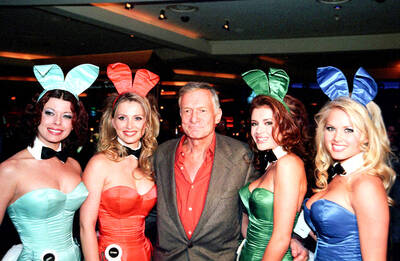
There was a time, a few decades ago, when the men who owned the world’s biggest pornography businesses were happy to be famous. They paraded a lifestyle they hoped looked glamorous, appearing in public dressed in silk pajamas or with a woman in swimwear on each arm. Porn moguls like Hustler’s Larry Flynt or Playboy’s Hugh Hefner were household names. “Say what you want about these old perverts, who once set the tone of our sexual culture, but at least you knew who they were and what they were selling,” Patricia Nilsson writes in her new book, Guilty Pleasure: The Pornification

Speculation started to fly last month that Chinese Nationalist Party (KMT) candidates running in the November elections wanted to keep their distance from party Chair Cheng Li-wun (鄭麗文). That some in the KMT were concerned that Cheng’s firm ideological adherence to the “one China principle” is no secret. There had already been pushback from within the party on issues ranging from the budget to defense, as well as over some of her more hardline comments. The timing made sense, however. The KMT party congress unity love fest wrapped up at the end of July. Through the primaries and up to

In 1904 the Japanese introduced caning to Taiwan. As a punishment, caning was applied by the Japanese to Taiwanese and Chinese subjects, never to the Japanese themselves (it had been outlawed in Japan in 1882). An imperial and colonial act, caning thus functioned to define and display social class boundaries. So it is with the new legislation permitting caning proposed by Chinese Nationalist Party (KMT) legislators last week. According to the KMT proposal, individuals committing major fraud, aggravated sexual assault, driving under the influence of drugs and child abuse may be subject to caning. These are high-profile offenses that generate great
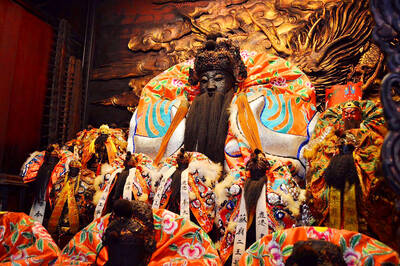
OCT. 5 to OCT. 11 Many worshippers of Taoist deity Lord Su (蘇府王爺) had never witnessed his “north-south grand inspection tour” of central Taiwan. The historic procession last took place in 1969, and before that, in 1893. Lukang’s Fengtian Temple (奉天宮) in Changhua County last Sunday completed Lord Su’s sixth grand inspection tour ever, taking its three main statues to settlements from Miaoli to Yunlin over 10 days. According to news reports, this year’s event also included a boat patrol that set out from Taichung, bringing luck and safety to fishers and offshore wind farm workers. Why did it


 RSS
RSS