


MAHLER, Symphony No.5
By Klaus Tennstedt,London Philharmonic
I’ve taken a huge gulp of breath, and now I’ll say it. This video is the most overpowering, wonderful, gripping and awe-inspiring classical event I’ve ever seen anywhere, live or otherwise.
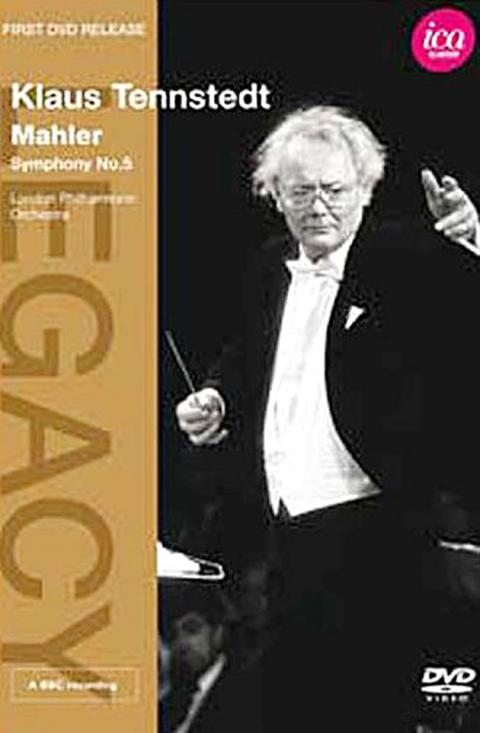
The conductor Klaus Tennstedt, who died in 1998, was born in the then East Germany but managed to migrate to Sweden in 1971, at the age of 45. He subsequently moved from country to country, working in West Germany, the US and the UK. His life was dogged by illness, but he was always much admired, especially his Mahler performances and his years as Principal Conductor of the London Philharmonic Orchestra (1983-1987). A very small number of his concerts have recently made it onto DVD.
Tennstedt’s version of Mahler’s Symphony No. 5, recorded live with the London Philharmonic in 1988, was legendary on CD. Now, after 24 years, we’ve finally got the event on DVD. Believe me, it’s an experience of a lifetime.
The orchestra is exceptionally fine, for one thing, and feels here like a collection of highly talented individualists who nevertheless cohere in response to Tennstedt’s powerful, somber approach. Everything about the performance is gripping and magnetic, and the dark color-tones of the film only add to the effect.
Take the famous fourth movement, the adagietto, for instance. It’s played without a shred of chocolate-box sentimentality; instead, it sounds like the heir to the most passionate, oceanic passages from Wagner’s Tristan. Tennstedt looks totally overwhelmed by it, and indeed at times scarcely able to keep it together. Is he mopping away the sweat or the tears? Either way, you’ve never heard the adagietto played like this before.
And at the end of it all the audience goes totally wild. It’s quite clear that everyone understood that this had been an altogether extraordinary occasion. This is a great Mahler performance by any standards, and must stand as first choice among the review items for this month, or any month.
MAHLER, Symphony No. 4; MOZART, Haffner Symphony (Symphony No. 35)
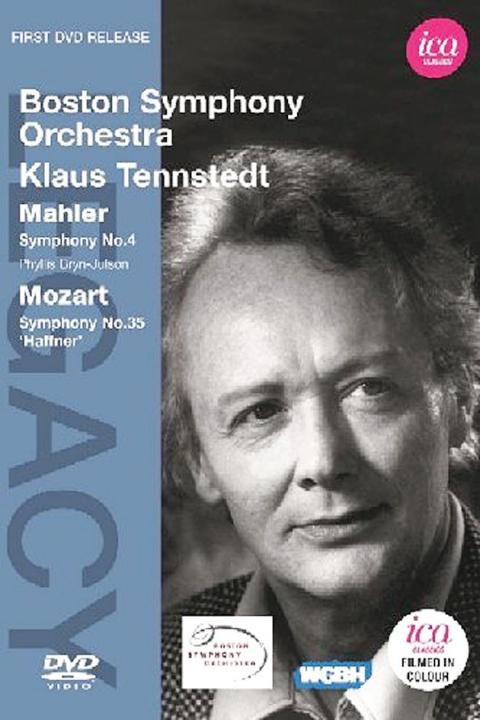
By Klaus Tennstedt, Boston Symphony Orchestra
A concert of Tennstedt conducting the Boston Symphony Orchestra in 1977 has also just been released, using old film originals. It can’t compare with the previous item but has its moments. It contains Mahler’s Symphony No. 4 followed, in an unusual sequence, by Mozart’s “Haffner” Symphony. The Mahler increases in intensity as it progresses, with the dream-like third movement especially sonorous and wonderful (but the whole of Tennstedt’s 5th is like this). The final movement, with Phyllis Bryn-Julson as soprano soloist, is appropriately youthful and spontaneous.
CHINESE NEW YEAR CONCERT
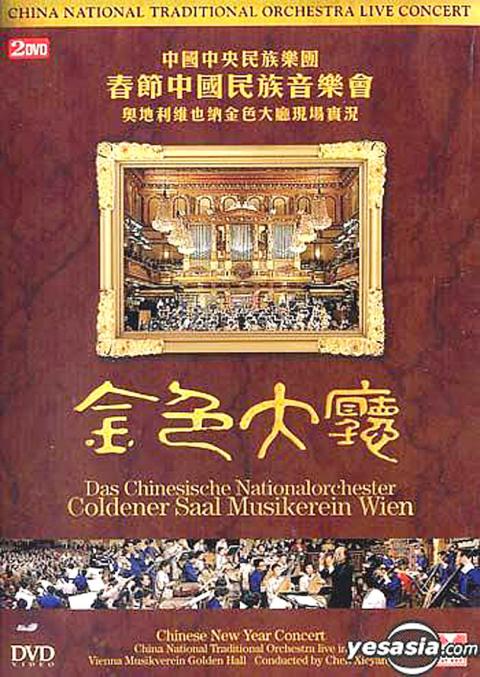
By the Chinese National Traditional Orchestra, Musikverein Golden Hall, Vienna
To descend from the sublime to the averagely quaint, a pair of DVDs, most easily available from YesAsia, shows Beijing’s Chinese National Traditional Orchestra playing a Lunar New Year concert in 1998 in Vienna’s sumptuous Musikverein Golden Hall. It’s a good introduction to the variety of this kind of music as the program consists of many short items, each with a different instrumental emphasis. Visuals are carefully attended to as well, with the male players dressed in blue for the first half but in white for the second, and the ladies in white at the beginning but in yellow after the intermission. Various instruments, too, are decorated with colourful tassels.
The whole event was clearly some kind of cultural statement, but there were nods to what was perceived as Viennese taste too in the shape of the Pizzicato Polka and the Radetzky March just before the end. The conductor was Chen Xieyang.
TCHAIKOVSKY, BERG etc., Symphony No.4, Lulu Suite
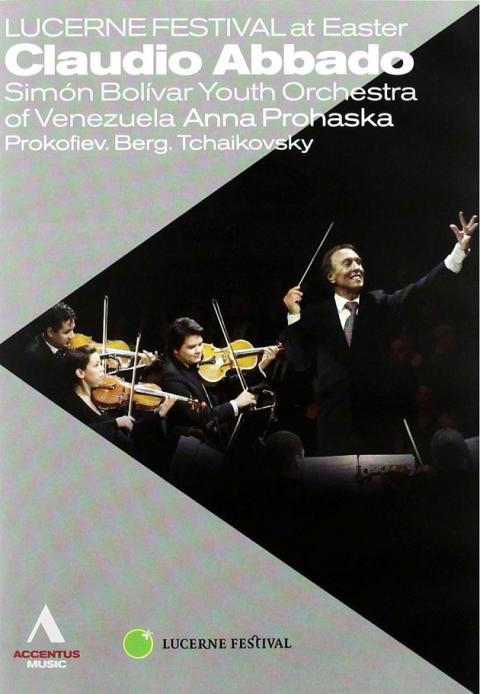
By Claudio Abbado, Simon Bolivar Youth Orchestra
A famous European conductor and a vibrant South American orchestra would make a great formula for an exceptional concert, you’d think, and so it proves. Claudio Abbado combines strength and sensitivity on the podium like few others, and the Simon Bolivar Youth Orchestra of Venezuela, though not as young as they were, still have all the virtues of Latin immediacy and a professionalism that comes from a youthful national pride. A concert from the Lucerne Festival, featuring Prokofiev, Mozart, Berg and Tchaikovsky, shows the enormous range and commitment of all involved.
It comes from the recently-established, Leipzig-based, Accentus label. And it’s not without interest that another item on Accentus’s small list—again with Abbado, but this time conducting Mahler’s 9th Symphony with his own hand-picked Lucerne Festival Orchestra—has just won the BBC Music Magazine prize for 2012 in its Best DVD category.
In the concert with the Venezuelans, Abbado comes up with a searing account of Prokofiev’s Scythian Suite, a rasping, rhythmic product evoking the primal qualities of Central Asia, with section titles like “The Evil God and the Dance of the Pagan Monsters.” Few works could suit the Simon Bolivar players, with their huge dynamic range and effervescent spirit, better, and the performance is as memorable as you’d expect.
Berg’s Lulu Suite, based on his opera, follows, with Anna Prohaska as soprano soloist. It doesn’t make for easy listening, but certainly demonstrates the orchestra’s versatility. Prohaska then sings Pamina’s aria “Ach, ich fuhl’s” from Mozart’s The Magic Flute.
The second half of the concert presents Tchaikovsky’s Symphony No. 6. Here orchestra and conductor scale great heights of intensity and anguish as Tchaikovsky, almost certainly, prepares to depart this life in brutal fashion. This is a magnificent performance and worth the price of the DVD on its own.
But if you only buy one classical DVD this month—or maybe in a lifetime—make sure it’s Klaus Tennstedt conducting Mahler’s 5th Symphony. No one could conceivably be disappointed.

Ajay Verma, a consultant gastroenterologist at Kettering general hospital in Northamptonshire, says our gut is a “complex machine.” “It is constantly providing us with the nutrition we need, initially to grow and develop, and then for us to survive, thrive and repair from injury and illness.” How can we keep it functioning well? Put simply: “Make sure what you put into it is balanced, and that you clear out its waste products adequately,” Verma says. “In a general gastroenterology clinic, the most common conditions we see are irritable bowel syndrome (IBS), gastroesophageal reflux disease, inflammatory bowel disease and constipation,” says Nisha
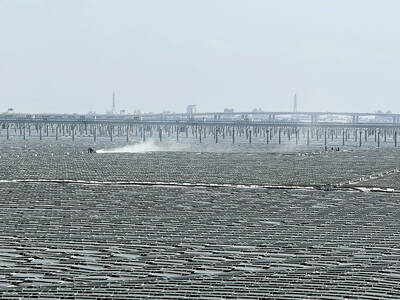
The arithmetic is straightforward and uncomfortable. By the end of 2025, Taiwan had committed itself to a 50-30-20 electricity mix — half natural gas, 30 per cent coal, 20 per cent renewables. The Ministry of Economic Affairs’s (MOEA) own monthly energy reports tell a different story. Natural gas reached 47.8 per cent of generation last year. Coal stood at 35.4 per cent, comfortably above its target ceiling. Renewables came in at 13.1 per cent, well short of the 20 per cent Taipei had pledged a decade earlier. Installed renewable capacity reached roughly half of the 12 gigawatts (GW) the government
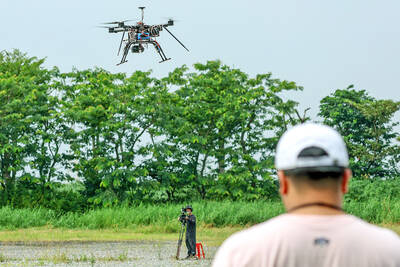
Taiwan’s drone exports are taking off, fuelled by the war in Ukraine, as Taiwanese companies seek a stake in the fast-growing global market for unmanned aerial vehicles (UAV). Low-cost drones used for reconnaissance and strikes are in high demand as governments around the world boost defense spending in the face of intensifying conflicts. A relative new player in the increasingly competitive industry, Taiwan’s pitch is to be an “Asian hub” for the production of UAVs and components free of Chinese materials, or “non-red.” That means its UAVs can be up to three times more expensive than their Chinese competitors, like the world’s biggest

There are shadowy cabals plotting to sell out Taiwan to be annexed by China, by invasion if necessary. Fortunately, they are buffoons. In 2019, former Bamboo Union gangster and founder of the China Unification Promotion Party (CUPP), Chang An-le (張安樂, colorfully known as “White Wolf”), led a protest at the Legislative Yuan against comments made by then-premier Su Tseng-chang (蘇貞昌) that in the event of an attack by China, he would never surrender, but would protect the nation by fighting to the end, even if he only had a broom. Chang had party members bring a wooden casket that they


 RSS
RSS