


American shock rocker Marilyn Manson is scheduled to perform on Thursday at the Taipei Show Hall 2 (台北展演二館), and it appears he has a sizable cadre of Taiwanese fans waiting to see him.
According to promoter Very Aspect Culture Group (有象文化), nearly 90 percent of the 6,000 available tickets have already been sold.
Taipei is one of the early stops on Marilyn Manson’s (also the band’s name) Hey Cruel World tour, which the group kicked off last week in Australia. The tour continues through the summer in the US and Europe.
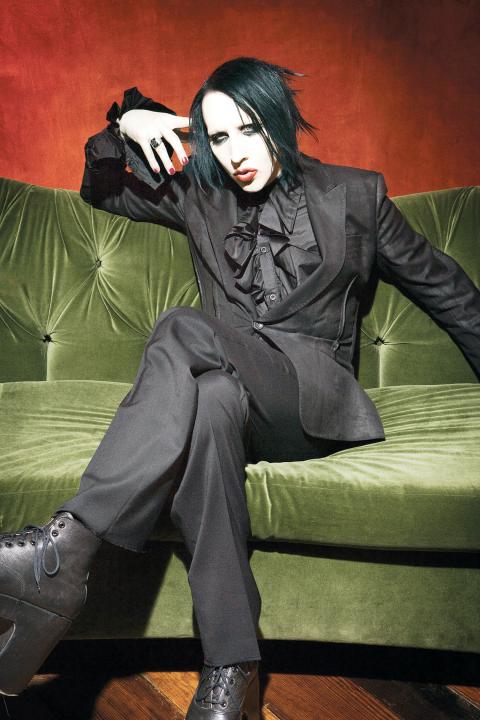
Photo Courtesy of Very Aspect Culture Group
Manson, 43, is also gearing up for the May release of his eighth full-length studio album, Born Villain. Judging from the promo video posted on his Web site, the new music is simply Manson doing what he does best.
The video for the song No Reason flaunts the typical theatrical elements that once made him a controversial figure: a creepy ghoulishness and fascination with dark sexual fantasies and graphic violence.
In the mid-1990s, Manson was denounced by conservative politicians and Christian organizations, which often picketed his concerts. He and his band started to enjoy mainstream success with their 1996 album Antichrist Superstar, a nickname Manson reportedly embraced for himself.
But for all the controversy Manson attracted — in the US, critics hastily blamed him for the Columbine High School shooting in 1999 — his music struck a chord among a large swath of hard-rock fans, many of them teenagers. To date, he has sold more than 50 million records worldwide.
Marilyn Manson’s unique brand of rock ’n’ roll initially adopted the heavy, industrial sound that emerged in the 1990s from bands like Nine Inch Nails (frontman Trent Reznor produced Antichrist Superstar). Compared to the monotone sludge of thrash metal, the band’s music had a blunter, darker edge. Manson later experimented with glam rock and even hip-hop, and has collaborated with Eminem and Lady Gaga.
Manson’s performances at festivals in Australia last week received mixed reviews, particularly from the indie music Web site musicfeeds.com.au, but things could shape up differently in Taipei.
Thursday’s show will be Manson’s first ever appearance in Taiwan, and the ghoulish rocker will have a concert hall full of excited fans ready to greet him.
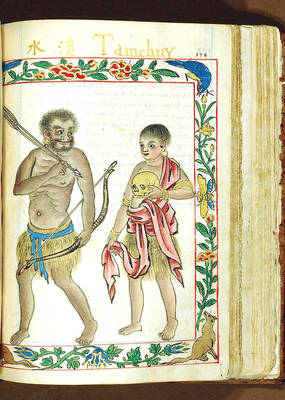
The Portuguese never established a presence on Taiwan, but they must have traded with the indigenous people because later traders reported that the locals referred to parts of deer using Portuguese words. What goods might the Portuguese have offered their indigenous trade partners? Among them must have been slaves, for the Portuguese dealt slaves across Asia. Though we often speak of “Portuguese” ships, imagining them as picturesque vessels manned by pointy-bearded Iberians, in Asia Portuguese shipping between local destinations was crewed by Asian seamen, with a handful of white or Eurasian officers. “Even the great carracks of 1,000-2,000 tons which plied
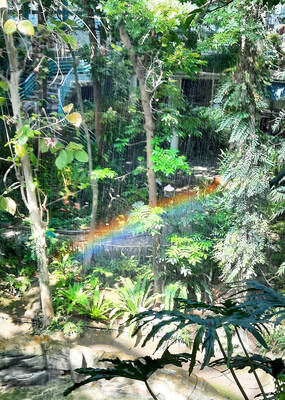
It’s only half the size of its more famous counterpart in Taipei, but the Botanical Garden of the National Museum of Nature Science (NMNS, 國立自然科學博物館植物園) is surely one of urban Taiwan’s most inviting green spaces. Covering 4.5 hectares immediately northeast of the government-run museum in Taichung’s North District (北區), the garden features more than 700 plant species, many of which are labeled in Chinese but not in English. Since its establishment in 1999, the site’s managers have done their best to replicate a number of native ecosystems, dividing the site into eight areas. The name of the Coral Atoll Zone might

On Monday morning, in quick succession, the Chinese Communist Party (CCP) and the Chinese Nationalist Party (KMT) released statements announcing “that the Central Committee of the Communist Party of China and General Secretary Xi Jinping (習近平) have invited KMT Chairwoman Cheng Li-wun (鄭麗文) to lead a delegation on a visit to the mainland” as the KMT’s press release worded it. The KMT’s press release added “Chairwoman Cheng expressed her gratitude for the invitation and has gladly accepted it.” Beijing’s official Xinhua news release described Song Tao (宋濤), head of the Taiwan Work Office of the CCP Central Committee, as
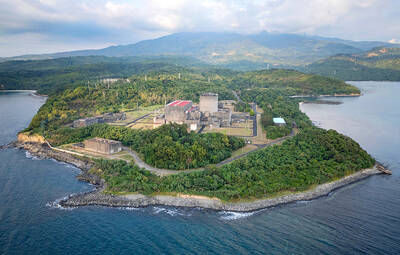
Nuclear power is getting a second look in Southeast Asia as countries prepare to meet surging energy demand as they vie for artificial intelligence-focused data centers. Several Southeast Asian nations are reviving mothballed nuclear plans and setting ambitious targets and nearly half of the region could, if they pursue those goals, have nuclear energy in the 2030s. Even countries without current plans have signaled their interest. Southeast Asia has never produced a single watt of nuclear energy, despite long-held atomic ambitions. But that may soon change as pressure mounts to reduce emissions that contribute to climate change, while meeting growing power needs. The


 RSS
RSS