


Clive Arrowsmith snaps pictures of film directors Cheng Wen-tang (鄭文堂) and Wu Mi-sen (吳米森) standing in the middle of a Taipei photo studio forming a “T” with their hands. The shutter on the high-end Hasselblad camera clicks with each shot, the captured images showing up instantly on a large computer monitor in the corner of the room.
The renowned London-based fashion photographer spent a week in Taiwan in May to take pictures for a Free Tibet awareness campaign organized by Guts United, Taiwan, which culminates with a concert today in Taipei. Arrowsmith was also the photographer for the “T for Tibet” campaign during last year’s Summer Olympics
“To have Clive ... be the official photographer of all the campaign ... it means a lot,” says the organizer of Free Tibet, Freddy Lim (林昶佐), also the front man of the death metal band, Chthonic (閃靈). Having the same photographer for both, Lim says, links the drive for Tibetan freedom in Taiwan with the larger global effort.
Some of the other celebrities photographed by Arrowsmith for Free Tibet are singer-actress Enno Cheng (鄭宜農), writer Wu Yin-ning (吳音寧), SET-TV news chief editor and anchor Chen Ya-lin (陳雅琳), folk singer Panai (巴奈), and Chthonic, Aphasia (阿飛西雅), Kook (庫克), LTK Commune (濁水溪公社) and FireEx (滅火器).
Arrowsmith’s photos for the campaign have since been posted around Taipei, with a large Free Tibet poster featuring Lim and his bandmate and wife Doris Yeh (葉湘怡) displayed at the Vieshow Cinema Square in Xinyi. The images have been broadcast on platform monitors at Taipei’s MRT stations.
Arrowsmith is one of the few photographers who take portraits of the Dalai Lama in an official capacity. He’s also taken portraits of countless other celebrities over the past three decades. A longtime photographer for British Vogue magazine, he shot the Pirelli calendars for 1991 and 1992. A quick flip through a draft of his soon-to-be published book is like going through a who’s who of the entertainment world.
Just a sampling shows actors Michael
Caine and Helena Bonham Carter, musicians George Harrison and David Bowie, writers Hunter S. Thompson and Roald Dahl, naturalist David Attenborough and cooking show host Nigella Lawson.
Behind each of the photographs, Arrowsmith has a story to tell that illuminates the lives and personalities of his subjects.
He detailed the time he was commissioned to snap Prince Charles for his 50th birthday. Arrowsmith remembers putting on a lot of cologne because he was very nervous, causing Prince Charles to say to him, “That cologne you’re wearing ... isn’t it what old Italian playboys wear?” He said they had a laugh over that.
And the time he took a portrait of a smiling Yoko Ono in London. Arrowsmith said when he first started shooting she was just standing still. To loosen her up, he asked her to sing a song. She started singing The Beatles’ When I’m Sixty-Four because, she told him, she turned 64 that year.
Or the time he took a photo of Liv Tyler wearing a diamond necklace for DeBeers. Arrowsmith says the company paid her in diamonds for the shoot.
Arrowsmith counts many of his celebrity subjects as his friends. He regularly plays guitar with Richard Gere and Paul McCartney calls him “Spike.”
At the photo shoot in Taipei, it’s clear Arrowsmith is efficient. He doesn’t take long with each subject. Arrowsmith says it’s all about capturing a moment when the picture, the person and the camera all gel together. He says it’s also about trying to put the subject at ease because if a photographer imposes his or her will on someone, “you can see the stress in their face.”
And when asked what difference photographs make, Arrowsmith, a practicing Buddhist, gets passionate. He says he got a friend to sneak some of his photographs of the Dalai Lama into Tibet to distribute to monks and the photos are treasured. “Absolutely photographs make a difference in peoples lives,” he said.
For more information about today’s The 50th Spring: Tibetan Freedom Concert (西藏自由音樂會) in Taipei, visit the Web site www.freetibet.tw.
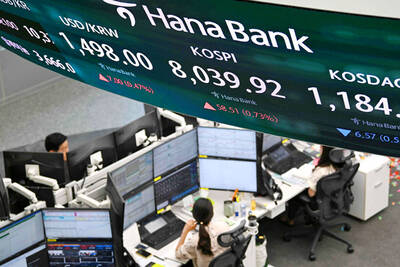
Taiwan’s overtaking of South Korea in GDP per capita is not a temporary anomaly, but the result of deeper structural problems in the South Korean economy says Chang Young-chul, the former CEO of Korea Asset Management Corp. Chang says that while it reflects Taiwan’s own gains, it also highlights weakening growth momentum in South Korea. As design and foundry capabilities become more important in the AI era, Seoul risks losing competitiveness if it relies too heavily on memory chips. IMF forecasts showing Taiwan widening its lead over South Korea have fueled debate in Seoul over memory chip dependence, industrial policy and
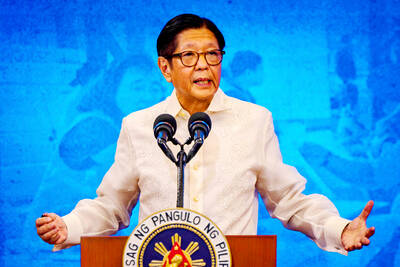
And so, in the wake of US President Donald Trump’s trip to the People’s Republic of China (PRC), all the experts on the Strait of Hormuz suddenly became experts on US-China-Taiwan relations. The Internet has certainly expanded human knowledge. Lots of these sudden experts made noise this week about Trump’s words after the meeting with PRC dictator Xi Jin-ping (習近平). Trump is going to sell out Taiwan! Longtime Taiwan commentator J. Michael Cole summed the situation up neatly in the Guardian: “We need to keep in mind that he has a tendency to say many things — sometimes contradicting himself within
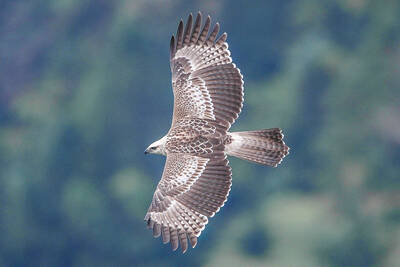
It took 12 years and months of standing in the same mountain location for director Liang Chieh-te (梁皆得) to capture a few seconds of footage: Taiwan’s largest resident raptor locking talons with its mate and spinning through the air in a courtship ritual. With only about 1,000 left in the wild and very short flight windows, the mountain hawk-eagle remains among Taiwan’s most elusive birds. The species generally produces only one offspring per year. Using forest cameras, the film crew and research teams document the arduous process the monogamous pairs go through for the chick to hatch and grow up, weathering
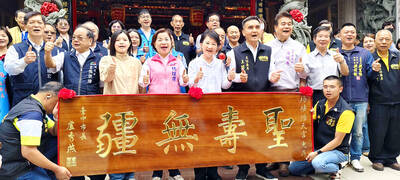
There is considerable frustration and confusion among many, both in Taiwan and abroad — including in Washington — as to why the Chinese Nationalist Party (KMT) seems so dead set on using their legislative leverage to slash defense spending and disrupt the ability of the ruling Democratic Progressive Party (DPP) administration to function. Are they pawns of the Chinese Communist Party (CCP)? Are they traitors? In reality, there are multiple reasons. In the first column in this series on this subject, “Donovan’s Deep Dives: How and why the TPP and KMT help Beijing” (Sat May 16, page 12), we examined three


 RSS
RSS