


Following the box-office success of Leste Chen's (陳正道) horror film Heirloom (宅變) last year, the local filmmaker has a new offering for local audiences: a coming-of-age movie about troubled youth and homosexual love titled Eternal Summer (盛夏光年).
The film opens at a seaside elementary school in the picturesque Hualien countryside when well-behaved student Cheng Hsing is tasked by a teacher to help bad boy Shou Heng adjust to school life, and the two become good friends.
Time passes and high-school life ticks along uneventfully until classmate Hui Chia comes between the two friends. The sensitive girl gradually realizes that she will never win the heart of Cheng Hsing, who has been harboring a secret love for his buddy.
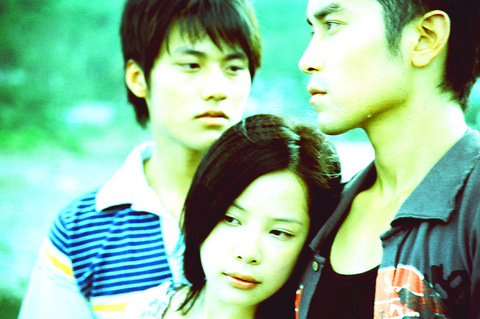
PHOTO COURTESY OF FLASH FORWARD ENTERTAINMENT
Hui Chi and Shou Heng become a couple in college, but the Sept. 21, 1999, earthquake opens Heng's eyes to the true nature of Cheng Hsing's feelings.
Not knowing where the love triangle will lead, the trio takes a trip to the seaside. Secrets that have been hidden in their hearts for years are revealed and the revelations mark the end of naive youth.
The film's cinematography is simple and clean with blue tones accentuated, and the scenery includes clammy urban imagery that reflects the muffled restlessness among the three protagonists.
What is surprising about this movie is director Chen's fine portrait of homosexual love. The sex scene between Shou Heng and Cheng Hsing is treated with great care and instead of being arousing or erotic, it portrays the emotional difficulties the two characters feel and the pair's tenderness.
Eternal Summer benefits greatly from accomplished performances by the three main actors. Having starred in the TV series Crystal Boys (孽子) based on the gay novel by Taiwan's Kenneth Pai (白先勇), Chang Hsiao-chuan (張孝全) seems to handle his bisexual role with ease. TV soap-opera actor Chang Jui-chia (張睿家) gives an amazingly vivid portrait of the reticent young repressed gay man while Golden Horse nominee Yang Chi (楊淇) brings to life the straight girl torn between the two.
Whether it is the verdant fields and beaches of Hualien or the damp streets and packed cram school in Taipei, Chen has created a movie full of familiar imagery that local audiences can identify with.
Ajay Verma, a consultant gastroenterologist at Kettering general hospital in Northamptonshire, says our gut is a “complex machine.” “It is constantly providing us with the nutrition we need, initially to grow and develop, and then for us to survive, thrive and repair from injury and illness.” How can we keep it functioning well? Put simply: “Make sure what you put into it is balanced, and that you clear out its waste products adequately,” Verma says. “In a general gastroenterology clinic, the most common conditions we see are irritable bowel syndrome (IBS), gastroesophageal reflux disease, inflammatory bowel disease and constipation,” says Nisha
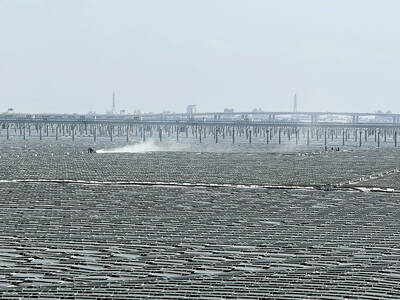
The arithmetic is straightforward and uncomfortable. By the end of 2025, Taiwan had committed itself to a 50-30-20 electricity mix — half natural gas, 30 per cent coal, 20 per cent renewables. The Ministry of Economic Affairs’s (MOEA) own monthly energy reports tell a different story. Natural gas reached 47.8 per cent of generation last year. Coal stood at 35.4 per cent, comfortably above its target ceiling. Renewables came in at 13.1 per cent, well short of the 20 per cent Taipei had pledged a decade earlier. Installed renewable capacity reached roughly half of the 12 gigawatts (GW) the government
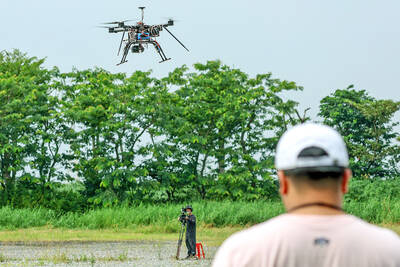
Taiwan’s drone exports are taking off, fuelled by the war in Ukraine, as Taiwanese companies seek a stake in the fast-growing global market for unmanned aerial vehicles (UAV). Low-cost drones used for reconnaissance and strikes are in high demand as governments around the world boost defense spending in the face of intensifying conflicts. A relative new player in the increasingly competitive industry, Taiwan’s pitch is to be an “Asian hub” for the production of UAVs and components free of Chinese materials, or “non-red.” That means its UAVs can be up to three times more expensive than their Chinese competitors, like the world’s biggest
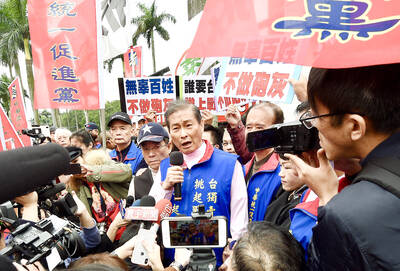
There are shadowy cabals plotting to sell out Taiwan to be annexed by China, by invasion if necessary. Fortunately, they are buffoons. In 2019, former Bamboo Union gangster and founder of the China Unification Promotion Party (CUPP), Chang An-le (張安樂, colorfully known as “White Wolf”), led a protest at the Legislative Yuan against comments made by then-premier Su Tseng-chang (蘇貞昌) that in the event of an attack by China, he would never surrender, but would protect the nation by fighting to the end, even if he only had a broom. Chang had party members bring a wooden casket that they


 RSS
RSS