


Taipei's first kebab shop opened just three weeks ago and has already built up a strong following. Its hearty Turkish grilled meat combos are currently popular with office workers out for a quick feed, local residents looking for something more substantial and expats in search of familiar tastes from home.
The brainchild of Jerry Hsu (
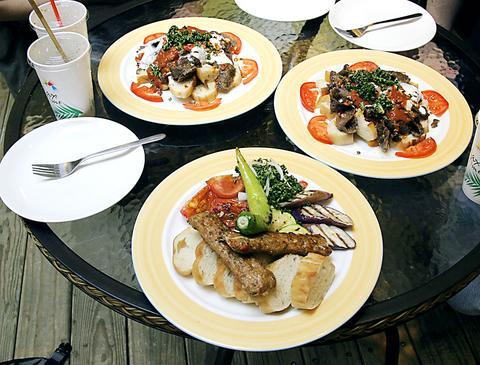
PHOTO: GAVIN PHIPPS, TAIPEI TIMES
Offering diners a clean, pleasant, roomy and inoffensive environment, the Doner's small, yet solid menu is, according to Hsu, still a work in progress. Those craving grilled Turkish treats should find the few items currently available to their liking. The drawback is the lack of dips. While Hsu has mastered the garlic and cucumber yogurt sauce the lack of tahini in Taiwan has meant that humous is, at present, not on the menu.
The most popular of the dishes on offer is the Turkish soda bread kebab. Available in beef, chicken, or a mixture of both, the hearty kebab comes stuffed with salad and is topped off with Hsu's homemade garlic yogurt sauce and costs NT$110. Hsu also offers Lebanese, or flat pita bread wraps, which cost NT$110 and are
available in the same combinations as the Turkish kebab.
Diners looking for more than a simple sandwich should try one of one of Hsu's set meals. The priciest of these is the NT$450 Kusbasi kebab, or a fillet of lamb served with mixed vegetables, Turkish bread and onion salad. The Adana kebab -- two spiced lamb kebabs cooked with capsicum and served with mixed vegetables, Turkish bread and a huge fiery green pepper -- and the Ishender kebab, a plate of beef topped off with garlic yogurt and chili sauce served on a bed of Turkish soda bread, both cost NT$300. Side orders of French fries are available on request for diners wanting that extra bit of cholesterol with their meal.
Hsu plans to add more Mediterranean-based meat and fish dishes as well as several vegetarian choices, including falafel in the near future. But for now, diners will have to make do with the basics. Not that there's anything wrong with that, as Hsu's kebabs hit the spot and diners will walk away from any meal at the Doner satisfied.

Taiwan’s English education system is being pulled apart by three opposing forces. Bilingual Nation 2030 pulls students toward English and global communication. Artificial Intelligence (AI) readiness pulls them toward digital judgment, verification and AI-mediated work. But Taiwan’s old exam culture pulls them back toward memorization, grammar drills, timed reading and correct answers. If the education system keeps using old exams to define success, it risks producing graduates who are neither genuinely bilingual nor genuinely AI-ready, but trained for tasks machines can already perform. The first force is Bilingual Nation 2030. Launched in 2018, the policy aimed to “help Taiwan’s workforce connect
It seems every few days one bumps into one of those “real man” comments in which Taiwan is urged to “face reality” or similar, and “make a deal,” with the speaker implying that soon it will be too late. “Deal” advocates always present themselves as having a superior grip on reality, and the manly ability to make the “hard choice.” Their testosterone-laden language often echoes that of Taiwan sellout advocates. Note that such commentary always specifies a process (“make a deal, work with, make progress”), never the end state of what occupation by a violent authoritarian colonialist state will entail. In
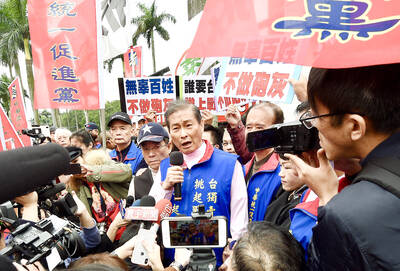
There are shadowy cabals plotting to sell out Taiwan to be annexed by China, by invasion if necessary. Fortunately, they are buffoons. In 2019, former Bamboo Union gangster and founder of the China Unification Promotion Party (CUPP), Chang An-le (張安樂, colorfully known as “White Wolf”), led a protest at the Legislative Yuan against comments made by then-premier Su Tseng-chang (蘇貞昌) that in the event of an attack by China, he would never surrender, but would protect the nation by fighting to the end, even if he only had a broom. Chang had party members bring a wooden casket that they
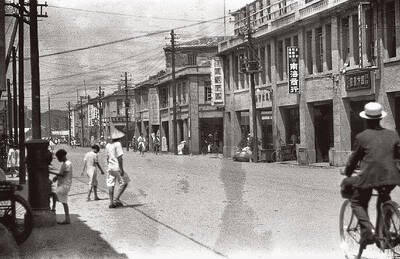
June 1 to June 7 "If all Taiwanese were as afraid of dying as you, then what would happen?” Physician Shih Chiang-nan (施江南) reportedly said this to his wife Chen Chiao-tung (陳焦桐) after she urged him to stop intervening on behalf of Taiwanese soldiers stranded overseas after serving in the Japanese Army during World War II. Shih had clashed with high-ranking officials over the issue, engaged in several heated arguments with Taiwan governor-general Chen Yi (陳儀) and allegedly shouted at general Ko Yuan-fen (柯遠芬), chief of staff of the Taiwan Garrison Command, over


 RSS
RSS